How Distribution Center Fire Pump Tracy Systems Work
Walk through a massive distribution center in Tracy, California and it feels like stepping into a mechanical city. Forklifts glide by like quiet little sharks in steel water. Conveyor belts whisper along, sorting and shifting packages without taking a breath. Yet behind all that motion, another system stands watch like a calm guardian in the background: the distribution center fire pump Tracy facilities depend on when everything is on the line.
When fire protection must perform without hesitation, that pump system becomes the building’s quiet hero. It will never get top billing on a movie poster, but when it is time to push water through miles of pipe and reach sprinklers hundreds of feet away, it absolutely deserves a standing ovation.
In this article, I will walk you through how fire pump systems work inside large distribution centers, why they matter so much in Tracy’s logistics corridor, and how property managers can ensure they perform when the pressure is on. Literally.
The quiet hero of the warehouse
Inside a distribution center, the fire pump is not just another big piece of machinery pushing water through pipes. It is the beating heart of the fire protection network, ready to deliver serious water power the moment a sprinkler head opens.
Why Tracy distribution hubs lean on pumps
Tracy sits at the crossroads of Northern California logistics. That means sprawling buildings, tall rack storage, and complex conveyor layouts that all add up to one thing: serious water demand when a fire breaks out.
How a distribution center fire pump Tracy facility relies on actually works
First things first. A fire pump is not just a big piece of machinery pushing water through pipes. In a distribution center environment, it really is the heart of the entire fire protection network, sitting quietly until something goes wrong and then becoming the star of the show.
Sprinkler systems depend on consistent water pressure. However, municipal water supplies do not always provide enough pressure for massive commercial buildings. Distribution centers often stretch hundreds of thousands of square feet. Water must travel long distances and still hit sprinklers with enough force to control a fire quickly and keep it from racing down long aisles of inventory.
This is where the pump system steps in and earns its keep.
When a fire sprinkler activates, the fire pump automatically starts. It pulls water from a reliable source and boosts the pressure so the sprinkler system can perform as designed. Without it, water might trickle instead of surge. And during a fire emergency, trickling is about as useful as bringing a water pistol to a dragon fight.
Industrial fire pump systems include several coordinated components that all have to play together perfectly.
- Controller panels that detect pressure drops and start the pump
- Electric or diesel drivers that power the pump during emergencies
- Pressure sensing lines that monitor the system constantly
- Test headers that allow technicians to verify performance
Each piece works together so the moment water flow begins, the system responds instantly. No hesitation. No debate. Just action.
Why Tracy distribution centers face unique fire protection demands
Tracy sits at the crossroads of Northern California logistics, with major highways connecting the region to the Bay Area, Sacramento, and the Central Valley. As a result, massive distribution hubs continue to rise across the region, and the typical distribution center fire pump Tracy teams design is anything but small or generic.
And these facilities are not small. Many buildings exceed half a million square feet. Some climb past one million. That scale introduces several fire protection challenges that pumps and sprinklers have to overcome.
High rack storage and vertical fire risk
Modern distribution centers store dense inventory. High rack storage systems stack goods vertically like library shelves for giants. When products sit forty feet in the air, fire protection must reach them quickly, push heat out of the way, and keep flames from jumping to the next rack.
Conveyors and complex sprinkler layouts
Automated conveyor networks create long pathways through buildings. While they move packages efficiently, they also create complex layouts for sprinkler coverage, with gaps, obstructions, changes in ceiling heights, and moving equipment that all affect how water has to be delivered.
Constantly changing fuel loads
Inventory changes constantly. One month a facility stores paper products. Next month it might store electronics or plastics. Each material burns differently and changes water demand. The pump has to be sized for those worst case scenarios, not just a quiet Tuesday shift.
Therefore, engineers design fire pump systems with significant capacity. They anticipate worst case fire scenarios rather than everyday conditions because when a building stores millions of dollars in goods under one roof, preparation is not optional. It is simply good business.
What property managers usually ask about fire pumps in large warehouses
I hear a few common questions whenever I speak with facility managers or building owners about the distribution center fire pump Tracy warehouses depend on to keep operations protected.
“Do we really need such a powerful pump?”
The short answer is yes. Fire codes for high pile storage and large commercial buildings require specific water flow levels. Those requirements often exceed what city water pressure alone can provide. A properly sized pump ensures compliance and protects the property, the inventory, and everyone working in the building.
“How often do these systems need testing?”
Regular testing is essential. Fire pumps must be exercised weekly or monthly depending on the configuration. Annual flow testing also verifies that the system delivers its rated performance and that the curves on paper still match reality in the field.
Think of it like owning a classic car. You cannot leave it parked for five years and expect it to roar to life during a road trip. Pumps need routine operation to stay reliable, and distribution centers cannot afford a “won’t start today” moment when a sprinkler opens.
“What happens if the pump fails?”
That is the question everyone asks quietly. In a real fire, inadequate water pressure can turn a controllable incident into a major loss. That is exactly why professional inspection, redundant design where required, and consistent maintenance matter so much.
In large commercial properties, redundancy and testing ensure that when a real emergency arrives, the system performs exactly as designed. Working with experienced specialists, such as the fire pump service team at Kord Fire Protection, helps keep that confidence level high year after year.
Inside the distribution center fire pump Tracy infrastructure
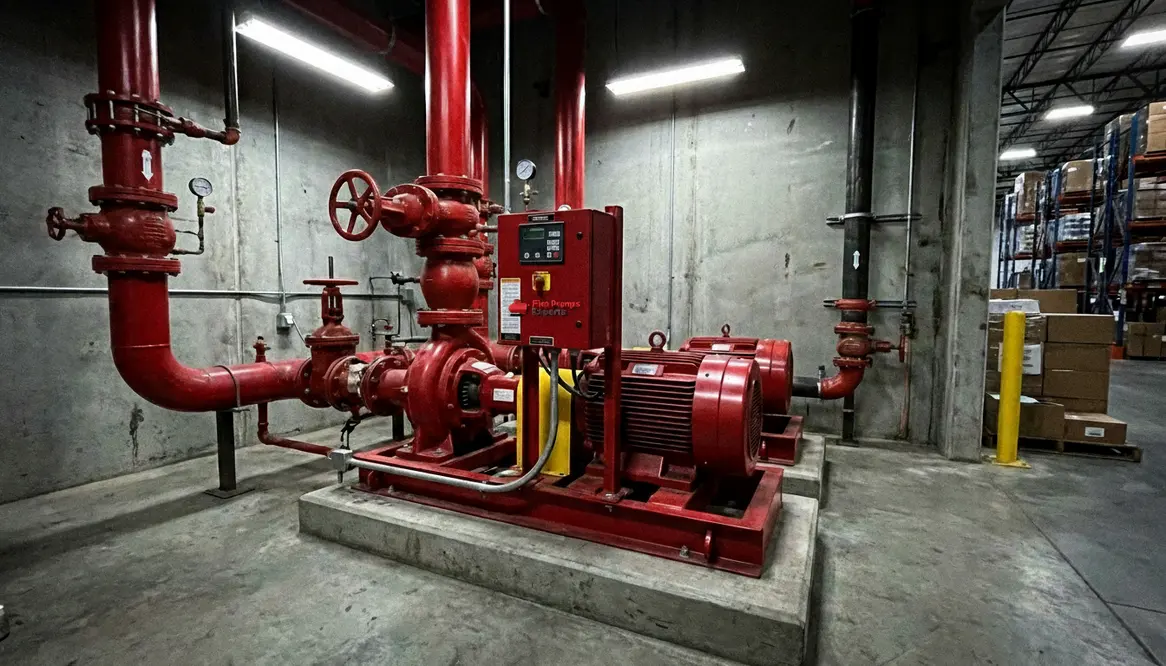
When I step into a pump room inside a Tracy distribution center, I usually see something impressive. Not flashy. But powerful in a quiet industrial way. The distribution center fire pump Tracy facilities rely on typically sits mounted on a concrete pad with thick piping branching into the building, almost like arteries feeding a giant mechanical body.
Nearby, control cabinets monitor system pressure every second. Gauges and valves form a maze that only trained technicians fully appreciate. To make the layout clearer, here is a simple breakdown of what is usually in that room.
|
Core Equipment Fire pump assembly Electric motor or diesel engine Controller and monitoring system Main discharge piping |
Support Components Pressure relief valves Test header connections Backflow prevention devices Water supply connections |
Although the room may look technical, the mission remains simple: deliver powerful water flow immediately when a sprinkler system activates. No complaints. No theatrics. Just pressure and flow doing exactly what the design team promised.
The pump room usually hums with the quiet seriousness of a control center in a sci fi movie. It is the kind of room where you half expect a calm voice to say, “Initiate fire suppression sequence.” Instead, the controller quietly watches pressure gauges, waiting for the moment to act.
Maintenance strategies that keep industrial fire pump systems reliable
Even the best equipment requires attention. In large commercial properties, preventative maintenance protects both safety and compliance. It is the difference between a fire pump that just looks impressive and one that actually produces the flow and pressure it was designed for.
Routine inspections and tests
Weekly visual inspections confirm that valves remain open and gauges show proper pressure. Operators also check for leaks, unusual sounds, or obvious mechanical issues that could escalate later.
Monthly churn tests run the pump without flowing water. This keeps mechanical parts active and ensures the motor starts properly. It is a quick way to confirm the system still remembers how to wake up on command.
Annual performance testing measures actual water flow and pressure output. Technicians connect hoses to test headers and verify the pump meets design specifications, documenting the results so that inspections, insurers, and owners all know the system can do its job.
Electrical vs. diesel considerations
Diesel powered pumps require fuel system checks, battery testing, and regular engine exercise. Electric driven pumps need electrical inspections, controller diagnostics, and verification that the power supply is reliable under load. Both can be highly dependable with the right maintenance program behind them.
Over time, these routine steps build confidence in the system. And in a building storing millions of products, confidence is worth quite a lot.
Planning fire pump upgrades as Tracy distribution hubs expand
Tracy continues to grow as a logistics powerhouse. New buildings appear every year, and existing facilities often expand operations. When those expansions stretch further out or higher up, they can quietly change the fire protection demand without anyone noticing until the next design review.
Expansions sometimes increase fire protection demand. Additional storage racks, higher pile storage, or automation equipment can change hazard classifications inside the building. As a result, engineers may evaluate whether the current pump still meets the required water flow and pressure.
Common upgrade paths
- Installing larger pumps or adding a second pump where allowed and needed
- Modifying piping layouts to reduce friction loss and improve delivery
- Upgrading controllers and monitoring systems for better visibility
- Adding remote monitoring so teams can track pump health in real time
Either way, planning ahead prevents surprises during inspections or emergencies. And nobody enjoys surprises when the topic is fire safety, especially in a facility depending on a distribution center fire pump Tracy code officials have already reviewed and approved.
FAQ about distribution center fire pump systems
Property managers and operations leaders tend to come back to a handful of practical questions when talking about fire pumps in distribution centers. These are some of the most common.
Protecting Tracy’s logistics backbone
Distribution centers keep goods moving across California and beyond. From the forklifts and conveyor belts to the loading docks and truck courts, everything is built for speed. Yet behind all that motion stands a critical safety system that rarely gets applause: the distribution center fire pump Tracy facilities rely on day and night.
When a sprinkler head fuses open, nobody on the floor stops to think about pump curves or water supply calculations. They just need that system to work. They need water to move with strength and speed, to hold the fire in check until firefighters arrive, and to keep people safe while protecting the building and the inventory inside.
If you manage or operate a large commercial property, partnering with experienced fire pump specialists helps ensure that quiet guardian is always ready. With the right design, maintenance, and upgrades over time, your fire pump becomes a reliable backbone of your life safety strategy. And when safety runs quietly in the background, that is exactly how it should be.