How Newark Fire Code Shapes Fire Pump Design
I have spent years around fire pump systems, and I can tell you right away that the Newark fire code is not just a document sitting on a dusty shelf. It shapes every decision we make in commercial and industrial fire protection. In fact, within the first few steps of any project in Newark, those regulations quietly step in like a seasoned director on a movie set, calling the shots before anyone rolls camera. And yes, while codes may not win Oscars, ignoring them will definitely earn you a sequel you do not want.
How the Newark Fire Code Shapes Fire Pump Design from Day One
When I begin a fire pump project in Newark, I do not start with equipment. I start with the rules. The local fire safety regulations dictate flow rates, pressure requirements, and system redundancy. Therefore, every pump I specify must align with those expectations before I even think about brand or layout.
Moreover, Newark’s enforcement is not casual. Inspectors expect compliance down to the smallest valve. Because of that, I build systems that meet both current demand and future inspections. It is a bit like cooking for a food critic who shows up unannounced. You prepare everything as if they are already in the room.
As a result, design becomes less about preference and more about precision. And honestly, that is a good thing. It keeps buildings safer and projects cleaner. The Newark fire code sets the frame, and a good fire pump design fills it in with the right performance, redundancy, and documentation so no one is improvising at inspection time.
What Do Newark Fire Code Requirements Mean for Pump Room Layout?
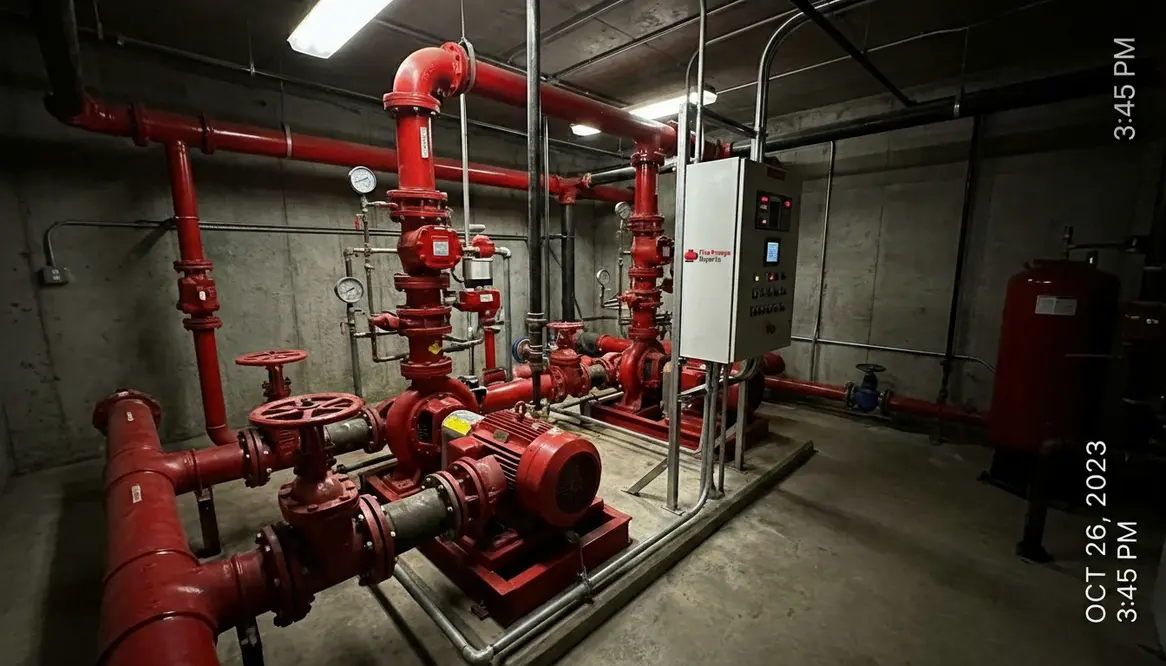
Let me answer this directly. The code influences spacing, access, ventilation, and even lighting. I cannot just place a pump wherever it fits. Instead, I must ensure enough clearance for maintenance, proper drainage, and safe operator access.
Additionally, inspectors want clear pathways and labeled components. So, I treat the pump room like a well organized control center rather than a storage closet. Think less basement chaos, more NASA mission control, minus the dramatic countdown.
Layout and Access
The Newark fire code drives how doors swing, where control panels sit, and how quickly someone can reach critical valves without climbing over equipment. When layouts respect that, emergency access feels natural instead of acrobatic.
Environment and Safety
Ventilation, drainage, and lighting stop being “nice to have” items and instead become code driven requirements. A dry, well lit, well ventilated pump room does not just pass inspection; it makes every future repair faster and safer.
Because of these requirements, planning early saves time later. If I ignore layout standards upfront, I will end up redesigning under pressure, and no one enjoys that kind of plot twist.
Cost Impacts I See from Local Compliance Rules
Let us talk money, because that is always part of the conversation. The Newark fire code does increase upfront costs. There is no dancing around that. However, it also prevents expensive corrections later.
For example, I often specify higher grade components to meet durability standards. While that raises initial budgets, it reduces long term repairs. In other words, you either pay a little more now or a lot more later. I have seen both versions of that story, and trust me, the second one is not fun.
Furthermore, compliance avoids delays. Failed inspections can stall entire commercial projects. So, investing in code compliant systems keeps timelines intact and stakeholders happy. And in construction, that is almost as rare as a quiet job site.
When you line up Newark fire code requirements with national standards like NFPA 20 or NFPA 25, you start to see a pattern: the upfront cost is really an insurance policy against downtime, rework, and schedule slippage that nobody has budgeted for but everyone ends up paying for when systems are rushed or underdesigned.
Key Compliance Areas I Always Prioritize
System Performance
- Required flow and pressure levels
- Backup power integration
- Reliable water supply connections
When Newark fire code standards call for specific flows or redundancy, these are not suggestions. They define how the system behaves on the worst day the building will ever see.
Operational Readiness
- Routine testing access
- Clear control panels
- Alarm and monitoring integration
If technicians cannot reach gauges, valves, and controllers easily, the day to day testing and maintenance that the code expects becomes a chore instead of a routine. That is how small issues grow quietly into expensive failures.
Each of these areas ties directly back to local enforcement expectations. Therefore, I never treat them as optional. Instead, I build around them from the start, cross referencing Newark fire code language with national standards and real world inspection experiences from facilities that have been operating for years, not just since last Tuesday’s ribbon cutting.
Permitting and Inspections Under Newark Fire Code
Permitting in Newark is not a box checking exercise. It is a process that requires detailed documentation and coordination. I work closely with engineers, contractors, and local officials to ensure everything aligns before installation begins.
Then comes the inspection phase. This is where preparation pays off. If the system meets the Newark fire code standards, inspections move smoothly. If not, delays stack up quickly.
I have learned to treat inspectors as partners rather than obstacles. They are there to enforce safety, not to ruin your schedule. Although, on a bad day, it might feel like both.
Good documentation, test reports, and clear pump room organization tell inspectors that the system was built by people who respect their time. And that usually means they are spending less of it in your mechanical spaces and more of it approving your project.
Why Newark Fire Code Compliance Improves Long Term Reliability
Here is something people often overlook. Following the Newark fire code does more than satisfy regulations. It creates systems that last.
Because the standards demand durability and consistent performance, compliant fire pumps tend to operate more reliably over time. That means fewer failures, fewer emergency repairs, and greater peace of mind for property owners.
In large commercial and industrial buildings, reliability is everything. A fire pump is not something you want to question when it is needed. It should work without hesitation, like a seasoned actor hitting their mark every time.
Connecting Local Code to Industry Standards
Behind the scenes, Newark fire code requirements lean on national standards that define how pumps are installed, tested, and maintained. If you want a deeper technical breakdown of how NFPA 20 shapes fire pump design and performance expectations, take a look at Kord Fire Protection’s article on how NFPA 20 regulates fire pump systems. It gives helpful context for why local inspectors push so hard on specific design and testing details.
FAQ
Over the years, I have heard the same questions on repeat in project meetings, pre construction calls, and panicked phone conversations right before inspection. Here are a few of the most common ones about the Newark fire code and fire pump systems.
Conclusion
If you are planning a fire pump project in Newark, I can help you navigate every requirement with confidence. I design systems that meet code, pass inspections, and perform when it matters most. Reach out today, and we will build a solution that protects your property, keeps your project on track, and meets every expectation without surprises. Because in this business, the only thing better than passing inspection is never worrying about it again.