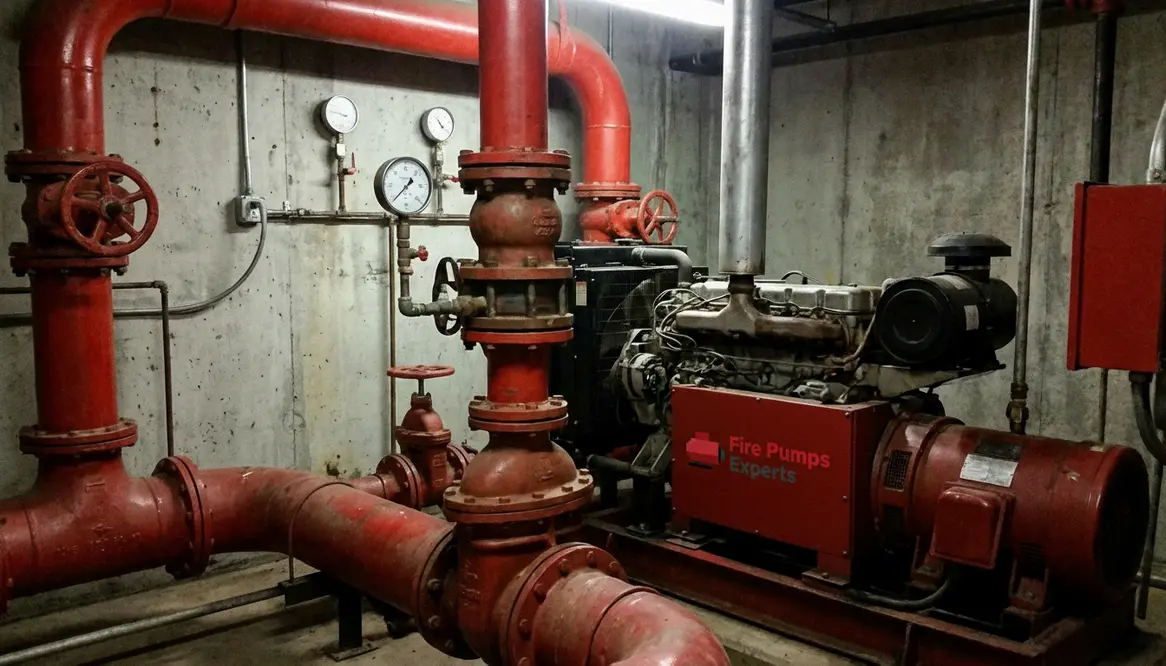
Industrial Fire Protection Water Pressure Systems Guide
I have spent enough time walking the mechanical rooms of large facilities to know one simple truth. When a fire breaks out, the entire building depends on one quiet hero. Water pressure. Without it, even the most advanced sprinkler network becomes about as useful as a garden hose in a hurricane. That is why industrial building fire protection water pressure systems exist. They ensure that when heat rises, valves open, and alarms scream, water arrives with the force and reliability needed to stop disaster in its tracks.
Across warehouses, manufacturing plants, distribution hubs, and large commercial complexes, maintaining steady suppression pressure is not just a design preference. It is a survival requirement. In the sections ahead, I will walk through how these systems actually maintain reliable pressure, why redundancy matters, and how modern facilities keep their fire suppression infrastructure ready every second of the day. Think of it as the behind the scenes crew of a blockbuster movie. You rarely see them, but without them the entire production collapses.
The Hidden Backbone of Industrial Fire Protection
Most people picture sprinklers when they think about fire protection. However, sprinklers are only the final delivery point. Behind them sits a carefully engineered network that keeps water moving with precision.
In large facilities, the biggest challenge is scale. A distribution center may cover hundreds of thousands of square feet. A manufacturing plant may contain multiple hazard zones with different suppression requirements. Consequently, pressure must remain stable across long pipe runs, multiple floors, and high demand events.
This is where fire pumps, storage tanks, and pressure management systems take center stage. Together they form a coordinated system that pushes water through pipes with consistent force. When a sprinkler head activates, the network instantly compensates for the pressure drop.
In other words, the system behaves like a disciplined orchestra. Every component knows its cue. If one instrument goes silent, another fills the gap. And yes, if a pipe suddenly opens during a fire event, the pumps respond faster than a superhero hearing trouble across town.
Modern suppression pressure systems inside industrial properties often include:
- Electric or diesel fire pumps that deliver high flow rates
- Large dedicated water storage tanks designed for sustained fire events
- Pressure sensing controllers that trigger pumps automatically
- Backflow prevention and supply monitoring to protect the water source
Because of these components working together, facilities can maintain stable pressure even during extreme demand scenarios.
How Do Industrial Buildings Maintain Reliable Fire Suppression Water Pressure?
I get this question a lot from facility managers and safety directors. The answer comes down to layered engineering.
First, engineers calculate the maximum water demand for the building. This includes sprinkler density, hazard classification, ceiling height, and total coverage area. From there, they design the pumping capacity required to meet those conditions.
Next, the system monitors pressure constantly. Sensors track water levels and pipeline pressure in real time. If pressure dips below a preset level, the fire pump controller immediately starts the pump.
Then the pump ramps up to deliver the flow required by the sprinkler system. As more sprinklers activate, the pump increases output to maintain the proper pressure curve.
Meanwhile, pressure relief valves prevent dangerous over pressurization in the piping network. That balance ensures water arrives quickly but safely.
Additionally, many facilities integrate backup power sources. Diesel driven pumps operate independently of the electrical grid. Therefore, even during a power outage the suppression network continues functioning.
Put simply, the system never waits for human intervention. It reacts automatically and instantly. Think of it as autopilot for fire safety.
Inside Modern Industrial Building Fire Protection Water Pressure Systems
Inside large commercial and industrial properties, suppression infrastructure has evolved far beyond basic pumping equipment. Modern designs prioritize reliability, monitoring, and redundancy.
Today’s industrial building fire protection water pressure systems integrate advanced control panels and diagnostic sensors that constantly evaluate system performance. Operators can see pump status, pressure levels, valve positions, and water supply conditions in real time.
However, technology alone is not enough. Redundancy is the real secret.
Redundant Pumping And Storage
Facilities often install multiple fire pumps configured in duty and backup arrangements. If the primary pump fails, the secondary pump activates automatically. Because of this layered design, a single mechanical issue rarely disrupts the system.
Large facilities also use dedicated water reservoirs sized for extended fire events. Municipal supply lines alone may not deliver the required flow rate for high hazard operations. Consequently, on site storage tanks provide a guaranteed water source.
Smart Layout And Flow Paths
Even pipe layout plays a major role. Engineers design looped piping networks rather than simple dead end branches. That configuration allows water to reach suppression zones from multiple directions, which keeps pressure balanced throughout the building.
When all these elements work together, the result is a system that remains calm and reliable even when the environment around it is anything but calm.
Design Strategies That Keep Pressure Stable Across Massive Facilities
Designing suppression pressure for a large industrial property requires careful planning. Unlike small buildings, pressure loss becomes a major factor over long distances.
Therefore engineers use several strategies to maintain stability.
Hydraulic modeling comes first. Designers simulate water flow across the entire system to predict pressure drops and friction losses.
Zoned distribution often follows. In taller structures or complex manufacturing plants, engineers divide the building into zones with separate pressure control strategies.
High capacity fire pumps ensure sufficient flow for multiple sprinkler activations. Some industrial pumps deliver thousands of gallons per minute.
Pressure regulating valves maintain safe levels in sensitive sections of the network.
Pressure Stability Tools
- Hydraulic flow modeling
- Fire pump controllers
- Pressure regulating valves
- Looped pipe networks
Reliability Measures
- Backup diesel pumps
- On site water storage tanks
- Automated monitoring systems
- Redundant pump configurations
When these strategies combine, the suppression network behaves predictably even under peak demand. In fact, the system is engineered to perform under worst case scenarios. That includes multiple sprinklers opening at once.
And yes, the design margins are intentionally generous. When it comes to fire protection, nobody wants a system that says, “I almost had it.”
Maintenance and Monitoring That Prevent Pressure Failures
Even the best system needs regular care. Pumps, valves, and sensors must remain ready every day of the year.
Routine inspection programs keep everything operating correctly. Facility teams test pump start sequences, verify pressure levels, and confirm that backup systems activate when needed.
Flow testing also plays a critical role. During these tests, technicians simulate high demand conditions to ensure the pumps deliver the required performance.
Furthermore, modern monitoring platforms allow facilities to track system health remotely. Alerts notify staff when pressure drifts outside acceptable limits.
This proactive approach prevents small issues from becoming major failures. Because of consistent maintenance, suppression pressure systems remain dependable for decades.
And honestly, that quiet reliability is the goal. When everything works properly, nobody notices. It is a bit like a bass player in a band. You may not always see them, but the whole performance falls apart without them.
FAQ About Fire Suppression Water Pressure in Industrial Facilities
Reliable Pressure Is the Quiet Guardian of Industrial Fire Safety
Reliable suppression pressure does not happen by accident. It comes from thoughtful engineering, redundant equipment, and ongoing maintenance. If you manage a large commercial or industrial property, investing in properly designed fire pump infrastructure protects both your facility and the people inside it.
When you partner with experts who understand high demand fire protection systems, you gain confidence that your building will respond instantly when it matters most. For example, a dedicated fire pump service such as Kord Fire’s fire pump systems support can help keep inspection, testing, and repairs aligned with code requirements.
In the end, the strongest industrial building fire protection water pressure systems are the ones no one has to think about in the middle of a workday. They hum quietly in the background, sensors watching, controllers ready, pumps poised to start. When alarms trip and sprinklers open, that is when all the design meetings, hydraulic calculations, and preventative maintenance pay off.
So if you have ever wondered whether your industrial building fire protection water pressure systems are actually ready for the worst day your facility might face, that question alone is worth acting on. Bring in specialists, review your test data, and confirm that your pumps, tanks, and valves are prepared. When the heat, smoke, and chaos arrive, you want your water pressure to feel less like a question mark and more like a promise.