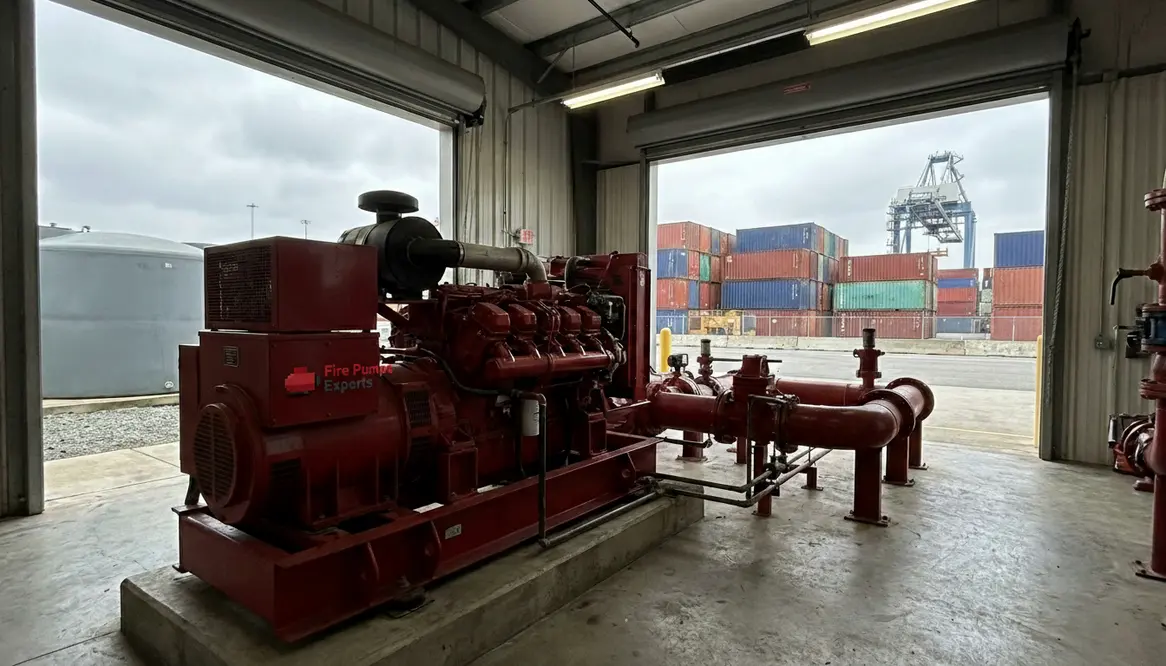
Industrial Fire Protection Water Systems Port of LA
Emergency Water Systems Supporting Industrial Facilities Near the Port of Los Angeles
I have spent a good amount of time studying how major industrial properties protect themselves from fire, and let me tell you something. When you stand near the docks of Los Angeles and watch container cranes swing like slow moving giants, you quickly realize the stakes are high. Massive warehouses. Fuel storage. Manufacturing plants. Logistics hubs that never sleep. Consequently, fire protection here cannot rely on luck or a garden hose.
That is where port of los angeles industrial fire protection water systems come into the conversation. These systems quietly sit behind the scenes, ready to move enormous volumes of water the moment something goes wrong. In many cases, emergency water infrastructure determines whether an incident becomes a brief interruption or the kind of headline that makes insurance executives spill their coffee.
Today I want to walk through how emergency water systems support industrial facilities around the port, why they matter, and how properly designed infrastructure protects both operations and people. And yes, we will keep it interesting. Fire pumps and storage tanks may sound dull, but trust me, they can be just as dramatic as an action movie. Only with fewer explosions and a lot more engineering.
Why Industrial Properties Near the Port Require Powerful Emergency Water Infrastructure
Industrial buildings near the Port of Los Angeles face a unique mix of risks. First, the sheer scale of operations demands high capacity water delivery. A single distribution center can exceed a million square feet. Meanwhile, container yards, fuel depots, and processing plants sit within close proximity.
Because of this density, fire protection systems must deliver water quickly and consistently. If pressure drops or supply runs short, suppression systems struggle to control a growing fire. Consequently, the entire safety strategy can collapse.
I often explain it this way. Fire suppression is like a heavyweight boxing match. The sprinkler system throws the punches, but the water supply is the stamina behind every round. Without it, even the strongest equipment tires out fast.
Additionally, port area facilities face operational realities that smaller buildings never encounter.
- Large commodity storage loads
- High rack warehouse configurations
- Hazardous materials handling
- Heavy electrical infrastructure
- Continuous shipping and logistics activity
Therefore, emergency water systems must account for extreme demand scenarios. Engineers design storage, pumping, and distribution networks that support long duration firefighting events while maintaining stable pressure across massive facilities.
How port of los angeles industrial fire protection water systems Keep Massive Facilities Operational
When I review the design behind modern port protection infrastructure, one thing becomes clear. Reliability rules everything.
Industrial operators cannot afford a water supply that only works on a good day. Consequently, systems often include multiple layers of redundancy that keep protection active even if one component fails.
These systems typically include several integrated parts.
- Dedicated fire pump assemblies capable of moving thousands of gallons per minute
- On site water storage tanks sized for extended suppression demand
- Looped underground piping networks to maintain pressure across wide properties
- Backup power or diesel driven pumps to operate during grid failure
Furthermore, engineers must coordinate these components with municipal water infrastructure. Port districts often experience fluctuating demand from ships, terminals, and industrial users. As a result, relying solely on city pressure would be like expecting freeway traffic to move smoothly at rush hour. In Los Angeles. Good luck with that.
Instead, facilities deploy independent water reserves and high capacity pumping systems. When an alarm triggers, water moves instantly through sprinkler networks, hydrant lines, and specialized suppression systems.
And the beauty of it all is that most people working inside the building never notice the system until the moment it matters.
Emergency Water Design for Large Port Facilities
When I evaluate protection strategies for industrial properties near the harbor, I like to look at two sides of the same coin. One side focuses on operational reliability. The other focuses on fire suppression performance. Both must work together.
Operational Reliability
- Independent fire pump rooms with controlled environments
- Regular flow testing and monitoring
- Remote alarm and pressure tracking
- Redundant pump configurations
Suppression Performance
- High capacity underground mains feeding hydrants and sprinklers
- Storage tanks sized for industrial hazard classifications
- Pressure stabilization across large site footprints
- Compatibility with foam or specialty suppression systems
When both sides align, the result is a water supply network that reacts instantly. In fact, the system behaves almost like a reflex. The moment heat activates a sprinkler head, the pumps respond, pressure stabilizes, and water moves exactly where it needs to go.
I like to imagine the system as a calm professional in a crisis. Think less action hero screaming into a radio and more quiet voice in the background saying, “Everything is under control.”
Can Industrial Facilities Near the Port Rely on City Water Alone?
Short answer. Usually not.
Municipal water systems provide valuable baseline pressure, but they rarely support the peak demands required for large scale industrial fire protection. A high challenge warehouse fire can demand several thousand gallons per minute for extended periods.
Consequently, facilities install private fire pump systems and dedicated storage infrastructure.
Moreover, industrial properties near shipping terminals face another complication. Earthquake resilience.
Southern California engineers plan for seismic events that could disrupt underground water lines. Therefore, many facilities design systems capable of maintaining fire protection even if the municipal grid temporarily loses pressure.
That is where modern port of los angeles industrial fire protection water systems prove their value. By combining independent water reserves with powerful pumps, facilities maintain protection during emergencies that extend beyond a simple building fire.
In other words, these systems prepare for the worst day imaginable while hoping it never arrives.
The Engineering Behind port of los angeles industrial fire protection water systems
Now we arrive at the heart of the operation. Designing water infrastructure for large industrial properties requires deep planning and detailed hydraulic modeling.
Engineers must calculate multiple factors before installing equipment.
- Maximum fire flow demand based on commodity classification
- Required duration of water supply
- Elevation changes across the property
- Pipe friction loss across long underground networks
- Simultaneous system activation scenarios
Because port area facilities often cover vast acreage, underground distribution loops play a major role. These looped systems maintain pressure balance across the entire site. If one section becomes isolated for maintenance or damage, water simply flows around the other direction.
Meanwhile, fire pump systems act as the beating heart of the network. Diesel and electric pumps activate automatically when pressure drops. Within seconds they deliver massive flow rates that feed hydrants, sprinkler risers, and specialty suppression equipment.
And yes, when you stand in a pump room during testing, it sounds like a mechanical dragon waking up from a nap. Loud. Powerful. Slightly intimidating. Exactly what you want protecting a multi million square foot facility.
If you are responsible for a facility near the harbor, partnering with specialists who live and breathe fire pump performance can make the difference between guessing and knowing your protection will work. Teams like the crew at Kord Fire’s dedicated fire pump service group understand how to keep these systems compliant, tested, and ready.
Maintaining Emergency Water Systems for Port Area Industrial Operations
Installing a system is only the beginning. Long term reliability requires disciplined inspection, testing, and maintenance programs.
Large commercial and industrial properties typically conduct scheduled pump flow tests, valve inspections, and system monitoring throughout the year. These procedures confirm that water supply, pressure levels, and pump activation all perform as expected.
Additionally, facility managers coordinate with specialized fire protection professionals who understand the scale of port infrastructure. Unlike smaller buildings, industrial campuses demand technical knowledge that spans hydraulics, electrical systems, and emergency planning.
When these practices stay consistent, protection systems remain ready every hour of every day. And that quiet readiness is exactly what industrial operators depend on.
FAQ About Emergency Water Systems for Port Area Facilities
To put some structure around all of this, here are common questions people ask when they start looking seriously at port of los angeles industrial fire protection water systems and how they support heavy industrial operations.
Conclusion
Industrial facilities near the Port of Los Angeles operate at a scale that demands serious protection. When emergency water systems function properly, they safeguard infrastructure, protect workers, and keep supply chains moving.
If your commercial or industrial property depends on reliable fire protection, the right engineering and pump systems make all the difference. Purpose built designs, thorough testing, and resilient storage all come together in modern port of los angeles industrial fire protection water systems to deliver that reliability when alarms sound.
Connect with professionals who specialize in high capacity fire protection water infrastructure and ensure your facility stays prepared for whatever challenges the harbor sends your way. The cranes will keep moving, the ships will keep docking, and your emergency water systems will be standing quietly in the background, ready to go the full twelve rounds if they are ever called into the fight.