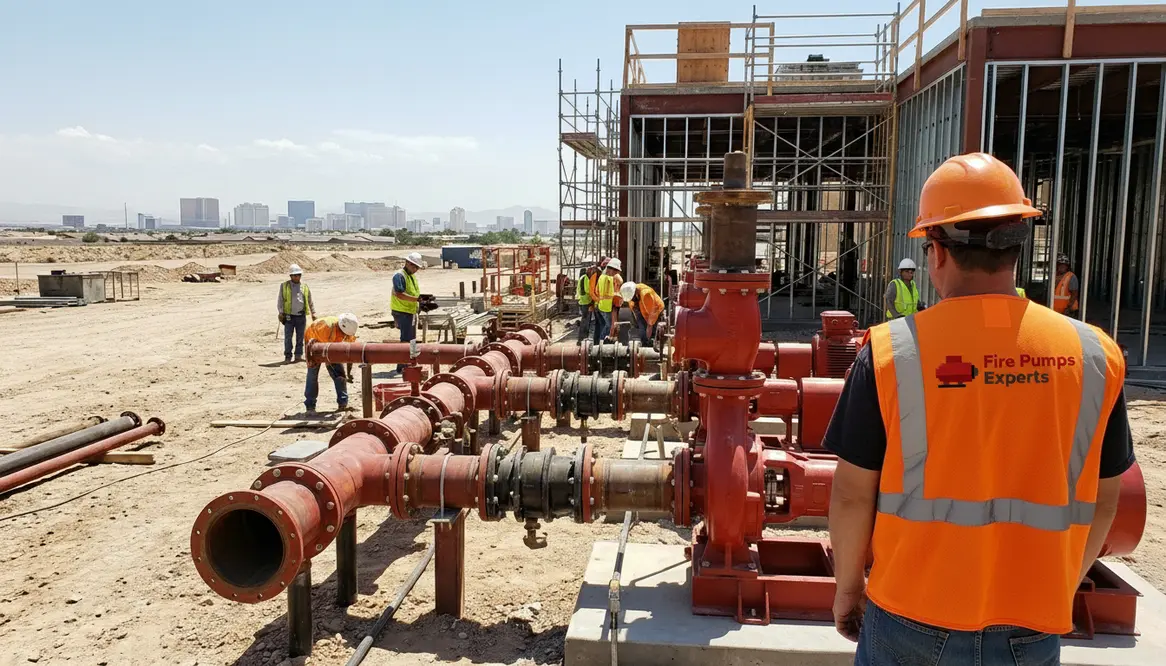
Industrial Fire Pump Solutions for Las Vegas Builds
I have spent enough time around Las Vegas construction sites to know one thing for certain. The desert does not wait, inspectors do not wait, and fire protection systems absolutely should not wait. That is why I always bring up industrial fire pump solutions early in any project conversation. Not as an afterthought, but as a cornerstone. Because when fire pumps are delayed, everything else begins to wobble like a bad poker hand on the Strip.
So let me walk you through how I avoid those delays. And yes, I will keep it practical, grounded, and just entertaining enough to stay with me.
Las Vegas Builds Move Fast. Your Fire Pumps Have to Move Faster.
Las Vegas construction rarely crawls. It sprints. Tower cranes rise where yesterday there was just compacted dust. Schedules are tight, budgets are tighter, and there is always pressure to open doors, flip the lights on, and welcome the first wave of guests, patients, tenants, or product trucks.
In that race, industrial fire pump solutions sit right at the crossroads of life safety, code compliance, and final inspections. When they are treated like an afterthought, the schedule starts to bend. When they are treated like a core system, the schedule holds.
Why Fire Pump Delays Derail Las Vegas Construction Timelines
Las Vegas builds fast. However, speed without coordination is just chaos in a hard hat. Fire pumps sit at the intersection of life safety, code compliance, and final inspections. When they lag, the entire project stalls.
First, approvals take longer than most teams expect. Clark County and local fire authorities do not rush reviews, and honestly, I would not want them to. Second, supply chain hiccups still show up like an uninvited guest. Even now, specialized components can stretch timelines.
As a result, one delayed pump can hold up testing, occupancy permits, and even insurance approvals. It is like planning a grand casino opening but forgetting the electricity. Technically impressive, but not very useful.
The Approval Reality Check
Fire pump plans touch multiple codes and authorities. That means more eyes, more signatures, and more chances for someone to ask for a revision. If those submittals land late, everything downstream shifts with them.
The Supply Chain Wild Card
Specialized drivers, controllers, or diesel units are not exactly sitting on a shelf in bulk. When your order lands late in the game and lead times stretch, your project suddenly trades momentum for waiting.
That is why I weave industrial fire pump solutions into the conversation early instead of hoping they will simply slot into place at the end.
How I Align Industrial Fire Pump Solutions with Project Milestones
I treat fire pump planning as an early phase activity, not a finishing touch. Right from schematic design, I coordinate with engineers, contractors, and compliance teams.
Then, I map procurement timelines alongside structural and mechanical schedules. This way, the pump system arrives when the site is actually ready for it. Not sitting in a warehouse. Not stuck in transit.
Additionally, I work closely with suppliers who understand commercial and industrial scale demands. Large facilities, high rises, and major properties require precision. A generic approach simply does not hold up under inspection.
Because of that, aligning industrial fire pump systems with construction phases ensures fewer surprises. And in this city, surprises belong in magic shows, not job sites.
Milestone-Based Fire Pump Planning
- Concept & Schematic: Confirm whether a pump is required, outline capacity, and identify code drivers.
- Design Development: Lock in preliminary equipment selections and start talking real lead times.
- Construction Documents: Tighten specifications, coordinate room layouts, and prep submittals.
- Procurement: Release orders as soon as drawings are permit-ready to defend your schedule.
- Construction & Commissioning: Sync installations, testing, and authority inspections with the overall completion plan.
What Causes Fire Pump Delays in Las Vegas Projects?
I see a pattern repeat itself across projects. While each job has its quirks, the root causes tend to cluster.
Common delay triggers include:
- Late submittals that push back approvals
- Incorrect specifications that require redesign
- Coordination gaps between trades
- Underestimating lead times for custom equipment
- Last minute code compliance changes
However, the biggest culprit is hesitation. Waiting too long to lock in decisions creates a ripple effect. And in construction, ripples turn into waves very quickly.
Hesitation vs. Momentum
On paper, it looks harmless: “We will decide on the pump package next month.” In reality, that delay can collide with permit reviews, shop drawing backlogs, factory queues, and inspection windows. By the time the team feels the impact, the project is already negotiating extensions.
Proactive Planning That Keeps Fire Pump Installations Moving
I rely on structured planning to keep momentum steady. Not flashy. Not complicated. Just disciplined execution.
First, I prioritize early engagement with fire protection engineers. Then, I ensure submittals are accurate the first time. Because resubmissions cost more than time. They cost confidence.
Meanwhile, I maintain clear communication between general contractors and fire system specialists. Everyone stays aligned, and no one is guessing.
To break it down visually, here is how I approach it:
|
Before Construction
|
During Construction
|
This dual track approach keeps everything moving forward instead of reacting to problems after they appear.
Where Industrial Fire Pump Solutions Pay Off
- Shorter approval cycles: Clean, code-aligned submittals do not bounce back and forth.
- Predictable commissioning: Equipment arrives when the site is ready, not months before or weeks after.
- Less rework: Proper coordination avoids ugly clashes in cramped fire pump rooms.
Choosing the Right Industrial Fire Pump Solutions Partner
Not all providers are built for large scale commercial work. And in Las Vegas, scale matters.
I look for partners who understand complex properties. Resorts, hospitals, distribution centers. These are not small buildings with simple needs. They require tailored industrial fire suppression pump systems that meet strict codes and performance demands.
Equally important, I choose teams that communicate clearly. If I have to chase updates, that is already a problem. A strong partner keeps me informed before I even ask.
And yes, experience matters. I prefer working with professionals who have already navigated Clark County approvals multiple times. Because learning on the job is great. Just not on my timeline.
For example, if I am refining a design that leans heavily on NFPA 20 compliance and long term reliability, I will often reference resources like the NFPA 20 overview from Kord Fire Protection to ground decisions in proven standards.
Questions I Ask Before Partnering
- Have you handled projects at this height, footprint, and occupancy type?
- How do you stay ahead of changing code interpretations in this jurisdiction?
- What does your typical timeline look like from submittal to commissioning?
- How do you support troubleshooting during inspections and performance testing?
Inspections, Testing, and the Final Stretch Without Delays
The final phase is where many projects stumble. Ironically, it is also where things should feel the most controlled.
I prepare for inspections well in advance. That includes verifying installation quality, ensuring documentation is complete, and scheduling tests early.
Furthermore, I coordinate directly with inspectors when possible. Clear communication reduces back and forth. And fewer surprises mean faster approvals.
Think of it like a dress rehearsal before opening night. You do not want to discover problems when the audience is already seated.
Inspection-Ready Checkpoints
- All as-builts and data sheets organized and current
- Fire pump room clean, accessible, and clearly labeled
- Test headers, valves, and controllers verified ahead of time
- Key stakeholders present or on call for testing and sign-offs
FAQ: Fire Pump Planning for Las Vegas Construction
These are the questions that come up most often when I am laying out industrial fire pump solutions for new Las Vegas builds.
Keep Your Project Moving Without the Headaches
Delays do not have to be part of the story. When I plan early, coordinate often, and rely on proven expertise, projects move the way they should. If you are working on a large commercial or industrial property in Las Vegas, now is the time to get serious about your fire protection strategy.
Build your plan around industrial fire pump solutions that match your building’s scale, risk profile, and code environment. Connect with a team that understands timelines, compliance, and performance, and make those conversations part of the first chapter of your project, not the epilogue.
Because in this city, finishing strong is not optional. It is everything.