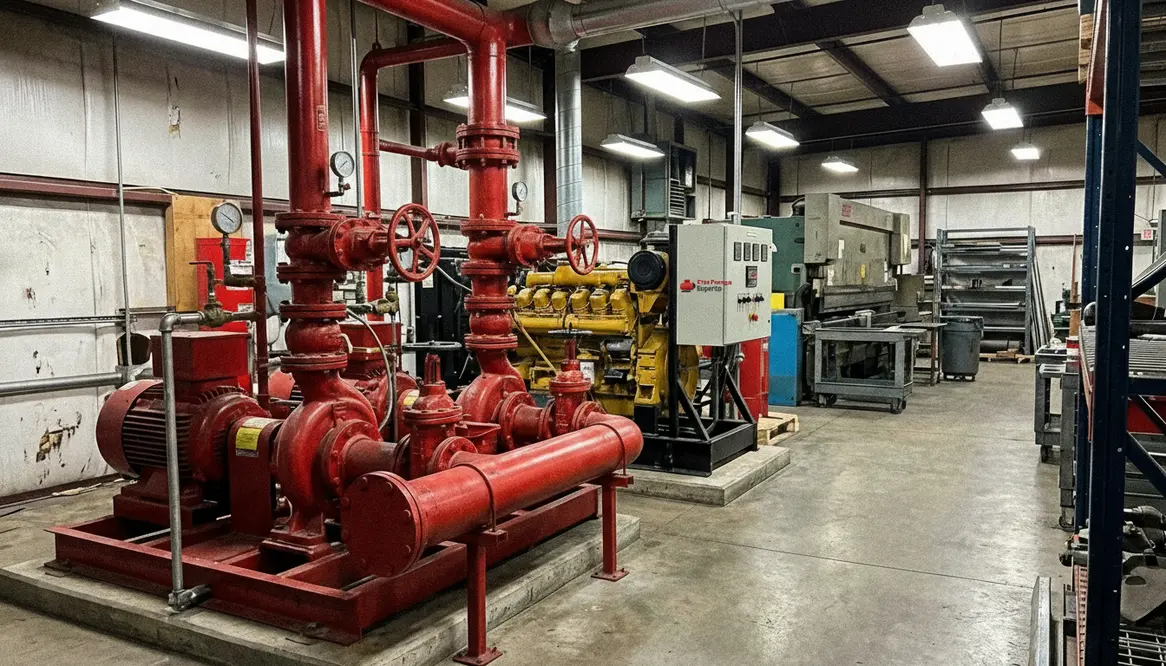
Industrial Fire Pump Solutions for Manufacturing Safety
On a manufacturing floor, nothing waits its turn. When something goes wrong, it usually arrives uninvited and at full speed. Fire is the worst of that crowd. That is why I always bring the conversation back to industrial fire pump solutions early and often. In large scale facilities, where heat, friction, and heavy machinery live side by side, the margin for error is thin. A well designed fire pump system is not just equipment. It is your silent night shift, always alert, never asking for a coffee break.
Your first line of real-world defense
In manufacturing and industrial environments, fire risk is not theoretical. It is baked into daily operations. Whether it is chemical processing, metal fabrication, or large scale warehousing, ignition sources exist everywhere. That is why I look at industrial fire pump solutions as the backbone of suppression systems, not an optional upgrade.
Pressure, reach, and reality
Unlike smaller commercial setups, these facilities demand consistent pressure across vast areas. A sprinkler head is only as good as the water behind it. Without the right pump, that water might as well be politely asking the fire to leave instead of forcing it out.
Why industrial fire pump solutions matter in high risk facilities
In the real world, regulations are not suggestions. Codes require reliable, tested systems that perform under stress. So when I evaluate a facility, I focus on performance under worst case scenarios, not best case assumptions. Because fires, much like plot twists in a good thriller, rarely follow the script.
In high risk facilities, industrial fire pump solutions give you three things you cannot fake: adequate flow, dependable pressure, and predictable performance when everything else feels unpredictable. When those three line up, sprinklers, hydrants, and hose stations suddenly look a lot more capable.
How do I choose the right fire pump system for a manufacturing plant?
Start with the water, not the wishlist
I start with the basics, then I dig deeper. First, I look at water supply. Is it municipal, stored, or a combination? Then I assess flow and pressure requirements based on hazard classification. That tells me how serious the fire could be and how aggressively the system must respond.
Choosing pump types with purpose
Electric fire pumps offer reliability and lower emissions, ideal where power is stable and you want consistent performance without dealing with fuel logistics.
Diesel fire pumps provide independence from the grid, which is crucial when outages are likely or when utility reliability is not something you are willing to bet your facility on.
Vertical turbine pumps step in when water sources sit below ground, such as tanks or wells, and you still need strong, dependable pressure up at system level.
However, choosing is not just about equipment. I factor in redundancy, maintenance access, and future expansion. Because if your facility grows and your system cannot keep up, that is a sequel nobody wants.
What I prioritize
- Reliable pressure delivery
- Code compliance across all demand zones
- Ease of maintenance and testing access
- System longevity and upgrade potential
What I avoid
- Undersized pumps that flatter the budget and fail the fire
- Overly complex layouts that confuse operators and inspectors
- Poor access for testing and service
- Single points of failure disguised as “simple design”
If you want a real world example of what this looks like in practice, take a look at how specialist teams approach fire pump systems and inspections. The same mindset should shape every serious discussion about industrial fire pump solutions in manufacturing.
Designing industrial fire pump solutions for large scale operations
Where design quietly makes or breaks performance
Design is where things either shine or quietly fall apart later. I approach system design with a clear mindset: simplicity where possible, strength where necessary. Industrial fire pump solutions only work if the layout behind them lets water move fast and intelligently, not just legally.
First, I map out demand zones. Different areas often require different levels of protection. Storage zones and production lines rarely share identical risks, and high piled storage plays by different rules than light assembly. Zoning ensures efficient water distribution and makes sure the pump does not “think” every part of the facility needs the same level of support at the same time.
Controls, monitoring, and actual visibility
Then I integrate controls and monitoring. Modern systems allow real time performance tracking: pressure trends, start signals, run time, and alarms. Having that visibility feels a bit like sitting in a control room from a sci fi movie, minus the dramatic lighting and background soundtrack. It also means issues get spotted long before they turn into failures.
Additionally, I account for environmental conditions. Temperature extremes, dust, and vibration can all impact system performance. So I select components that can handle the realities of the space, not just look good on paper or in a proposal. That means enclosures, vibration isolation, and routing that respect both the equipment and the people who have to live with it.
Installation and maintenance that actually hold up over time
Commissioning: where “good enough” is not enough
Even the best system design can fail if installation is rushed. I have seen it happen. Pipes slightly off, connections not fully secure, testing skipped because someone was in a hurry. That is how small issues grow into big problems that only reveal themselves when alarms are blaring.
So I insist on proper commissioning. Every valve, every sensor, every pump gets tested under realistic conditions. Not just a checkbox exercise, but a genuine performance validation that says, “Yes, this will deliver water where and when it matters.”
Maintenance: the quiet hero of every fire pump room
After installation, maintenance becomes the real hero of the story. Regular inspections, flow tests, and performance checks keep the system ready. A fire pump is like a parachute. You really want it to work the first time you need it, and you probably will not get a second chance.
Furthermore, I encourage facilities to document everything. Service logs, test results, and system updates create a clear history. That way, when something changes, you are not guessing. You are informed, and you can adjust your industrial fire pump solutions before they ever get tested by an actual fire.
Common mistakes I see in industrial fire protection systems
What goes wrong long before the alarm does
Some mistakes show up more often than I would like. And while I wish I could say they are rare, that would be like saying nobody skips leg day.
One major issue is underestimating demand. Facilities expand, processes evolve, yet the fire system stays the same. That mismatch creates vulnerability and quietly turns yesterday’s adequate design into today’s weak link.
Another is neglecting backup power. Relying solely on electric pumps without contingency can be risky. Power outages do not send warnings, and they certainly do not coordinate with potential fire events to avoid overlapping.
Finally, poor layout planning can limit system effectiveness. Long pipe runs with pressure loss, or poorly placed pumps, reduce performance when it matters most. The system still exists on paper, but in practice it underdelivers.
The good news is that all of these issues are preventable. With the right planning and ongoing evaluation, systems can adapt alongside the facility. That is the promise of well planned industrial fire pump solutions: they grow in intelligence as your risk profile evolves.
FAQ: Industrial Fire Pump Systems
These are the questions I hear most often when we start talking about industrial fire pump solutions and how they fit into a broader protection strategy.
Let’s make your facility safer starting now
I believe every industrial space deserves a system that works without hesitation. If you are planning, upgrading, or simply unsure about your current setup, now is the time to act. The right industrial fire pump solutions bring confidence, not complexity, and they quietly protect every shift, every process, and every person on site.
Reach out, take a closer look at your fire protection strategy, and make sure your facility is ready for anything. Because when it comes to fire safety, preparation is everything, and your fire pump room is where that preparation either becomes real or stays theoretical.