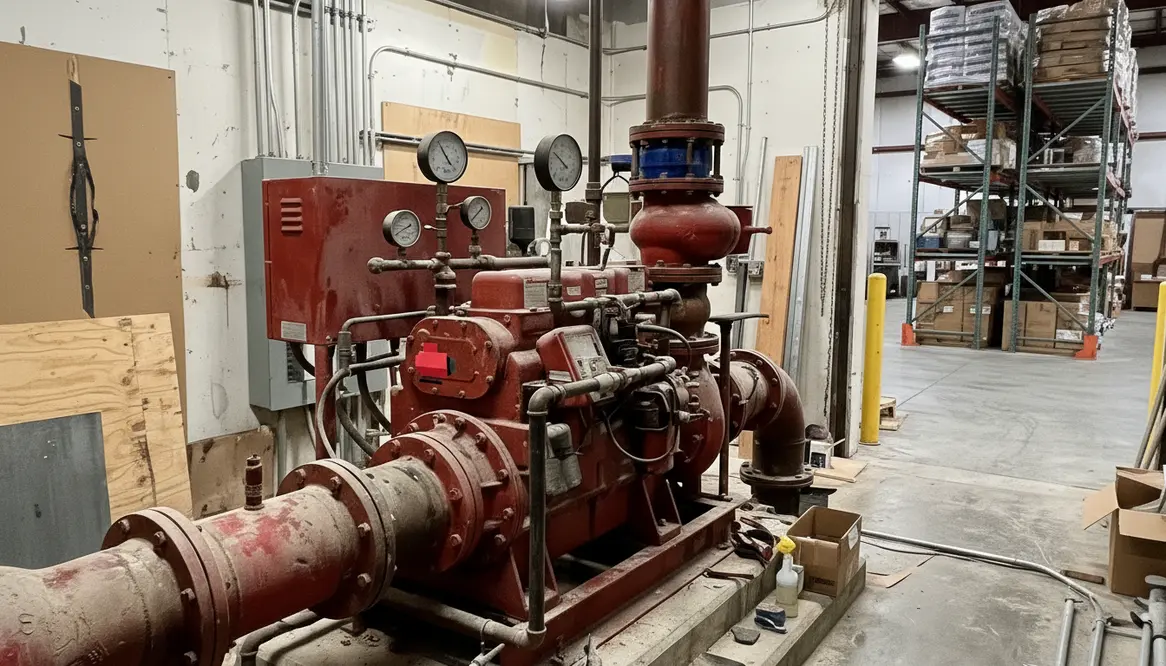
Industrial Tenant Improvement Fire Water Supply
How renovations reshape risk, water demand, and the quiet infrastructure that decides whether a fire becomes a story to tell or a story on the news.
I have spent many years walking through factories, distribution hubs, and massive commercial facilities where the hum of machines never quite stops. In those places, one topic quietly sits behind the scenes but carries enormous weight: the industrial tenant improvement fire protection water supply. It is not flashy. It does not make the highlight reel. Yet when a building undergoes renovation or tenant improvement, that water supply can make the difference between a controlled emergency and a headline on the evening news.
So when I step into a project meeting about industrial renovations, I treat the fire protection water supply like the steady drummer in a band. Nobody notices it when it works well. But when it falters, the whole performance collapses. Today I want to walk through what really matters when upgrading or modifying fire protection water systems in large commercial and industrial buildings. And yes, we will keep it practical. Because if there is one thing worse than a dry sprinkler line, it is a dry technical article.
In This Article
- Why renovations rewrite the fire water equation
- How to evaluate water supply capacity
- Design priorities for industrial tenant improvement fire protection water supply
- Common renovation pitfalls
- Best practices to keep systems reliable
If you are involved in industrial tenant improvements, your fire protection water supply is not a background detail. It is the foundation. Treating it as an afterthought is how otherwise smart projects stumble into expensive delays, failed inspections, or real-world emergencies that no one wants to experience.
Why Renovations Change the Fire Protection Water Supply Equation
Every industrial renovation starts with optimism. New tenant. New production lines. New revenue streams. However, the moment you change occupancy or layout, you also change the fire risk profile. That means the existing fire protection water supply may no longer meet the demand.
For example, a warehouse converted into light manufacturing will often require higher sprinkler density. Meanwhile, adding high piled storage pushes water demand even further. Suddenly the original water supply, which performed perfectly for years, finds itself outmatched.
Therefore I always begin with a simple rule: never assume the existing system can support the new hazard classification.
During tenant improvements in large commercial buildings, several factors shift at once:
Hazard classification increases
New equipment, combustible materials, or storage heights increase water demand.
System expansion
Additional sprinkler zones increase the required flow and pressure.
Code updates
Current fire codes may require higher performance than older systems were designed to deliver.
Consequently, renovations often trigger a deeper look at water supply capacity. It is a bit like upgrading your home internet plan after adding five teenagers with gaming consoles. Suddenly what worked before feels painfully slow.
How I Evaluate Water Supply Capacity in Large Facilities
Whenever I begin assessing a building during tenant improvements, I focus on one question first: can the water supply actually deliver the required fire flow?
To answer that, I look at several elements.
Core Supply Checks
Municipal supply reliability
City water systems vary widely. Some urban areas provide strong pressure. Others struggle during peak demand. I always review hydrant flow tests to understand the true available supply.
Existing fire pump performance
If the facility already uses a fire pump, its capacity must match the new hazard demands. Pumps installed decades ago may not meet today’s flow requirements, which is why services like dedicated fire pump system evaluation can be invaluable for industrial tenant improvement fire protection water supply assessments.
Distribution & Storage
Pipe network condition
Aging pipes create friction loss that reduces effective pressure. Corrosion, mineral buildup, and undersized mains quietly reduce performance over time.
Water storage systems
Large industrial properties often depend on storage tanks to maintain adequate fire flow during an emergency and support the overall industrial tenant improvement fire protection water supply strategy.
Furthermore, I compare these conditions against the calculated sprinkler demand. If supply falls short, the solution may involve upgrading pumps, adding tanks, or modifying the distribution system.
And trust me, discovering that shortfall during design is far better than discovering it during a fire inspection. That situation tends to raise eyebrows. And not the friendly kind.
Key Design Factors During Industrial Renovation Projects
Once I understand the available supply, the next step is aligning the fire protection infrastructure with the building’s new purpose. Industrial tenant improvements rarely involve small adjustments. They tend to reshape entire operational zones and put fresh pressure on the industrial tenant improvement fire protection water supply that once felt oversized.
Therefore I focus on several design priorities.
Storage & Processes
Storage height changes
Higher rack storage dramatically increases sprinkler water demand.
Process equipment hazards
Manufacturing operations may introduce flammable liquids or heat sources.
System zoning
Large facilities benefit from segmented sprinkler zones to manage flow demand.
Reliability & Growth
Fire pump redundancy
Critical facilities often require backup pumps to maintain reliability.
Future expansion planning
Designing capacity for growth avoids expensive upgrades later.
Hydraulic balance
Pipe sizes and layouts must maintain pressure across massive floor areas.
Additionally, coordination between engineers, contractors, and facility managers becomes crucial. Industrial facilities are complex environments. Production schedules rarely pause just because a pipe needs replacing.
Sometimes the planning meetings feel like assembling the Avengers. Mechanical engineers, fire protection specialists, operations managers, city inspectors. Everyone shows up with a different perspective. But when coordination works, the result is a safer building that still keeps production moving.
What Problems Appear Most Often During Tenant Improvements?
Ah yes. The surprises. Renovation projects always bring a few.
First, many older industrial buildings were designed with minimal water supply margins. The system met the code of its time but left little room for future expansion. As a result, new tenants often push those limits immediately.
Second, underground fire mains can present hidden issues. Decades of corrosion or undocumented modifications sometimes reduce capacity. You would be amazed how often original drawings differ from what actually sits beneath the concrete.
Third, fire pump rooms occasionally become storage closets over the years. I once opened a pump room door and found enough cardboard boxes to start a small recycling center. Needless to say, that conversation with the facility manager was… memorable.
Finally, coordination gaps during renovations can create hydraulic conflicts. A new sprinkler branch added without full hydraulic analysis might increase demand beyond system capacity.
Therefore, detailed evaluation and proper design coordination prevent expensive redesigns later.
Best Practices for Reliable Industrial Tenant Improvement Fire Protection Water Supply
When working with large commercial and industrial properties, I rely on several proven strategies to keep the fire protection water supply dependable.
Practical Steps You Cannot Skip
- Perform updated flow testing
Every major renovation should begin with fresh hydrant flow tests to verify municipal supply conditions. - Conduct full hydraulic modeling
Modern modeling software helps confirm that sprinkler systems can perform under real demand conditions. - Evaluate fire pump capacity
Upgrading or replacing pumps may be necessary when hazard classifications increase. - Consider water storage solutions
Large industrial sites often benefit from on site tanks to stabilize supply during emergencies. - Plan for operational continuity
Design construction phases that keep fire protection active while renovations occur so the industrial tenant improvement fire protection water supply is never compromised.
Moreover, collaboration with experienced fire protection specialists helps avoid costly missteps. Large commercial facilities carry higher risks and more complex infrastructure than smaller buildings.
And while the average employee may never think about the water supply feeding the sprinkler system above their head, that quiet network stands ready every second of every day. Kind of like a superhero who refuses to wear a cape.
FAQ: Fire Protection Water Supply in Industrial Renovations
Over the years, a few questions come up again and again on projects that touch the industrial tenant improvement fire protection water supply. Here are the straight answers.
Conclusion
Renovating an industrial facility brings opportunity, but it also demands careful planning behind the walls and beneath the floor. A properly designed fire protection water supply ensures that new operations remain safe, compliant, and resilient. When the dust settles, the measure of success is simple: if the worst day ever arrives, your systems either perform or they do not.
If your facility is planning a major renovation or tenant improvement, the team at FirePumps.org can help evaluate, design, and upgrade the systems that protect your building. Reach out today and let us make sure your water supply is ready when it matters most.