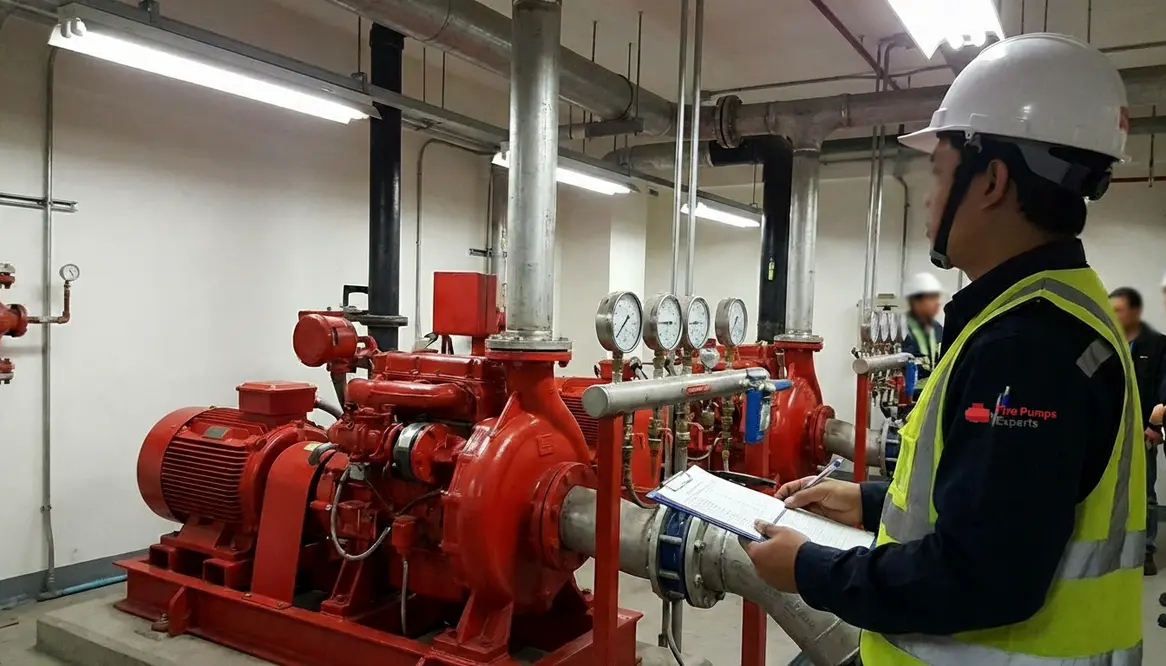
Las Vegas Commercial Fire Pump Acceptance Testing
I have stood in pump rooms that hum like a quiet engine of survival, where every valve and gauge carries weight. In cities with strict codes, like those shaped by Las Vegas commercial fire pump requirements, acceptance testing is not just a checkbox. It is a moment of truth. Within the first few seconds of a test, you can tell if a system will stand strong or fold under pressure. And in a place that never sleeps, that kind of certainty matters.
What makes fire pump acceptance testing different in code heavy cities?
When I step into a facility in a tightly regulated city, I know the rules are not suggestions. They are enforced with precision. Therefore, acceptance testing becomes more detailed, more observed, and frankly, less forgiving.
For example, I often see stricter documentation requirements. Inspectors expect full performance curves, calibrated gauges, and verified flow data. Additionally, many jurisdictions require third party witnessing. That means you are not just testing for yourself. You are proving compliance in real time.
And yes, sometimes it feels like the fire marshal is watching like a film critic at a premiere. No pressure, right?
Why stricter jurisdictions shape better practices
Cities guided by rigorous standards, including those driven by Las Vegas commercial fire pump requirements, tend to push teams toward tighter coordination and cleaner execution. Every test feels like a live performance with no option for reshoots.
That pressure, when managed well, builds habits that carry over into every other project: better pre-planning, sharper field execution, and documentation that can stand up under a magnifying glass.
How I prepare for acceptance testing in commercial facilities
Preparation is where most projects succeed or quietly fall apart. I always begin by reviewing the approved plans against installed conditions. If those do not match, the test will expose it immediately.
Next, I verify water supply conditions. This step matters more than most people think. A pump can only perform as well as the supply feeding it. Then, I confirm that all components are operational, including controllers, relief valves, and sensing lines.
In large commercial and industrial buildings, I also coordinate with multiple teams. Electrical, mechanical, and fire protection crews all play a role. Without alignment, the test becomes chaos. And chaos is not something you want when dealing with high pressure systems.
Las Vegas commercial fire pump requirements and what they demand
Now let me bring this back to Las Vegas commercial fire pump requirements, because they set a tone many cities are beginning to follow. These standards demand precise flow testing at multiple points, including churn, rated capacity, and peak load.
Moreover, documentation must be airtight. Inspectors expect clear records of flow rates, pressures, and system responses. If something looks off, even slightly, they will pause the process.
Additionally, redundancy and reliability are key themes. Systems must demonstrate they can handle real world stress, not just ideal conditions. It is less about passing and more about proving resilience. That mindset is at the heart of how Las Vegas commercial fire pump requirements shape project expectations long before test day.
In practice, that translates into deeper pre-testing reviews, more disciplined field checks, and tighter alignment between designers, installers, and inspectors so the final test feels like confirmation instead of a gamble.
Common mistakes I see during acceptance tests
Even seasoned teams make avoidable mistakes. And trust me, the system will not politely ignore them.
Frequent issues
- Improper gauge calibration
- Air trapped in sensing lines
- Incorrect pump rotation
- Incomplete system flushing
Impact on testing
- False readings
- Delayed pump response
- Reduced performance
- Clogged components
Because of these issues, I always double check the basics. It is not glamorous work, but it prevents very public failures. And nobody wants their system debut to look like a blooper reel.
Why documentation and witnessing matter more than ever
In today’s regulatory environment, if it is not documented, it did not happen. That is the mindset I work with.
Inspectors often require detailed test reports immediately after completion. These reports must include flow data, pressure readings, and system observations. Furthermore, video or digital records are becoming more common.
Witnessing adds another layer. Having an authority present ensures transparency. It also means there is no room for improvisation. Every step must follow the approved procedure.
Think of it like cooking for a panel of judges. You cannot just say it tastes good. You have to prove it, step by step.
How I adapt to different city requirements without losing efficiency
Every city has its quirks. Some focus heavily on documentation, while others emphasize performance metrics. I adapt by building a flexible testing framework.
First, I standardize core processes. That keeps the foundation consistent. Then, I layer in local requirements based on jurisdiction. This approach allows me to stay efficient without missing critical details.
Additionally, I stay in close communication with local authorities. A quick clarification early on can save hours later. And in large commercial projects, time is always under pressure.
Over time, I have learned that adaptability is not optional. It is essential. Especially when the rules change faster than your morning coffee cools. The more demanding the jurisdiction, the more valuable that adaptability becomes, particularly where Las Vegas commercial fire pump requirements and similar standards set the pace.
FAQ
What is fire pump acceptance testing?
It is a process that verifies a fire pump system performs according to design and code requirements.
Who needs to witness the test?
Typically, a fire marshal or authority having jurisdiction must observe and approve the test.
What happens if a system fails the test?
The system must be corrected and retested until it meets all required standards.
How long does acceptance testing take?
It usually takes a few hours, depending on system size and complexity.
Why are flow tests important?
They confirm the pump can deliver the required pressure and volume during a fire event.
Final thoughts and next steps
When I approach acceptance testing, I see more than a requirement. I see a responsibility. In cities shaped by strict codes, success depends on preparation, precision, and adaptability. If you manage a commercial or industrial property, now is the time to ensure your system is ready. Connect with experienced professionals who understand local demands and can guide your project from installation to approval with confidence.
If you want a deeper look at performance checks, inspections, and maintenance around pump testing, you can explore resources like the fire pump testing overview at fire pump testing requirements and best practices to see how rigorous programs keep systems reliable long after the initial acceptance test.