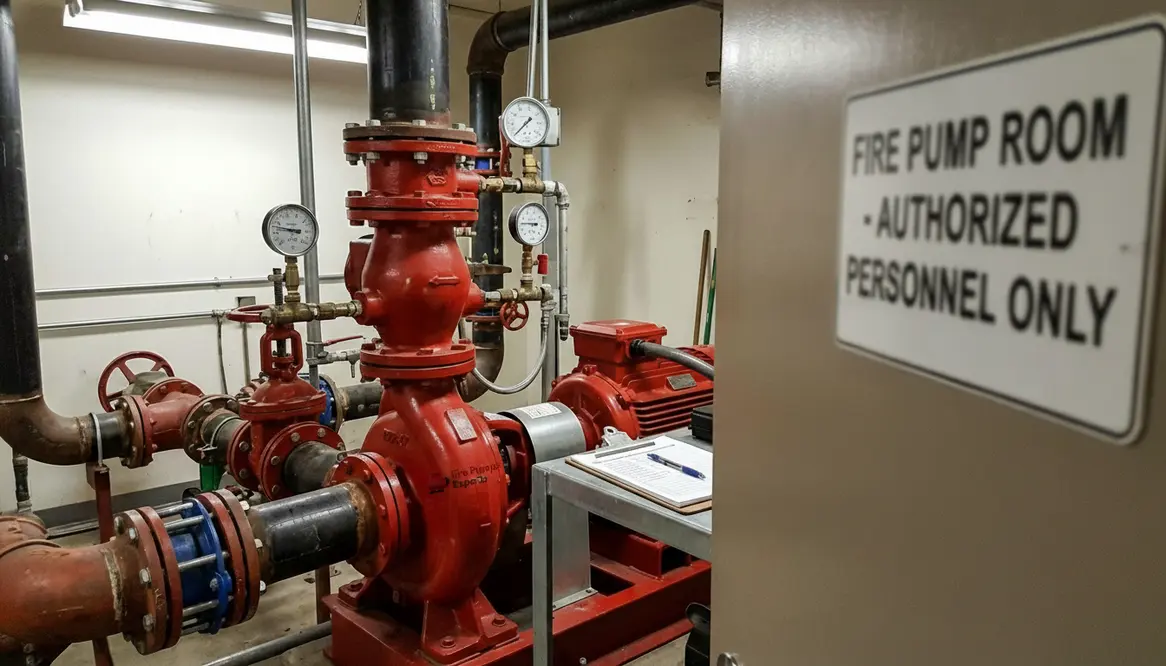
Leasing Clubhouse Fire Pump Requirements Guide
I have spent years around large properties, the kind that hum quietly until something goes wrong. And when it comes to safety, few things matter more than understanding leasing clubhouse fire pump requirements. These systems are not just mechanical equipment tucked behind locked doors. They are the heartbeat of a building’s fire protection strategy. And while they do not wear capes, they do save the day more often than most superheroes in the Marvel universe.
So today, I am going to walk you through fire protection for property management buildings in a way that actually sticks. No fluff. No jargon storms. Just clear, steady guidance you can use.
What do property managers need to know about fire protection systems?
I will give it to you straight. Fire protection is not a box you check once and forget. It is a living system that demands attention, testing, and respect.
First, every large property relies on a layered defense. Sprinkler systems, alarms, standpipes, and yes, fire pumps all work together. However, if one piece fails, the rest can struggle to keep up. That is why I always emphasize system integration rather than isolated compliance.
Additionally, codes evolve. Local jurisdictions update requirements, and insurance carriers tighten expectations. So if your building still runs on decade old assumptions, you are already behind.
And let me say this with a bit of humor. Fire does not care about your budget cycle. It shows up uninvited, like that one guest who eats everything at the party and still asks for dessert.
How I approach leasing clubhouse fire pump requirements in large properties
When I evaluate leasing clubhouse fire pump requirements, I look beyond the equipment itself. I focus on performance under pressure, literally.
First, I confirm the pump can meet demand during peak usage. Clubhouses often serve as central gathering spaces, and therefore, they carry higher occupancy risks. That means water supply must remain strong even when multiple systems activate.
Next, I review placement and accessibility. A fire pump tucked into a hard to reach corner is a liability. Technicians need quick access for testing and maintenance. In an emergency, seconds matter.
Then comes power reliability. Fire pumps depend on consistent energy, whether electric or diesel. Backup systems must engage instantly. Because when the lights go out, the fire should not get a head start.
Finally, I ensure regular testing is documented. Not guessed. Not assumed. Documented. If it is not written down, it did not happen.
Designing fire protection systems that actually work under stress
Good design is quiet. It does its job without drawing attention. However, poor design announces itself at the worst possible moment.
I always push for systems designed around real world scenarios. For example, simultaneous activation of sprinklers across multiple floors. Or water demand spikes during peak occupancy. These are not edge cases. They are predictable realities.
Moreover, I prioritize redundancy. Backup valves, secondary power, and pressure monitoring all play a role. Because relying on a single point of success is like trusting one Wi Fi bar during a critical video call. It will fail you at the worst time.
What I prioritize
- Reliable water supply under peak load
- Accessible equipment layout
- Clear system labeling
- Routine inspection schedules
What I avoid
- Overcomplicated designs
- Hidden or blocked equipment
- Infrequent testing cycles
- Outdated compliance assumptions
Maintenance strategies that keep systems ready at all times
Maintenance is where many properties fall short. Not because people do not care, but because it gets pushed aside.
I treat maintenance like a standing appointment. It does not get canceled. Weekly churn tests, monthly inspections, and annual performance evaluations all serve a purpose. Together, they confirm the system will respond when needed.
In addition, I recommend working with specialists who focus on commercial and industrial properties. These environments are complex. They demand expertise beyond basic service calls.
And here is a simple truth. A silent fire pump is either doing its job perfectly or not ready at all. The only way to know is to test it.
Compliance, risk, and why cutting corners never pays off
I have seen what happens when compliance becomes an afterthought. It starts small. A delayed inspection. A skipped test. Then suddenly, you are facing fines, insurance issues, or worse.
Therefore, I align every system with current codes and standards. This includes local regulations, national fire protection guidelines, and insurer requirements. Each layer adds protection, not just for the building, but for the people inside.
Also, documentation plays a huge role. Inspectors and auditors want proof. Clean records show responsibility and readiness. Messy records raise questions you do not want to answer.
Think of compliance like a seatbelt. You do not notice it when everything goes right. But when something goes wrong, it makes all the difference.
Why leasing clubhouse fire pump requirements shape overall safety
In many communities, the clubhouse is the most active building on the property. People host events, work remotely, exercise, and gather there daily. That constant activity is exactly why leasing clubhouse fire pump requirements deserve more attention than a line item on a design drawing.
When the fire pump backing that space is properly sized, tested, and documented, it quietly supports every event and every occupant. When it is ignored, it becomes a hidden vulnerability. Treating leasing clubhouse fire pump requirements as a strategic priority rather than a technical chore is one of the simplest ways to reduce risk without killing the aesthetic or functionality of the space people love most.
FAQ
Final thoughts and next steps
Fire protection is not just a requirement. It is a responsibility that shapes the safety of every person who walks through your property. I take leasing clubhouse fire pump requirements seriously because they anchor the entire system. If you manage a large building, now is the time to review, test, and strengthen your setup. Work with experts who understand complex facilities, and make sure your systems are ready before they are ever needed.
If you want to compare your current approach against established best practices, you can start with resources like https://firepumps.org and then tailor your strategy to your specific jurisdiction, insurer expectations, and property risk profile.