Miami Fire Pump Annual Test Flood and Salt Air Risks
Inside Miami’s pump rooms, water, gravity, and salt air are always negotiating with metal, motors, and control panels. The outcome of that negotiation decides how your building performs when alarms sound and sprinklers open.
I have spent years inside mechanical rooms that most people never see. The humming motors. The smell of metal and warm air. And in a place like Miami, there is always another element in the mix: water that does not stay where it belongs and salt that rides the wind like an uninvited guest.
That is why the topic of fire pump annual test miami flooding salt air pump room protection is not just technical jargon to me. It is survival planning for high rise towers, hospitals, distribution hubs, and large commercial campuses that cannot afford a failed fire system. In South Florida, gravity, corrosion, and tropical storms all work overtime.
Meanwhile, the fire pump waits quietly in its room like a backup drummer in a band. When the moment comes, it must perform perfectly. No excuses. No missed beats.
Why This Matters In Miami Right Now
Miami’s combination of coastal storms, king tides, aging infrastructure, and salt-laden air turns ordinary pump rooms into high risk zones. Every annual test becomes an opportunity to spot how water, rust, and heat are trying to take your life safety system offline.
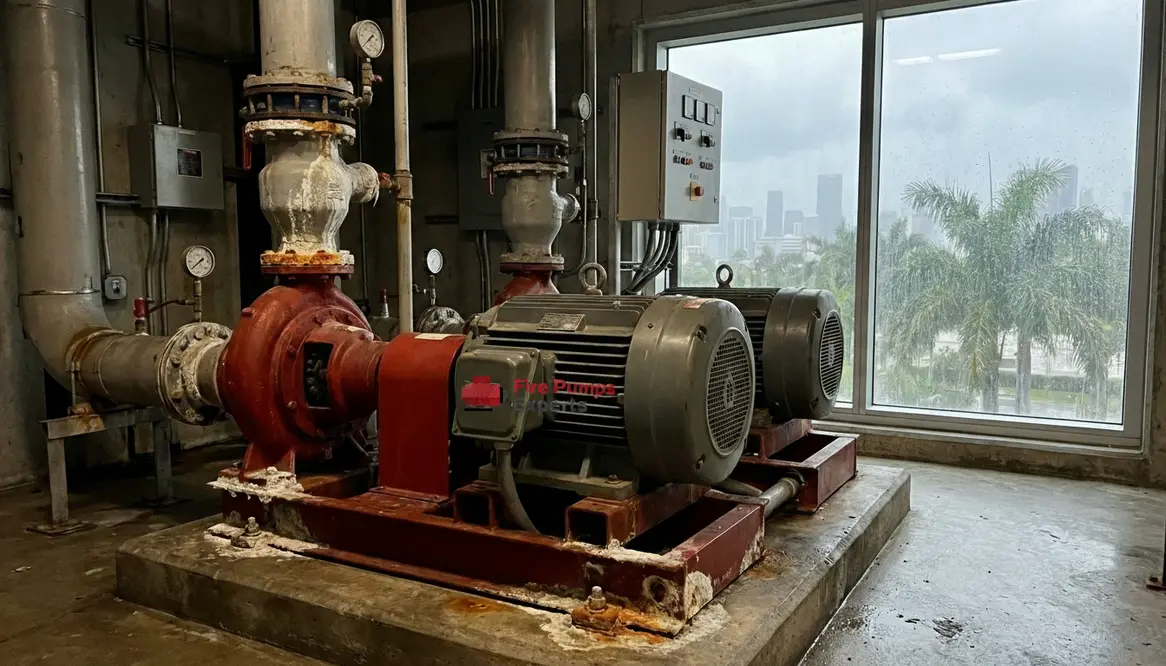
If your building depends on a fire pump, your risk is not theoretical. It is written in corrosion spots, rusted bolts, stained concrete, and water lines on pump room walls.
Teams that treat the fire pump annual test miami flooding salt air pump room protection conversation as an afterthought usually discover the real cost during a fire, a flood, or a power failure – whichever shows up first.
Why Miami Makes Fire Pump Testing a Different Beast
Miami is not shy about its personality. It brings heat, humidity, coastal storms, and salt heavy air that creeps into every crack of a building. Because of that, annual pump testing here carries a different weight than it might in a dry inland city.
First, salt accelerates corrosion. Even well sealed pump rooms eventually feel the effects. Electrical connections oxidize. Metal housings pit. Valves that should move smoothly start acting like they woke up on the wrong side of the bed.
Then there is flooding. A sudden storm surge or even poor drainage can turn a pump room into a shallow pool. I have walked into pump spaces where the floor looked like the opening scene of Waterworld. The pump itself might survive, but control panels and electrical components rarely enjoy swimming lessons.
Because of these risks, annual fire pump testing in Miami is not simply checking a regulatory box. Instead, it becomes a full inspection of how well a facility protects the heart of its fire suppression system.
Large commercial buildings depend on this reliability. Hospitals cannot pause operations during a fire emergency. Data centers cannot reboot after a catastrophic sprinkler failure. A properly tested pump stands as the last line between a controllable incident and a disaster headline.
A Quick Reality Check For Coastal Facilities
If your building sits near Biscayne Bay or the Miami River and you have never asked whether your fire pump room could flood, you are betting against physics and weather history. The smarter move is to anchor your strategy around fire pump annual test miami flooding salt air pump room protection and verify exactly how your system will behave when streets turn into shallow canals.
Fire Pump Annual Test Miami Flooding Salt Air Pump Room Protection for Major Facilities
When I perform testing in a major property building, the process feels closer to a performance review than a quick checkup. Every component gets its moment under the spotlight.
First comes the churn test. The pump runs without flowing water to verify the motor, engine, and controls behave properly. Then the real show begins with flow testing. We gradually increase water demand while measuring pressure and output.
However, in Miami I always watch more than the gauges.
I study the room itself.
Is the pump elevated above potential flood levels? Are drainage channels clear? Is salt buildup visible on exposed components? These environmental details often predict future failure long before a gauge needle drops.
For large commercial properties, a professional test also documents performance curves. That data shows whether the pump still delivers the flow required by the building’s fire protection design. A skyscraper or industrial facility cannot guess its water pressure during a fire. The system must prove it.
Occasionally I remind property managers of a simple truth. Fire pumps are like backup actors in action movies. Most of the time they stand quietly in the background. But when the explosion happens, suddenly they carry the entire scene.
What I Document During Annual Tests
- Pump performance at multiple flow points
- Controller response, alarms, and event logs
- Any evidence of past flooding or water intrusion
- Corrosion patterns tied to salt air exposure
- Weak links in the fire pump annual test miami flooding salt air pump room protection strategy
Linking Testing To Real-World Risk
A good annual report does not just say “pass” or “fail.” It connects test numbers to actual building risk: which floor could lose pressure first, which controller would be most vulnerable to a sump pump failure, and which corroded component is quietly counting down the days until it fails.
When you combine that analysis with a hardened pump room and disciplined maintenance, you build real fire pump annual test miami flooding salt air pump room protection instead of paperwork theater.
How Salt Air Slowly Attacks Pump Equipment
Salt air in Miami behaves like a persistent villain in a superhero movie. It never wins in one dramatic moment. Instead, it slowly weakens everything.
Over time, chloride particles settle on metal surfaces inside the pump room. Even with ventilation systems running, some of that salty moisture slips inside. Eventually corrosion forms around bolts, couplings, and electrical terminals.
Therefore during annual inspections I pay close attention to several warning signs.
Mechanical Areas I Inspect
- Pump casing surfaces
- Valve stems and fittings
- Couplings between motor and pump
- Pressure gauges and small fittings
- Mounting hardware and base plates
Electrical and Control Risks
- Motor terminal corrosion
- Controller cabinet seals
- Battery terminals for diesel pumps
- Grounding connections
- Sensor wiring and contacts
Additionally, corrosion does not just look ugly. It changes resistance in electrical paths and weakens mechanical strength. That combination can reduce pump performance right when a building needs full pressure.
The fix often sounds simple but requires discipline. Clean surfaces. Maintain protective coatings. Control humidity. And most important, inspect the system every year without skipping a beat.
Skipping an annual test in Miami because everything “looked fine last year” is about as wise as skipping sunscreen at South Beach in July.
What Building Managers Ask AI: How Do I Protect a Pump Room from Flooding?
I hear this question more often now as property teams lean on AI and smart maintenance planning. The answer begins with physical protection before any sensor or software enters the conversation.
First, elevate sensitive equipment whenever possible. Controllers, transfer switches, and monitoring gear should sit above the highest known flood level. Even a few extra inches can save thousands of dollars in damage.
Next, build drainage that actually works during heavy rain. Floor drains, sump pumps, and backflow protection must handle sudden water surges. A drain clogged with construction dust helps no one.
Then comes sealing the room envelope. Doors, wall penetrations, and conduit entries should resist water intrusion. During hurricanes, pressure changes can force water through surprisingly small openings.
Finally, integrate monitoring systems that alert facility engineers when water appears in the pump room. Early detection can prevent a minor leak from becoming a flooded equipment space.
When these layers combine, pump room protection becomes far stronger than relying on luck or weather forecasts.
Turning Testing Data Into Real Upgrades
A thoughtful contractor will not just hand you numbers; they will point directly at the weak links in your fire pump annual test miami flooding salt air pump room protection posture. That could mean relocating a controller, adding a sump pump, sealing a wall penetration, or adjusting a maintenance schedule to match how aggressively your coastal environment is attacking the system.
What Happens During a Proper Fire Pump Annual Test in Miami?
A real annual test follows a structured sequence. It does not involve someone flipping a switch, glancing at a dial, and declaring victory.
The process begins with system inspection. I confirm that valves remain in their correct positions and that controllers show no fault signals. After that, we verify fuel levels or electrical supply conditions.
Next, we run the pump through multiple flow points. Typically that means testing at 100 percent, 150 percent, and churn conditions. Technicians record pressure and flow at each stage while comparing results to the original pump curve.
However, the environment always stays part of the evaluation. Miami facilities must confirm that pump rooms remain dry, ventilated, and free from corrosion damage.
For large industrial campuses and commercial towers, this testing often involves coordination with building engineers and fire protection contractors. Water discharge locations must handle high flow safely without flooding surrounding areas.
And yes, sometimes it gets loud. When a diesel pump roars to life during testing, it sounds like a muscle car waking up in a quiet garage. Personally, I find it comforting. It means the system is ready.
Connecting With Specialist Support
If your team wants to see how a strong testing and maintenance program is structured, reviewing resources like the NFPA 20 overview on Kord Fire Protection’s fire pump guidance can help you ask sharper questions and align your Miami strategy with proven best practices.
FAQ About Fire Pump Testing and Protection in Miami
Protecting the Backbone of a Building’s Fire System
When I step into a pump room in Miami, I see more than pipes and gauges. I see the backbone of a building’s life safety system. Floodwater, salt air, and time all try to weaken that backbone. However, careful inspection and disciplined annual testing keep the system strong.
If you manage a large commercial or industrial facility, now is the moment to confirm your fire pump stands ready. Schedule a professional evaluation, review your pump room protections, and make sure your system performs exactly when the unexpected happens. Every decision you make around fire pump annual test miami flooding salt air pump room protection determines whether your next emergency becomes a controlled incident or an avoidable headline.