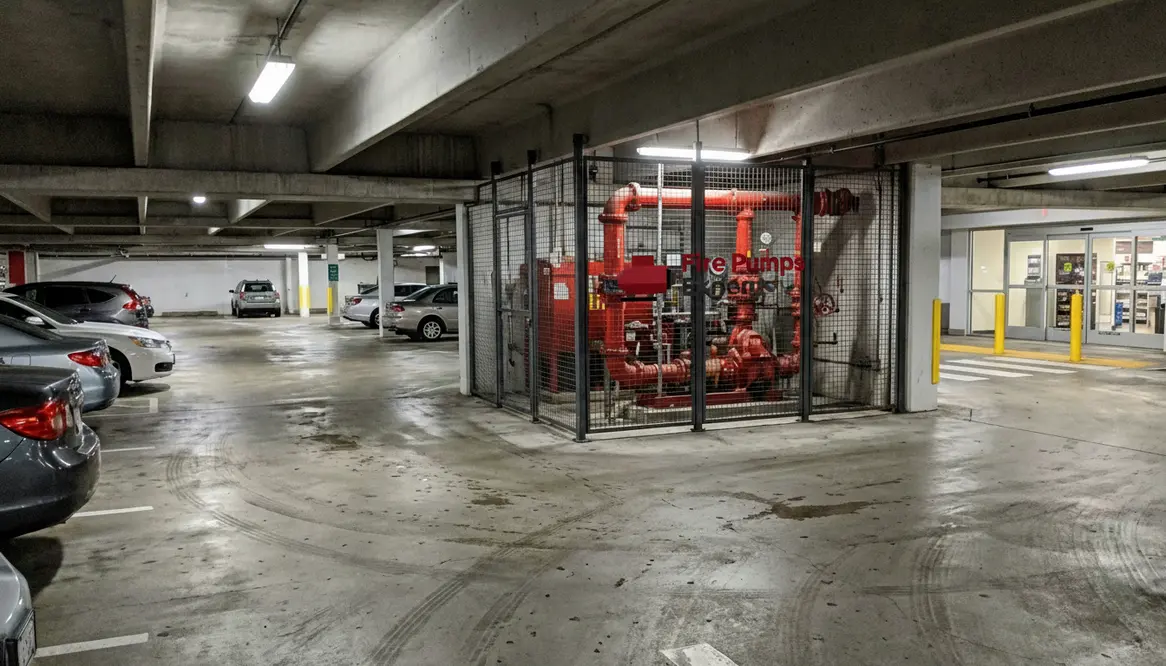
Mixed Use Parking Garage Fire Pump System Design
I have spent enough time around commercial properties to know one thing for sure. When people think about parking structures, they think about convenience, maybe a good spot near the elevator, and occasionally whether their car will survive a tight turn. What they rarely think about is fire protection. Yet, mixed use parking garage fire pump systems quietly carry a heavy responsibility. In shared use environments where retail, office, and residential traffic converge, fire pump planning is not just a box to check. It is the backbone of safety, continuity, and code compliance.
Why shared use parking changes everything
Shared use parking is a different animal. I am not talking about a simple standalone garage. I mean spaces that serve office workers by day, residents by night, and retail crowds in between. As a result, the fire risk profile shifts constantly.
Because of this, I always approach planning with flexibility in mind. A fire pump system in these environments must handle varying occupancy loads, fluctuating water demand, and layered fire protection zones. Moreover, coordination with multiple building systems becomes critical. Sprinklers, standpipes, and alarm systems all depend on consistent pressure.
And yes, if you are wondering, this is where things can get complicated fast. Think of it like directing traffic in Times Square, except instead of taxis, you are managing water flow under pressure.
How do I size a fire pump for a shared use garage?
I start with demand, always. The biggest mistake I see is undersizing based on a single use case. In shared environments, I calculate for the highest combined demand scenario. That means sprinklers operating across multiple zones plus standpipe requirements.
Then, I factor in vertical elevation. High rise mixed use buildings often stack parking below occupied spaces, which adds pressure requirements. After that, I look at redundancy. Because in commercial and industrial properties, downtime is not just inconvenient, it is expensive.
Finally, I verify water supply reliability. If the municipal supply fluctuates, the pump must compensate without hesitation. Fire does not wait for pressure to stabilize, and neither should your system.
Design priorities for mixed use parking garage fire pump systems
When I design these systems, I focus on three priorities that guide every decision.
First, accessibility
Fire departments need quick and clear access to connections. Therefore, I place equipment where it supports rapid response, not where it is simply convenient for construction.
Second, durability
Parking garages are harsh environments. Moisture, exhaust, and temperature swings can wear down equipment. I select components that can handle that abuse without constant maintenance.
Third, integration
The fire pump cannot operate in isolation. It must sync with alarms, backup power, and building management systems. When everything talks to each other, response time improves dramatically.
What I always include
- Redundant controllers for reliability
- Corrosion resistant piping materials
- Clear zoning for multi occupancy protection
- Backup power integration
What I avoid
- Single point failure designs
- Hard to access pump rooms
- Undersized pressure ratings
- Overcomplicated layouts that confuse operators
Coordinating with building stakeholders
I never design in a vacuum. Shared use properties involve multiple stakeholders, including property managers, engineers, and sometimes a developer who just wants everything done yesterday.
So, I bring everyone into the conversation early. This helps align expectations and prevents costly redesigns. For example, retail tenants may require different protection levels than office tenants. Meanwhile, parking operators care about minimizing downtime during installation.
Because of that, coordination meetings are not optional. They are essential. And while they may not be as thrilling as a blockbuster movie, they save everyone from a sequel no one wants, like unexpected system failures.
Common pitfalls I see too often
Planning for the future
Even experienced teams can miss key details. Over time, I have noticed a few recurring issues. First, ignoring future expansion. Shared use properties evolve. If the system cannot scale, it becomes a liability.
Maintenance and documentation
Second, poor maintenance planning. A fire pump system is not a set it and forget it deal. Without routine testing, performance degrades. Third, inadequate documentation. When systems are complex, clear documentation ensures that operators understand how everything works. Without it, troubleshooting becomes guesswork.
And let me be honest, guessing during a fire emergency is about as effective as bringing a water gun to a five alarm blaze.
Keeping systems compliant and ready
Compliance is not just about passing inspections. It is about ensuring the system performs when it matters most. I stay aligned with NFPA standards and local codes, but I also go a step further.
I build in testing protocols that make routine checks straightforward. In addition, I recommend monitoring systems that provide real time performance data. This allows facility teams to catch issues before they escalate.
Because in commercial and industrial facilities, reliability is not a luxury. It is a requirement. And when a fire pump system works exactly as intended, no one notices. That is the goal.
FAQ
Final thoughts and next steps
When I plan fire protection for shared use parking, I treat it like a long term investment, not a short term requirement. The right system protects people, property, and business continuity. If you are managing or developing a commercial or industrial property, now is the time to evaluate your approach. Reach out, ask the hard questions, and make sure your fire pump system is ready to perform when it counts.