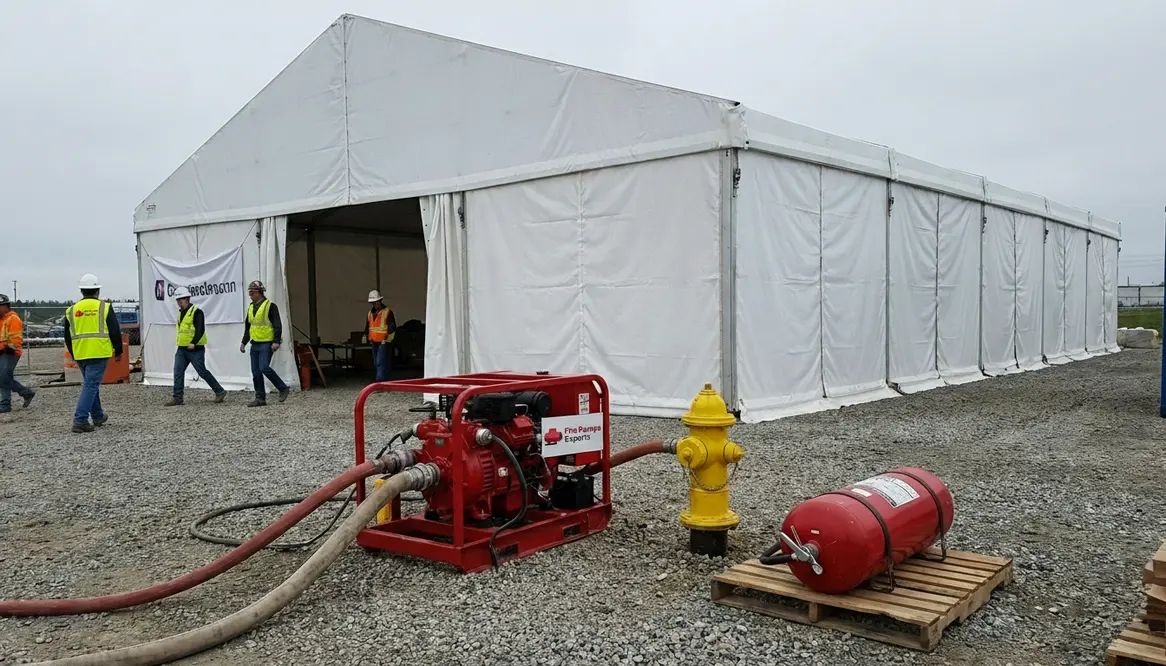
Model Home Center Fire Pump Requirements Guide
I have walked through enough temporary and semi permanent structures to know one thing for certain. Fire does not care if your building is permanent, rented, or set up just for the season. It behaves the same way every time. Fast, hungry, and very unforgiving. That is exactly why I take model home center fire pump requirements seriously, even in spaces that feel temporary. Because when you step back and look at it, temporary does not mean low risk. In many cases, it means the opposite.
And yes, I know what you are thinking. It is just a temporary setup, what could go wrong? Well, as every disaster movie has taught us, from Die Hard to Jurassic Park, things go wrong when people assume they will not.
Why Temporary Structures Need Serious Fire Protection
At first glance, a temporary structure looks harmless. However, I have seen how quickly risk builds up when materials, electrical systems, and high occupancy collide. These spaces often use lightweight materials that burn faster than traditional construction. So, while the structure may go up quickly, it can come down even faster.
Moreover, these buildings are often used for commercial purposes. Think large event centers, industrial staging areas, or model home complexes. That means more people, more equipment, and more pressure on safety systems. As a result, applying model home center fire pump requirements becomes less of a suggestion and more of a necessity.
And let me tell you, fire does not send a calendar invite before it shows up.
What Fire Safety Systems Should I Install in a Temporary Commercial Structure?
If you are asking this question, you are already ahead of the curve. I always recommend starting with the essentials and building from there.
Core systems I rely on:
- Fire pumps that meet commercial demand and maintain pressure across large layouts
- Automatic sprinkler systems designed for rapid activation
- Fire alarms and detection systems with clear notification pathways
- Emergency lighting that activates without hesitation
Additionally, I make sure these systems work together. A fire pump without proper distribution is like having a superhero who forgot their cape. It might still work, but why take the chance?
Furthermore, aligning with fire pump standards for model centers ensures consistent water flow even when demand spikes. This becomes critical in large scale commercial environments where multiple sprinkler heads may activate at once. When those standards tie directly into model home center fire pump requirements, you reduce the chance of hidden gaps in protection.
Designing for Compliance Without Overcomplicating It
I have seen people overthink compliance, and I have also seen people ignore it entirely. Neither approach ends well. The sweet spot sits right in the middle. I focus on meeting local codes while integrating reliable fire suppression systems that scale with the structure.
For example, temporary does not mean exempt. In many jurisdictions, commercial temporary structures must meet the same fire safety expectations as permanent ones. Therefore, I treat them with the same level of planning and discipline.
Key compliance priorities:
- Clear access for emergency responders
- Proper spacing for sprinkler coverage
- Reliable water supply supported by fire pumps
- Routine inspection schedules
Consequently, when I align these elements with established fire pump requirements for model facilities, I avoid last minute surprises. And trust me, surprises are great for birthdays, not for inspections. Practical guides like those from https://firepumps.org help translate codes into real-world model home center fire pump requirements that can actually be applied in the field.
Balancing Speed, Cost, and Safety in Fast Build Environments
Temporary structures move fast. That is part of their charm. However, speed often invites shortcuts, and shortcuts are where problems begin.
What I prioritize
- Pre planned fire system layouts
- Modular fire pump setups
- Quick connect water supply systems
- Scalable sprinkler designs
What I avoid
- Last minute system add ons
- Underpowered fire pumps
- Ignoring occupancy loads
- Delaying inspections
Meanwhile, I keep reminding teams that cutting corners on fire protection is like removing the brakes from a car because you are in a hurry. It may save time now, but it rarely ends well. The cost of meeting model home center fire pump requirements upfront will always be lower than the cost of explaining why they were ignored after an incident.
Maintaining Fire Readiness After Installation
Installation is only the beginning. I treat maintenance as the quiet hero of fire safety. Because even the best system can fail if ignored.
Therefore, I build a routine that includes regular testing, inspection, and documentation. Fire pumps get tested under load. Alarms get checked for response time. Sprinklers are inspected for blockages.
In addition, I make sure staff understand the basics. You do not need everyone to be a firefighter, but you do need them to know what to do when seconds matter.
And yes, I have seen people silence alarms because they were annoying. That is like unplugging your smoke detector because it ruins your cooking vibe. Funny in theory, disastrous in reality. Long term readiness is where model home center fire pump requirements stop being theoretical and become part of daily operations.
FAQ About Fire Safety in Temporary Commercial Structures
Final Thoughts and Next Steps
Fire safety is not about checking a box. It is about protecting people, assets, and operations in environments that can change quickly. When I apply the right systems, follow proven standards, and respect the role of fire pumps, I create spaces that are ready for the unexpected. If you are managing a commercial or industrial temporary structure, now is the time to act. Connect with experts, evaluate your setup, and make fire protection a priority before it becomes a problem. Treating model home center fire pump requirements as a baseline instead of an afterthought clears the way for safer operations, smoother approvals, and a lot less stress when the alarms do exactly what they are supposed to do.