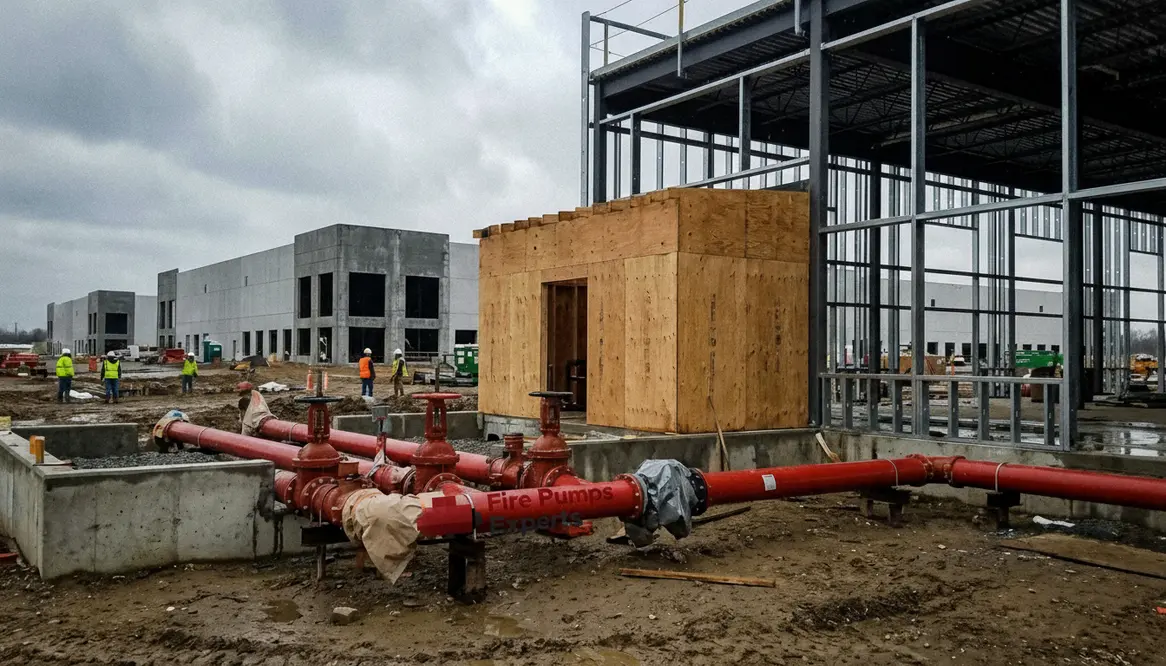
Multi Building Fire Pump Systems for New Construction
Designing fire protection for new commercial and industrial projects is equal parts engineering, foresight, and risk management. This is especially true when planning multi building fire pump systems that have to perform flawlessly the first time they’re needed.
Why Fire Pumps Matter So Much in New Construction
I have spent enough time around commercial and industrial construction sites to know one thing for certain: fire protection is never an afterthought, at least not if you want to sleep at night. When I talk about multi building fire pump systems, I am talking about the backbone of protection for campuses, distribution hubs, and large scale facilities where a single failure is simply not an option. And yet, the requirements for these systems shift depending on how and where you build. So let me walk you through it in a way that feels less like a code manual and more like a conversation you might actually enjoy.
How Fire Pump Requirements Change With New Construction
A clean slate with higher expectations
Right out of the gate, new construction gives me something older buildings rarely do: a clean slate. Because of that, I can design fire pump systems that align precisely with current codes, site conditions, and operational demands. However, that freedom comes with stricter expectations.
Codes, standards, and local twists
First, local and national codes drive everything. I follow NFPA standards, but I also account for municipal amendments. Then, I look at building size, hazard classification, and water supply. A high rise office tower demands something very different from a sprawling logistics center, even if both look impressive on paper.
Water supply: the yes/no decision point
Additionally, water supply dictates whether I need a dedicated pump at all. If city pressure falls short, and it often does, I integrate a system that boosts flow reliably. That is where planning early makes all the difference. Waiting until halfway through construction is like trying to install a jet engine after the plane has taken off. Technically interesting, but not recommended.
Why System Design Starts Before the First Shovel Hits the Ground
Early coordination beats late corrections
I always say the smartest fire pump is the one designed before concrete is poured. During early planning, I coordinate with architects, civil engineers, and utility providers. This ensures proper space allocation, power supply, and access routes.
Designing for the future, not just opening day
Moreover, I factor in future expansion. Commercial properties grow. Industrial campuses evolve. So I design systems that can scale without requiring a complete overhaul. Think of it like buying pants with a little extra room after the holidays. You may thank yourself later.
Redundancy for when “Plan A” fails
Equally important, I consider redundancy. For larger properties, especially those using multi building fire pump systems, I often include backup pumps or looped water supplies. Because when a system fails during an emergency, there is no pause button.
Key Components That Shape Performance in Modern Builds
Every fire pump system may look similar at a glance, but the details separate a dependable setup from a risky one. I focus on a few critical elements that determine whether the system performs under real pressure or simply looks good on a drawing set.
Water supply and pressure
I evaluate flow tests and ensure the system can meet peak demand. Then I size the pump accordingly, matching it to the most demanding combination of sprinklers, standpipes, and hose allowances the building may ever see.
Power reliability
Electric or diesel, the power source must remain operational during outages. I never assume the grid will behave. Generators, fuel storage, transfer switches, and starting methods all get scrutinized long before anyone signs off on the design.
System layout
I design piping to minimize friction loss and maintain consistent pressure across the property. That includes thoughtful routing, pipe sizing, and zoning so remote areas do not quietly become weak points.
Control systems
Modern controllers provide monitoring and alerts, which means fewer surprises and faster response times. Remote supervision, alarms, and trend data turn a quiet pump room into an actively managed asset instead of a forgotten mechanical space.
Because all these parts work together, overlooking even one can compromise the entire system. It is like assembling the Avengers and forgetting Iron Man. Technically still a team, but noticeably less effective.
Multi Building Fire Pump Systems in Large Scale Developments
From single boxes to sprawling campuses
When I deal with campuses or multi structure facilities, complexity rises quickly. Instead of protecting a single building, I am coordinating coverage across multiple zones, sometimes spanning acres. That is where thoughtfully planned multi building fire pump systems begin to earn their keep.
Centralized vs. distributed strategies
In these cases, centralized pump systems often make sense. They provide consistent pressure across all buildings and simplify maintenance. However, I also evaluate whether distributed systems offer better reliability. The answer depends on layout, risk exposure, and operational priorities. Sometimes a hybrid approach gives the best blend of resilience, cost, and expandability.
Hydraulic balance across multiple structures
Furthermore, I ensure hydraulic balance. Each building must receive adequate flow without starving another. This requires careful modeling and testing. There is no guesswork here. Only math, experience, and a healthy respect for what can go wrong when multi building fire pump systems are treated like oversized single-building designs.
Compliance, Testing, and Long-Term Performance
Code compliance as a starting line, not the finish
Meeting code is not a one time event. I build systems that perform not just on inspection day, but for years afterward. That means planning for testing, maintenance access, and component durability, especially when multi building fire pump systems spread infrastructure across an entire site.
Access, durability, and real-world conditions
For example, I include clear access to pump rooms and valves. I also specify materials that can withstand environmental conditions, whether that is heat, humidity, or corrosive elements in industrial settings. Outdoor or remote buildings on a campus do not get a pass; they get the same level of detail as the flagship structure.
Commissioning: where the truth comes out
Then comes commissioning. I test flow, pressure, and automatic activation. If something feels off, I address it immediately. Because the worst time to discover a flaw is during an actual emergency. That is not the kind of surprise anyone enjoys. Full-scale testing across all branches of the system confirms that paper designs translate into real-world performance.
FAQ: Fire Pump Requirements for New Construction
A few questions come up on nearly every new project, whether it is a single distribution center or a complex of buildings tied together by shared infrastructure.
Conclusion
If you are planning a commercial or industrial project, I would not leave fire protection to chance. A well designed system protects assets, operations, and lives without compromise. That is even more true when the project includes multiple structures intertwined by shared utilities, occupants, and risks.
Whether you are building a single facility or a large campus, thoughtful planning of multi building fire pump systems will shape how your property performs under real-world stress. Getting it right the first time means fewer surprises, fewer expensive fixes later, and far more confidence when inspectors and insurers start asking hard questions.
If you want to explore design strategies, compare centralized and distributed options, or simply sanity check an approach, you can start with the resource hub at https://firepumps.org. From there, translating theory into a system that works as hard as your operation does becomes a lot more straightforward.