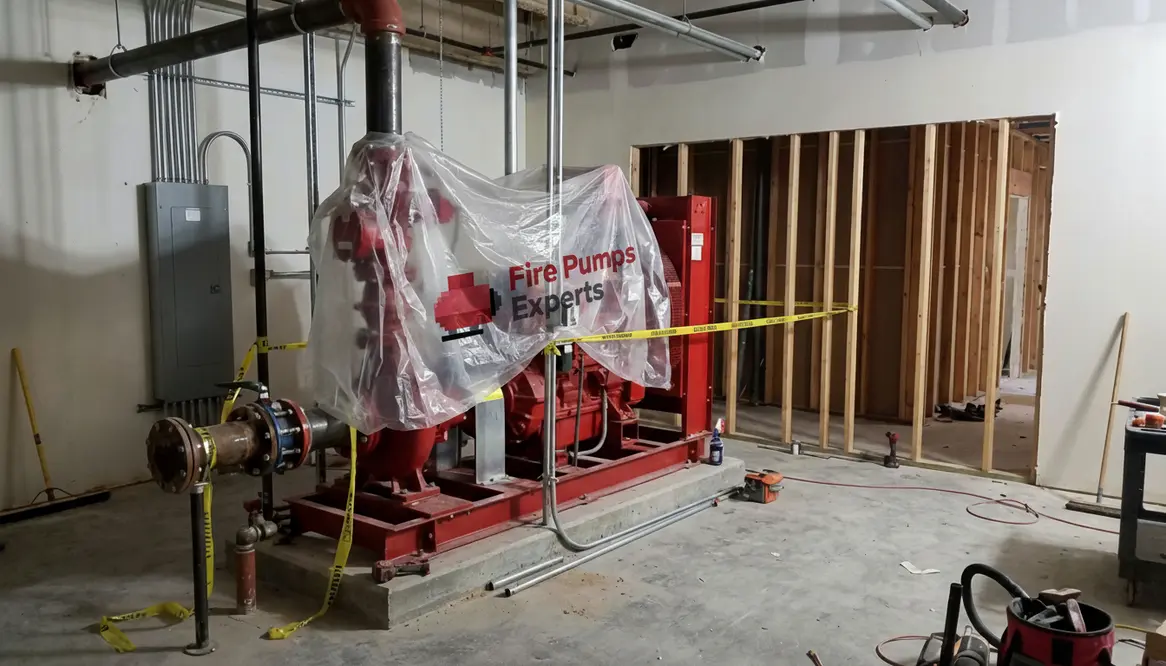
Office Renovation Fire Pump Systems Guide
I have seen a lot of office remodels in my time. Walls move, ceilings rise, and budgets… well, budgets tend to disappear like snacks in a breakroom. But one element people often underestimate is how office renovation fire pump systems shape the entire project. These systems are not just tucked away pieces of equipment. They quietly dictate design decisions, timelines, and even how safe your building feels when everything is said and done. And trust me, nothing ruins a grand reopening faster than a failed inspection.
Why Fire Pump Planning Changes Everything
When I approach a remodel, I treat fire protection as a starting point, not an afterthought. Because once you adjust layouts or increase occupancy, the demand on your fire suppression system shifts. Therefore, your fire pump must keep up.
For example, expanding a floor or adding high density workspaces can increase required water flow. As a result, your existing system might fall short. I have seen projects stall simply because the original pump could not meet updated codes. Not exactly the kind of plot twist you want.
Moreover, local regulations tend to tighten over time. So even if your system worked fine ten years ago, it may not pass today. That is where planning ahead saves both time and sanity.
How Do Fire Pumps Affect Office Layout Decisions?
Short answer? More than most architects would like to admit.
Because fire pumps require dedicated space, ventilation, and access, they often influence where key building components go. In addition, routing piping through a redesigned office can feel like solving a puzzle where half the pieces are missing.
I usually tell clients this: if you want that sleek open concept with glass walls everywhere, your fire system still needs a backbone. And that backbone is not always pretty. However, with the right planning, it can stay out of sight and out of mind.
Think of it like a movie set. The audience sees the polished final scene, but behind the camera, there is controlled chaos making it all work.
Office Renovation Fire Pump Systems and Code Compliance
Now we get to the part where inspectors become the main characters. And they do not accept improvisation.
Fire pump requirements tie directly into building codes and fire safety standards. Therefore, any renovation must align with current regulations, not the ones from when the building first opened its doors.
I always recommend early coordination with engineers and fire protection specialists. This ensures your office renovation fire pump systems meet pressure, flow, and redundancy requirements. In addition, it prevents last minute redesigns that can derail schedules.
Furthermore, testing and commissioning are not optional. They confirm that your system performs under real conditions. Skipping this step is like rehearsing a play without ever turning on the lights. It might look fine on paper, but reality tells a different story.
Key Components That Shape Performance
Water Supply
First, the pump is only as good as its water source. Whether it connects to a municipal line or a storage tank, consistency matters.
Pump Type
Then comes choosing between electric or diesel driven pumps. Each has its place depending on reliability needs and facility scale.
Controllers
In addition, controllers act as the brain. They ensure the pump starts and operates correctly during an emergency.
Pipe Network
Next, distribution piping must support the required flow without pressure loss. Poor design here undermines everything.
Backup Power
Meanwhile, power reliability cannot be ignored. A pump without power is just expensive decoration.
Testing Systems
Finally, built in testing connections allow ongoing verification. Because systems that sit idle too long tend to surprise you.
Cost Implications You Should Expect
Let me be honest. Fire pump upgrades are not the place to hunt for bargains. However, they are where smart investments pay off.
Initially, costs include equipment, installation, and integration with existing infrastructure. But beyond that, there are indirect costs tied to construction delays if issues arise late. Therefore, addressing fire pump requirements early often reduces overall spending.
Additionally, efficient systems can lower long term maintenance and energy use. So while the upfront price may raise eyebrows, the long game tends to balance things out.
And if you are wondering whether skipping upgrades saves money, it does not. It simply postpones the bill until it grows larger and less friendly.
Coordinating Teams Without Losing Your Mind
Remodels bring together architects, engineers, contractors, and inspectors. Add fire protection specialists to that mix, and suddenly it feels like assembling the Avengers, except everyone speaks a different technical language.
That said, coordination is everything. I make it a point to align all teams early. This ensures that fire pump requirements integrate smoothly with structural and mechanical plans.
Moreover, clear communication prevents rework. Because nothing slows a project like tearing down freshly installed work to reroute piping. It is the construction equivalent of rewriting a script after filming the final scene.
FAQ About Fire Pump Systems in Office Remodels
Conclusion
If you are planning a remodel, do not treat fire protection like background noise. It deserves center stage. I help clients align design, compliance, and performance so their buildings stay safe and functional long after the dust settles. When you are ready to upgrade or evaluate your system, take action early and bring in the right expertise. Because in this story, preparation is what keeps everything running smoothly.