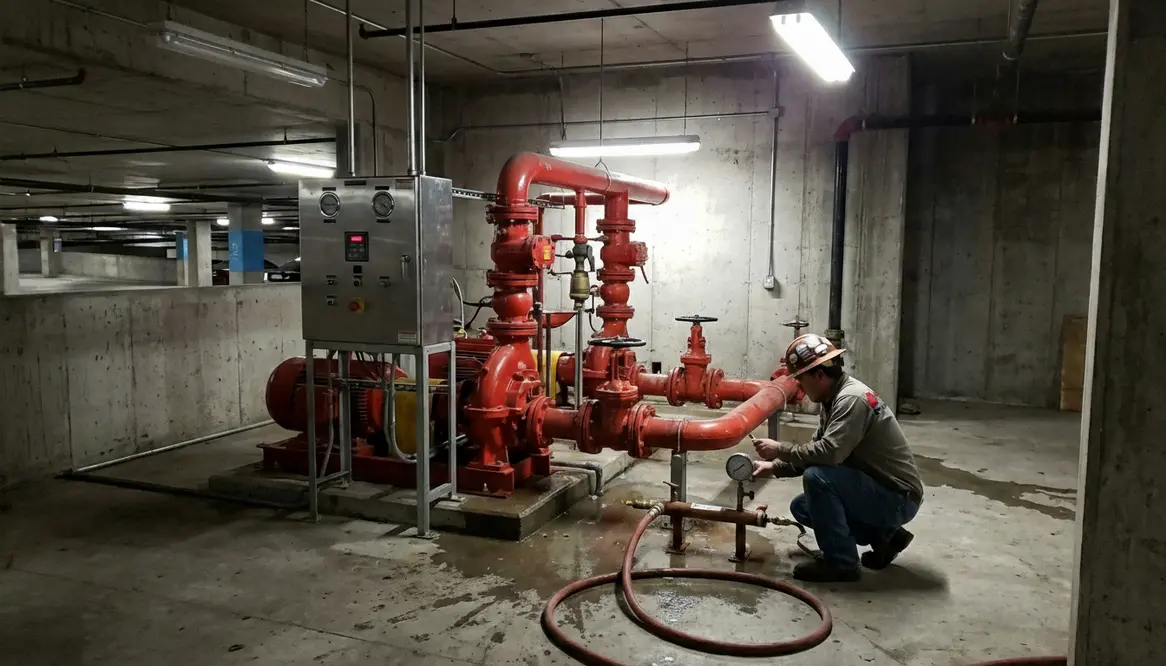
Parking Garage Fire Pump Requirements Explained
When people picture fire protection, they often imagine sprinklers raining down like a scene from an action movie. Yet behind the curtain sits the real workhorse of the system. The fire pump. And when it comes to large structures filled with vehicles, concrete, and echoing ramps, the parking garage fire pump requirements become especially important. I have spent years around commercial fire protection systems, and I can tell you this much with confidence. Parking structures bring unique risks that demand reliable water pressure, smart system design, and strict adherence to code. In other words, when a fire starts in a parking facility, the pump must perform like the hero of the story. No dramatic monologue required.
Why Parking Structures Create Unique Fire Protection Challenges
At first glance, a parking structure may seem simple. Cars go in. Cars go out. Occasionally someone forgets where they parked and wanders the levels like a confused extra in a zombie film. However, from a fire protection standpoint, these buildings are surprisingly complex.
First, vehicles bring fuel loads. Gasoline, plastics, electrical wiring, and now lithium batteries in electric vehicles all increase fire intensity. Meanwhile, large open floor plans allow heat and smoke to travel quickly. Therefore, suppression systems must respond fast and with strong water pressure.
Additionally, parking garages are often built partially below grade or across multiple levels. This creates a pressure challenge. Water must move vertically through long pipe runs, and without assistance the municipal supply often cannot maintain the required flow.
That is where fire pumps enter the picture.
In commercial and industrial facilities, the pump becomes the backbone of the sprinkler or standpipe system. It ensures the building maintains the correct pressure even at the highest levels. Without it, sprinklers may open but deliver little more than a polite drizzle. And in a fire, a polite drizzle does about as much good as a garden hose in a dragon fight.
Parking Garage Fire Pump Requirements Explained Clearly
Whenever I evaluate a system for a large property, I start with code compliance. Fire pumps installed in parking structures must follow standards such as NFPA 20 and NFPA 13, along with local building codes. These codes shape the core parking garage fire pump requirements that engineers and contractors work from every day.
However, code language can read like ancient runes unless someone translates it. So here is the practical version.
Key Elements Of A Compliant Fire Pump Installation
Proper water supply
The system must connect to a reliable source capable of meeting design flow demand. If municipal pressure falls short, the pump compensates.
Correct pump sizing
Engineers calculate flow based on sprinkler demand, standpipes, and hose allowances. Oversizing wastes energy. Undersizing creates risk. Balance matters.
Dedicated pump room
Most commercial properties require a protected room with fire rated construction, controlled temperature, and easy access for maintenance crews.
Automatic start capability
When system pressure drops due to sprinkler activation, the pump must start immediately without human intervention.
Backup power when required
Many facilities install diesel driven pumps or generator supported electric pumps so the system runs during power loss.
Each of these elements works together. Think of it like assembling the Avengers of fire protection. One hero alone is impressive. The full team saves the day.
For owners and designers, understanding these parking garage fire pump requirements early in a project avoids last minute redesigns, painful change orders, and awkward conversations during final inspections.
How Engineers Determine The Right Pump Capacity
People often assume bigger pumps are better. That logic works for pickup trucks and movie explosions. However, fire pump design requires precision.
Engineers start by calculating sprinkler demand across the most demanding area of the structure. For parking garages, this often includes multiple operating sprinklers plus a hose stream allowance. Then they evaluate friction loss in the piping network.
Next comes elevation.
Water pressure drops roughly 0.433 psi for every foot it travels upward. In multi level parking structures, that adds up quickly. Therefore the pump must provide enough pressure to overcome both height and pipe friction.
In many commercial garages, the result falls somewhere between 500 and 1500 gallons per minute depending on size and configuration. However, every facility differs.
Because of this, serious commercial property owners rely on detailed hydraulic calculations rather than guesswork. After all, guessing works for trivia night. Not for life safety systems.
Translating Calculations Into Real-World Pump Choices
Once those calculations are complete, engineers compare them to standard fire pump ratings and curves. They look for a pump that meets flow and pressure at 100% duty, while also performing at 150% flow during testing. In a parking structure, that often means coordinating sprinkler zones, standpipes, and hose outlets so the entire system behaves like a single, predictable machine instead of a patchwork of disconnected parts.
Common Design Mistakes I See In Large Parking Facilities
Even experienced project teams sometimes miss critical details. Over the years, I have seen patterns emerge. And frankly, some mistakes appear more often than reruns of The Office.
Undersized supply piping
If underground supply lines cannot support pump demand, the system struggles from day one.
Poor pump room placement
Maintenance access matters. When the pump room sits behind three locked gates and a maze of storage cages, technicians lose valuable response time.
Ignoring future expansion
Commercial developments grow. A pump sized only for the current footprint may fail when the facility expands.
Skipping long term maintenance planning
Fire pumps require testing and servicing. Systems designed without service space become headaches later.
Fortunately, each of these issues can be avoided through thoughtful engineering and coordination between property developers, fire protection specialists, and code officials. Getting the core parking garage fire pump requirements right from the drawing board keeps these problems from surfacing years later when they are far more expensive to fix.
What Smart Property Owners Ask About Parking Garage Fire Pump Requirements
Owners of large commercial buildings often come to me with similar questions. That is a good sign. Asking early prevents expensive retrofits later.
Do I actually need a fire pump?
If the municipal supply cannot meet sprinkler pressure and flow requirements, then yes. Many multi level garages require one.
Should I choose electric or diesel?
Electric pumps are common where reliable power exists. Diesel pumps offer independence from the electrical grid.
How often must the system be tested?
Commercial fire pumps typically require weekly or monthly churn tests and annual flow testing depending on system type.
Will EV vehicles change design needs?
Potentially. Lithium battery fires burn differently, so engineers continue studying future suppression strategies.
Can one pump serve multiple buildings?
Sometimes, but it depends on layout, pipe distance, and hydraulic demand.
How long do pumps last?
With proper maintenance, many systems operate reliably for several decades.
Asking these questions early keeps projects moving smoothly. And smooth projects make everyone happier. Developers, engineers, inspectors, and yes, even the person circling level four looking for parking.
Maintenance Keeps The System Ready When It Matters
Installing a fire pump is only the beginning. The real responsibility lies in keeping it ready year after year.
Commercial properties must follow strict inspection, testing, and maintenance schedules. Regular testing confirms the pump starts automatically, maintains pressure, and delivers the required water flow.
Furthermore, technicians monitor vibration, engine condition, controller signals, and valve status. Even small irregularities deserve attention. Because when the alarm activates, the system has seconds to perform.
Why Maintenance Is Non-Negotiable
I often tell facility managers one simple truth. A fire pump is like a parachute. You hope you never need it. But if you do, it absolutely must work.
Consequently, partnering with experienced fire protection professionals makes a major difference for large commercial properties. Routine inspections, performance testing, and code updates keep systems compliant and dependable. This is especially true for parking structures, where the parking garage fire pump requirements intersect with complex layouts, heavy vehicle loads, and evolving risks like electric vehicle charging stations.
For owners who want deep support on fire pump inspection, testing, and repair, specialized service providers such as full-service fire pump system experts can help ensure that pumps, controllers, and connected sprinkler systems remain ready for real-world emergencies.
FAQ About Parking Garage Fire Protection Systems
Property teams often look for quick answers when they first encounter parking garage fire pump requirements. The most common questions tend to focus on when pumps are required, which codes apply, and how often testing needs to occur.
Building Safer Parking Structures Starts With The Right Fire Protection Strategy
Parking structures may look simple on the outside, but their fire protection systems require thoughtful engineering and reliable equipment. When commercial property owners understand the role of pumps, pressure calculations, and code compliance, they create safer environments for every tenant and visitor.
The most successful projects treat parking garage fire pump requirements as a foundational design input, not an afterthought. That approach supports smarter pump sizing, better pump room placement, and easier long-term maintenance.
If your facility needs expert guidance on fire pump design, inspection, or upgrades, the specialists at firepumps.org can help ensure your system performs exactly when it matters most. With the right team, a clear understanding of code, and a commitment to ongoing testing, your parking structure can move from “barely compliant” to confidently prepared for the emergencies everyone hopes never happen.