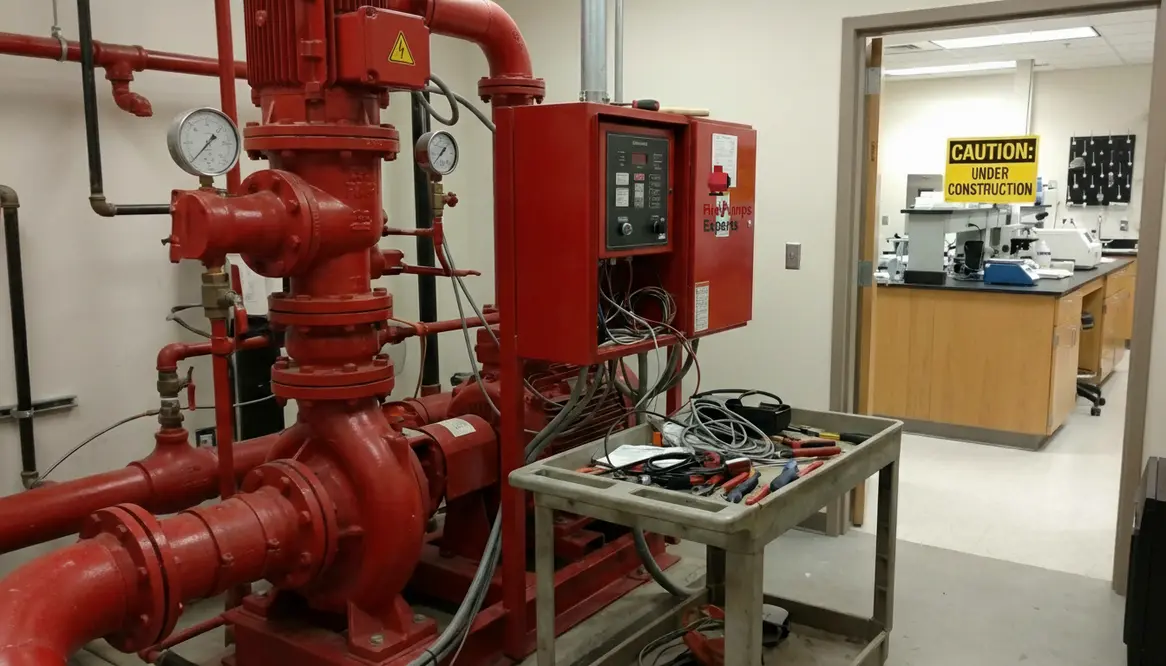
Renovation Fire Pump Considerations for Labs
I have spent enough time around research laboratories to know one simple truth. Brilliant minds and volatile materials often share the same room. That is exactly where renovation fire pump considerations quietly step into the spotlight. Within the first moments of a fire event, the difference between controlled response and catastrophic loss often comes down to how well a fire pump system was planned, installed, or upgraded. And yes, while fire pumps may not sound as exciting as a particle accelerator, they are the unsung heroes that keep everything from turning into a scene out of a disaster movie.
Why fire pumps are critical in modern research laboratories
Research laboratories operate in a unique risk environment. Flammable chemicals, pressurized gases, and high powered equipment all coexist in a carefully controlled balance. However, when that balance breaks, things escalate quickly.
Fire pumps ensure consistent water pressure when municipal systems fall short. More importantly, they support suppression systems that must perform instantly. Without that support, even the most advanced sprinkler system becomes a decorative ceiling feature.
Additionally, laboratories often run experiments around the clock. Because of this, fire protection systems must be equally reliable at 3 a.m. as they are during peak hours. A properly designed fire pump system guarantees that reliability and should always be at the top of your renovation fire pump considerations checklist.
What should I consider when upgrading fire pumps in laboratory facilities
When I approach upgrades, I focus on renovation fire pump considerations that align with the building’s evolving risks. Laboratories are not static environments. New experiments bring new hazards, and older systems may not keep up.
1. Evaluate changing demand
First, I evaluate demand changes. Has the facility expanded? Have new suppression zones been added? If so, the fire pump must handle increased load without hesitation. Renovation fire pump considerations should always start with how the building has grown and how the hazard profile has shifted.
2. Integrate with smart systems
Next, I look at system compatibility. Modern labs often integrate smart monitoring systems. Therefore, upgraded fire pumps should communicate with these platforms to provide real time diagnostics. When working through renovation fire pump considerations, integration with existing building management systems is now just as important as pipe sizing.
Finally, redundancy matters. In high value research environments, a single point of failure is unacceptable. Backup pumps or parallel systems add a layer of protection that can save millions in assets and years of research.
Inside the mechanics of fire pump performance
Let me pull back the curtain a bit. Fire pumps are not just big machines pushing water. They are precision systems designed to respond instantly under pressure.
Key components
- Driver systems such as electric or diesel motors
- Controllers that activate pumps automatically
- Pressure sensing devices
- Reliable water supply connections
Performance goals
- Maintain consistent water pressure
- Activate without delay
- Operate under extreme conditions
- Support multiple suppression zones
Because of these elements, fire pumps act like the heartbeat of a fire protection system. And much like a heartbeat, you do not want to discover a problem when it is already too late.
How fire pumps support compliance and risk management
In commercial and industrial laboratory settings, compliance is not optional. Regulatory standards demand that fire protection systems meet strict performance criteria.
Fire pumps play a direct role in meeting those standards. They ensure that suppression systems deliver the required flow and pressure outlined by codes. Moreover, they support insurance requirements, which can significantly impact operational costs.
From a risk management perspective, investing in proper fire pump infrastructure reduces potential downtime. And let us be honest, in research environments, downtime is not just inconvenient. It can derail entire projects.
As a bonus, having a robust system in place makes safety audits far less stressful. Nobody enjoys explaining to an inspector why a critical system might not perform. That conversation rarely ends with a handshake and a smile.
The human element behind fire pump reliability
Technology matters, but people make it work. Proper installation, regular testing, and ongoing maintenance are essential.
I always emphasize scheduled inspections. Over time, wear and tear can affect performance. Seals degrade, controllers drift, and components age. However, consistent testing catches these issues early.
Training also plays a role. Facility teams should understand how their fire pump systems operate. While no one expects them to become engineers overnight, a basic understanding improves response during emergencies.
And yes, even the best systems need occasional upgrades. That is where thoughtful planning and those earlier renovation fire pump considerations come back into play.
Designing for the future of laboratory safety
Laboratories continue to evolve. New technologies, new materials, and new risks emerge every year. Fire pump systems must evolve alongside them.
Scalability and flexibility
Forward thinking designs focus on scalability. They allow facilities to expand without completely overhauling their fire protection infrastructure. In addition, integrating smart monitoring tools provides valuable data. This data helps predict maintenance needs and improves overall system reliability.
Energy efficiency and cost
There is also a growing emphasis on energy efficiency. Modern fire pumps are designed to reduce energy consumption without sacrificing performance. That means safer buildings and lower operational costs, which is a combination everyone can appreciate.
And if that sounds like a win win, it is. Even Batman would approve, and he trusts very few things. For deeper technical references and best practices, resources such as https://firepumps.org can help frame renovation fire pump considerations in the broader context of laboratory safety design.
FAQ: Fire pumps in research laboratories
Conclusion
When I look at laboratory safety, I see fire pumps as a quiet force that keeps everything in balance. They protect people, preserve research, and support compliance without asking for attention. If you are managing a commercial or industrial facility, now is the time to evaluate your system, plan upgrades, and ensure your protection measures are ready when it matters most. Reach out to experts who understand your environment and take action before the unexpected happens.