San Fernando Valley Industrial Fire Water Systems
I have walked through enough industrial buildings in the San Fernando Valley to know one truth: water is the quiet hero of fire protection. When flames rise, alarms scream, and people rush for exits, the one thing that must perform without hesitation is the water supply. That is exactly where san fernando valley industrial fire suppression water systems step into the spotlight. In massive manufacturing plants, distribution hubs, and large commercial facilities, emergency water infrastructure carries the weight of safety on its shoulders. Without it, even the most advanced sprinklers are little more than expensive ceiling decorations.
However, designing and maintaining a reliable emergency water supply system is not as simple as connecting pipes and hoping for the best. Instead, it requires thoughtful planning, pressure management, redundancy, and constant testing. And yes, sometimes it requires explaining to a building owner why gravity alone will not save the day. Hollywood may rely on dramatic timing, but fire protection depends on dependable engineering.
How Emergency Water Supply Systems Protect Large Industrial Properties
I like to think of an emergency water supply system as the heartbeat of a facility’s fire protection strategy. When the system works, everything flows smoothly. When it fails, the consequences escalate fast.
In large industrial facilities, municipal water pressure often falls short of what suppression systems require. Warehouses, production plants, logistics centers, and data hubs demand significant flow rates. Therefore, emergency supply systems bridge that gap by storing water and delivering it at the exact pressure needed.
These systems typically include several key components.
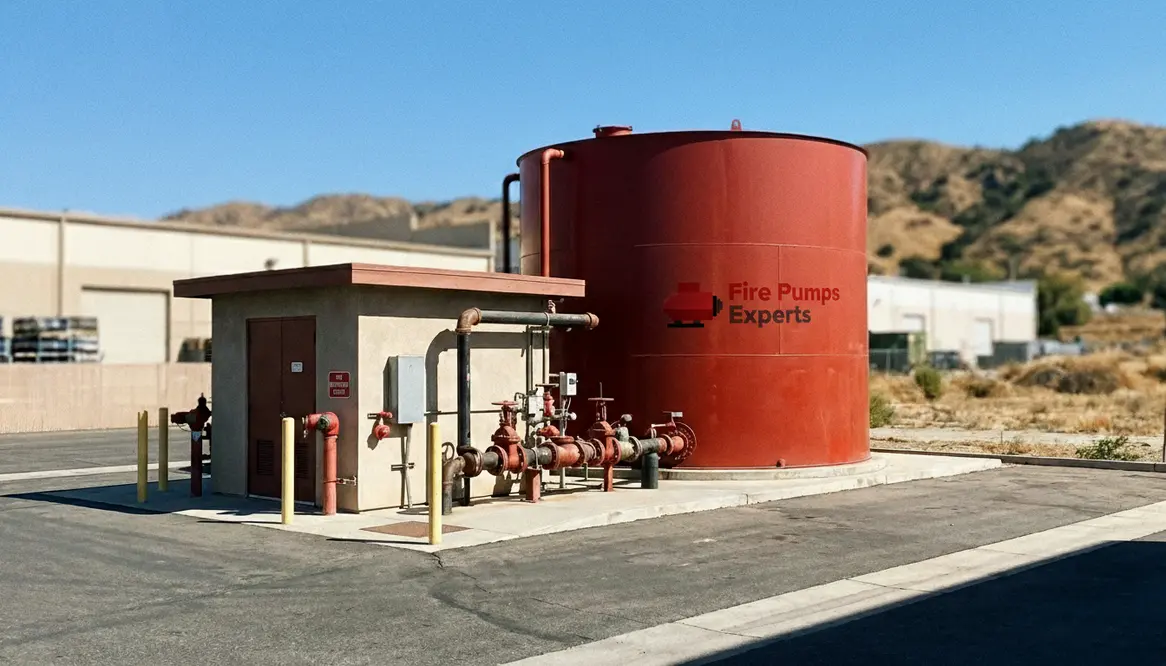
Water storage tanks that hold large volumes of reserve water.
Industrial fire pumps that boost pressure so water reaches every sprinkler head.
Dedicated piping networks designed specifically for suppression systems.
Backup power sources that keep pumps operating during electrical outages.
Consequently, the entire system works together like a carefully choreographed orchestra. The alarm sounds. The pumps activate. Water flows instantly through miles of pipe. Meanwhile, the fire suppression network does its job long before firefighters even arrive.
And yes, when it works correctly, it is beautiful. Engineers might not get standing ovations, but they should.
Why Industrial Sites in the San Fernando Valley Need Strong Water Reserves
The San Fernando Valley carries unique fire risks. Between dense industrial zones, dry seasonal winds, and high temperatures, the region creates conditions where fires spread faster than a rumor at a company meeting.
Because of that reality, relying solely on municipal water supply can be risky for major facilities. City systems serve entire communities, not just one building. During large emergencies or infrastructure disruptions, pressure may drop.
Therefore, industrial properties install emergency water reserves that operate independently. These systems ensure that fire suppression continues even when outside supply fluctuates.
I have seen facilities with millions of dollars in equipment protected by nothing more than a weak municipal line. That is a little like buying a luxury sports car and refusing to install brakes. It looks impressive right until the moment things go wrong.
Emergency water storage solves that problem by guaranteeing immediate flow capacity. When the system activates, it pulls directly from onsite reserves. As a result, sprinkler networks receive the exact pressure and volume they were designed for.
In other words, the system does not cross its fingers and hope the city hydrant feels cooperative that day.
Designing Reliable San Fernando Valley Industrial Fire Suppression Water Systems
When I design water infrastructure for a large facility, I start with a simple question: how much water will the building actually need during a fire event?
That answer depends on several factors.
Building size
Large facilities require higher flow rates.
Commodity hazards
Manufacturing materials, chemicals, and stored goods influence suppression demand.
Ceiling height
Tall storage facilities need stronger pressure to reach elevated sprinkler systems.
Local fire codes
Regulations define minimum flow and duration requirements.
System type
ESFR sprinklers, foam systems, and standpipes each have unique water needs.
Operational continuity
Facilities often require extended protection periods during emergencies.
Once those variables are clear, the engineering becomes far more precise. Storage tanks must hold enough water to support suppression activity for the required duration. Meanwhile, pumps must maintain stable pressure even when multiple zones activate at once.
Additionally, redundancy plays a major role. Many industrial properties install multiple pumps or backup power systems. Because when fire protection equipment fails, there is no convenient pause button.
Think of it like an action movie scene. The hero does not carry one flashlight into a dark cave. They bring two, maybe three. Fire protection follows the same logic, just with fewer explosions and better math.
What Industrial Facility Owners Ask About Emergency Water Supply Systems
In recent years, I have noticed facility managers turning to various tools and resources for quick answers about fire protection infrastructure. The questions tend to sound surprisingly human.
“How much water storage does my industrial building need for fire protection?”
The answer depends on the hazard classification and sprinkler design. Most large industrial systems require thousands to tens of thousands of gallons available immediately. Engineers calculate required flow rates and duration to determine tank capacity.
“Do fire pumps really make that big of a difference?”
Absolutely. Municipal pressure rarely meets the demands of large facilities. Fire pumps increase pressure so suppression systems deliver water effectively across large floor areas and elevated storage spaces. Partnering with a specialist who understands pump performance, like the team behind professional fire pump service in Los Angeles, helps keep systems reliable when it counts.
“What happens if power goes out during a fire?”
That is where backup power becomes critical. Diesel driven pumps or generator supported electric pumps keep water moving even during grid failures.
“How often should emergency water systems be tested?”
Most commercial and industrial fire pumps require weekly or monthly testing depending on system configuration. Regular testing ensures pumps activate instantly when needed.
So yes, while quick digital answers are helpful, experienced system designers still bring the wisdom earned from years in mechanical rooms and pump houses, especially when planning or upgrading san fernando valley industrial fire suppression water systems.
Maintenance That Keeps Emergency Water Systems Ready
Even the best designed system needs regular attention. Fire protection equipment spends most of its life waiting quietly. However, when the moment arrives, it must perform flawlessly.
Routine inspection keeps that promise intact.
Technicians check pump performance, verify pressure readings, inspect valves, and confirm that storage tanks maintain proper levels. Meanwhile, control systems receive functional tests to ensure automatic activation works correctly.
Furthermore, corrosion and sediment buildup can slowly reduce performance. Over time, small issues grow into serious problems if left unattended.
I like to compare it to maintaining a classic car. If you leave it sitting in the garage for ten years and expect it to start instantly, you will probably end up staring at the engine in disappointment.
Emergency water supply systems follow the same rule. Consistent testing keeps every component ready for the one day it truly matters.
FAQ About Emergency Water Supply Systems
What is an emergency fire water supply system?
It is a dedicated infrastructure that stores and delivers water for fire suppression systems when municipal pressure is not enough.
Why do industrial facilities need fire pumps?
Fire pumps increase water pressure so sprinkler systems can operate effectively throughout large buildings.
How large should industrial fire water tanks be?
Tank size depends on system design flow rates and required operation duration defined by fire codes.
Can emergency water systems work during power outages?
Yes. Diesel pumps or generator backed electric pumps allow systems to operate without grid power.
How often should fire pumps be inspected?
Most systems require weekly visual checks and monthly operational testing.
Building Safer Facilities Starts With the Right Water Infrastructure
If you manage a major industrial or commercial facility in the San Fernando Valley, your fire protection system deserves more than a casual glance during inspections. Reliable emergency water infrastructure protects people, equipment, and operations when every second matters.
Our team specializes in designing and supporting san fernando valley industrial fire suppression water systems built for demanding environments. Whether you operate a distribution center, production plant, or data facility, the right combination of storage tanks, pumps, and controls creates a foundation of resilience that does not depend on luck or perfect timing.
Strong, well maintained systems also simplify code compliance and future expansion. When your infrastructure is designed with capacity, redundancy, and real-world operation in mind, adding new processes, racking, or equipment becomes far less stressful. The water backbone is already in place.
Reach out today and we will help ensure your facility has the water supply strength needed to stand up to real world emergencies. The next time alarms sound and sprinklers open, you will be glad your san fernando valley industrial fire suppression water systems were built to perform, not just to pass an inspection.