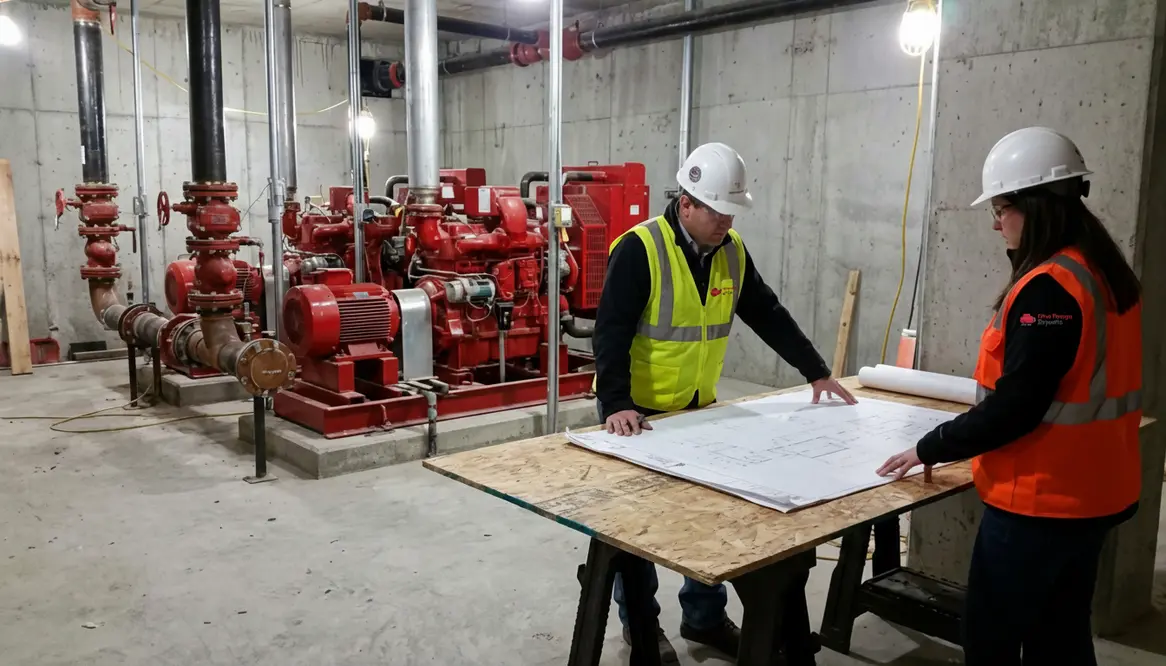
Shell Office Fire Pump Requirements Planning Guide
I have seen too many projects stumble before they even lace up their boots. It often starts with one overlooked detail, something small that quietly grows into a full blown headache. In commercial and industrial construction, that detail is often tied to shell office fire pump requirements. If I address it early, the entire build moves with rhythm. If I ignore it, well… let’s just say even the best architects cannot design their way out of bad water pressure.
So today, I am walking you through fire pump planning before tenant buildout. Not as a checklist, but as a story of cause and effect. Because when you understand the “why,” the “how” tends to behave itself.
shell office fire pump requirements start before walls go up
I always say the fire pump is not a piece of equipment. It is a promise. A promise that water will show up when everything else fails. Therefore, I plan for that promise before drywall, before finishes, before someone argues about carpet colors like it is a life or death decision.
First, I evaluate the base building demand. Then, I compare that with what future tenants might need. A warehouse tenant does not behave like a data center. Likewise, a manufacturing floor plays by a completely different set of rules. Because of this, I size systems with flexibility in mind.
However, many teams wait. They assume they can “figure it out later.” That is like casting a superhero movie without checking if the lead can actually fly. It looks fine on paper, right up until gravity shows up.
When I align early with fire protection engineers, I avoid rework. More importantly, I protect the project schedule. Time, as we all know, is the one thing no contractor has in surplus.
How do I size a fire pump before tenant needs are finalized?
I start with the worst reasonable scenario. Not fantasy. Not paranoia. Just a grounded projection based on building type, occupancy trends, and code requirements.
Then, I build in capacity. Not excess for the sake of ego, but enough to support likely tenant improvements. Because sooner or later, someone will request higher demand. They always do. It is almost as predictable as someone bringing up The Office in a meeting and expecting everyone to laugh.
After that, I coordinate with available water supply. City pressure is not a suggestion. It is a hard limit. So, I test it, verify it, and design around it.
As a result, the system can evolve with the building. Instead of forcing expensive upgrades later, I give future tenants room to grow. And in commercial real estate, flexibility is not a luxury. It is currency.
Key planning factors I never ignore in commercial projects
Water supply reliability
I confirm consistent flow and pressure because fluctuations can cripple performance.
Space allocation
I secure proper room for equipment, access, and maintenance early in design.
Power requirements
I ensure electrical systems can support pump demand without compromise.
Future tenant variability
I plan for higher hazard uses even if they are not confirmed yet.
Code compliance
I align with local and national standards from day one to avoid redesign.
Maintenance access
I design with long term service in mind, not just installation day.
Each of these factors connects. If one slips, the others follow. It is like a band where the drummer decides to freestyle while everyone else plays jazz. Technically impressive, but completely unusable.
shell office fire pump requirements and tenant flexibility
I treat tenant buildout as a moving target. Because it is. Therefore, I avoid locking the system into a single use case. Instead, I create a foundation that adapts.
For example, I may oversize certain components or design piping layouts that allow expansion. Additionally, I coordinate early with leasing teams. They often have insight into target industries, and that information shapes smarter decisions.
Because of this approach, I reduce friction later. Tenants move in faster. Modifications stay manageable. And owners avoid those painful “why didn’t we plan for this” conversations that echo through conference rooms.
Also, let’s be honest. Nobody wants to explain to a tenant why their operations are delayed because the building cannot deliver enough water. That is not a great first impression.
Coordination between trades makes or breaks the system
I never treat fire protection in isolation. Instead, I pull mechanical, electrical, and plumbing teams into the conversation early. Because when systems overlap without coordination, conflicts happen.
For instance, I have seen pump rooms squeezed into spaces that barely allow a technician to turn around. It looks efficient on paper, yet it fails in practice. So, I fight for proper layout and access.
Meanwhile, I align electrical infrastructure with pump demands. Fire pumps do not negotiate with undersized power systems. They simply refuse to cooperate.
As a result, early collaboration saves time, money, and sanity. And in construction, sanity is often the first thing to disappear.
FAQ about fire pump planning before tenant buildout
Conclusion
I approach fire pump planning with intention because the stakes are real and the margin for error is small. When I get ahead of shell office fire pump requirements, everything else falls into place with less friction and fewer surprises. If you are working on a commercial or industrial project, now is the time to think ahead. Reach out, start the conversation, and let’s make sure your building performs exactly when it matters most.