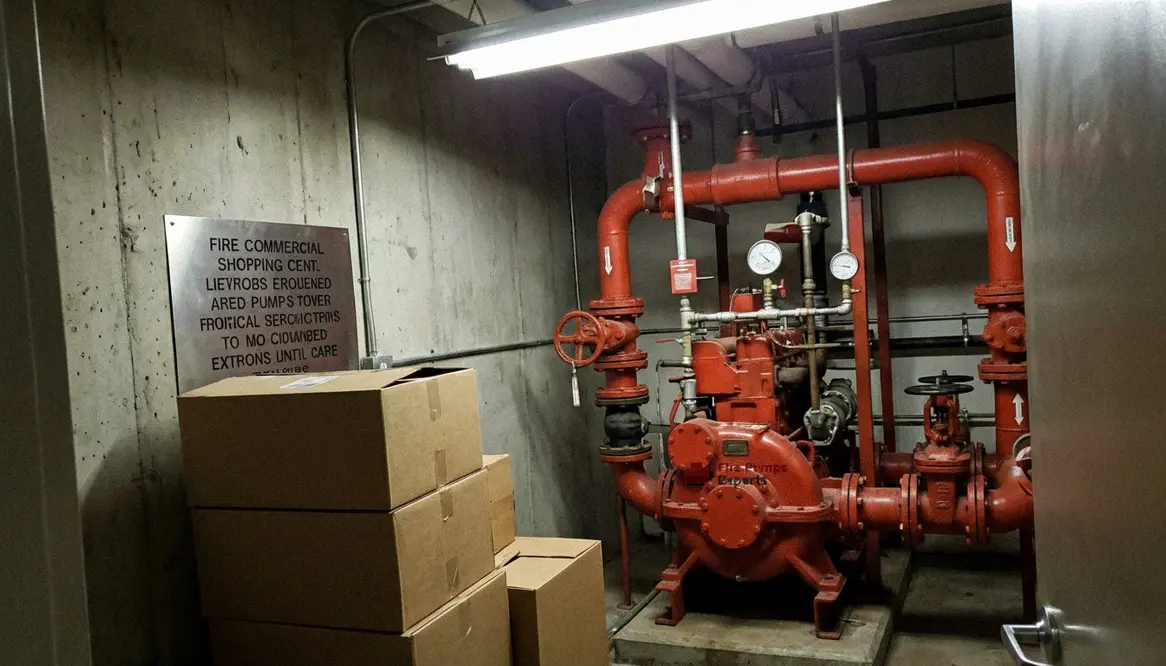
Shopping Center Fire Pump Requirements Guide
I have spent years walking through commercial properties where a single spark could rewrite the entire story of a business. That is why I always begin with one grounding truth: shopping center fire pump requirements are not just technical guidelines. They are the quiet guardians of life, inventory, and reputation. In mixed retail occupancies, where restaurants share walls with boutiques and storage areas sit behind polished storefronts, fire safety becomes a coordinated dance. And trust me, this is one dance where you do not want to freestyle.
Understanding Fire Risk in Mixed Retail Occupancies
Mixed retail spaces are a bit like ensemble cast movies. You have different players, different risks, and sometimes conflicting needs. A clothing store carries high fuel loads, while a restaurant brings open flames and grease into the picture. Meanwhile, a salon might introduce chemicals that behave unpredictably under heat.
Because of this variety, I always treat these spaces as layered environments. Each tenant adds complexity, and therefore, the fire protection strategy must adapt. For example, fire can spread faster through shared ceiling voids or utility corridors. So, while one business may follow strict protocols, another could unintentionally raise the overall risk.
Therefore, aligning fire protection systems across tenants is not optional. It is essential. And yes, that includes ensuring that the fire pump system can handle the combined demand without breaking a sweat.
How Do I Meet Shopping Center Fire Pump Requirements Without Overbuilding?
I get this question a lot, usually from property managers staring at a blueprint like it just insulted them. The key is balance. You do not want to overspend, but you definitely do not want to underperform.
First, I calculate total system demand based on the most demanding occupancy. Then, I layer in safety margins that reflect real world conditions, not just textbook scenarios. After that, I ensure the pump capacity aligns with sprinkler density, standpipe needs, and any special hazard systems.
However, I avoid the trap of assuming bigger is always better. An oversized pump can create pressure issues that damage the system. It is like using a firehose to water a houseplant. Impressive, but wildly unnecessary.
So, I rely on precise hydraulic calculations, code compliance, and field experience to strike the right balance. When I evaluate shopping center fire pump requirements, I am thinking about how every gallon per minute translates into real performance during a worst-case scenario.
Key Fire Protection Systems That Must Work Together
Fire safety is not a solo act. It is a full orchestra. When one system misses a note, the entire performance suffers.
Detection Systems
These identify threats early. Smoke detectors, heat sensors, and alarm panels must communicate clearly and quickly so that water is moving before flames rewrite the floorplan.
Suppression Systems
Sprinklers and standpipes act as the first line of defense. They must be properly zoned to match tenant layouts so that water goes where the hazard lives, not just where it is convenient on paper.
Fire Pumps
These provide the muscle behind the system. Without adequate pressure, even the best sprinklers become decorative ceiling fixtures. Evaluating shopping center fire pump requirements means confirming that this muscle does not tire when multiple hazards call for water at once.
Emergency Power
Because fires do not wait for the power grid to cooperate, backup systems keep everything running when it matters most. Generators, transfer switches, and fuel supplies must support every critical fire protection component.
When these systems work together, response times shrink and damage stays contained. On the other hand, when they do not, that is when headlines happen. And not the good kind.
Designing for Code Compliance and Real World Performance
I always say codes are the floor, not the ceiling. Meeting them is required, but exceeding them is often wise.
In mixed retail environments, I look beyond minimum standards. For instance, I consider how tenant turnover might change hazard classifications over time. A quiet bookstore today could become a bustling café tomorrow. Therefore, flexibility in system design pays off.
Additionally, I coordinate closely with local authorities and fire departments. Their input often reflects real incidents, not just theoretical risks. And let us be honest, firefighters have seen things most of us would rather not imagine.
By combining code compliance with practical foresight, I create systems that perform under pressure. Literally. That performance is measured against shopping center fire pump requirements, but also against one simple question: will this setup still hold up when tenants, layouts, and hazards change?
Maintenance Strategies That Actually Prevent Problems
Now here is where many properties stumble. They install excellent systems, then treat maintenance like a New Year resolution. Enthusiastic in January, forgotten by March.
I take a different approach. Regular inspections, flow testing, and performance checks are non negotiable. Fire pumps, in particular, need routine verification to ensure they deliver the required pressure and flow.
Moreover, I keep detailed records. These logs tell a story over time, revealing trends before they become failures. Think of it as reading the early chapters instead of skipping straight to the disaster.
Consistent maintenance does more than protect assets. It builds confidence. And in commercial environments, confidence is currency. When stakeholders understand that shopping center fire pump requirements are being met, tested, and documented, they sleep better and invest with fewer doubts.
Integrating Shopping Center Fire Pump Requirements into Long Term Planning
Long term planning is where smart property owners separate themselves from the rest. Integrating shopping center fire pump requirements into future expansions or renovations ensures continuity and safety.
For example, when adding new tenants or reconfiguring layouts, I revisit system capacity and distribution. I also assess whether existing infrastructure can handle increased demand. If not, upgrades are planned proactively, not reactively.
Furthermore, I align fire protection planning with business goals. After all, safety should support growth, not hinder it. When done right, it becomes an invisible strength that allows everything else to thrive.
If you want to explore design examples and deeper technical discussions, there are resources available through specialist sites such as https://firepumps.org, which can help frame how your own strategy stacks up against current expectations.
FAQ: Fire Safety for Mixed Retail Occupancies
These are the questions that surface most often when owners and managers start looking closely at shopping center fire pump requirements and the systems that surround them.
Conclusion
Fire safety in mixed retail occupancies is not just about compliance. It is about foresight, coordination, and commitment. When you align systems, maintain them with care, and respect the role of fire pumps, you create a safer environment for everyone.
If you are managing a commercial property, now is the time to review your approach and strengthen it where needed. Look closely at how your current setup measures against shopping center fire pump requirements, how well your tenants are coordinated, and how disciplined your maintenance program truly is. Because in this business, preparation is not optional. It is everything.