Transit Oriented Development Fire Pump Systems Guide
I have spent years around large properties where safety is not a feature but a promise. In business parks and corporate campuses, that promise often rests quietly behind the walls in the form of transit-oriented development fire pumps. These systems do not ask for attention, yet when the moment comes, they deliver with precision. And while they are not exactly the Batman of building systems, they do tend to show up right when things get dramatic.
So let me walk you through how fire pump systems support modern commercial environments, why they matter more than most realize, and how they quietly protect assets, people, and reputations.
Why Fire Pump Systems Matter in Corporate Campuses
When I look at a sprawling corporate campus, I see more than glass buildings and well-kept landscaping. I see complexity. Multiple structures, long pipe runs, varying elevations. That means water pressure alone often cannot meet fire protection demands.
This is where fire pump systems step in. They boost water flow and pressure to ensure sprinklers and standpipes perform exactly as designed. Without them, even the most advanced fire protection layout becomes a paper tiger.
Moreover, business parks operate with high occupancy and valuable infrastructure. Data centers, research labs, and corporate offices all depend on consistent protection. A properly designed pump system ensures compliance, reduces risk exposure, and keeps operations from turning into an unscheduled disaster movie.
How Do Transit Oriented Development Fire Pumps Support Large Properties?
In large scale developments connected to transit hubs, I often see unique challenges. Buildings sit closer together, vertical expansion increases, and emergency access can become more complex. Transit-oriented development fire pumps address these challenges by maintaining steady pressure across wide and dense layouts.
Additionally, these systems adapt to fluctuating demand. During peak hours, when occupancy rises, water demand can shift quickly. A well-calibrated pump system responds instantly, ensuring no drop in performance.
Think of it like a seasoned orchestra conductor. Everything stays in rhythm, even when the tempo changes.
Key Components That Keep Everything Running
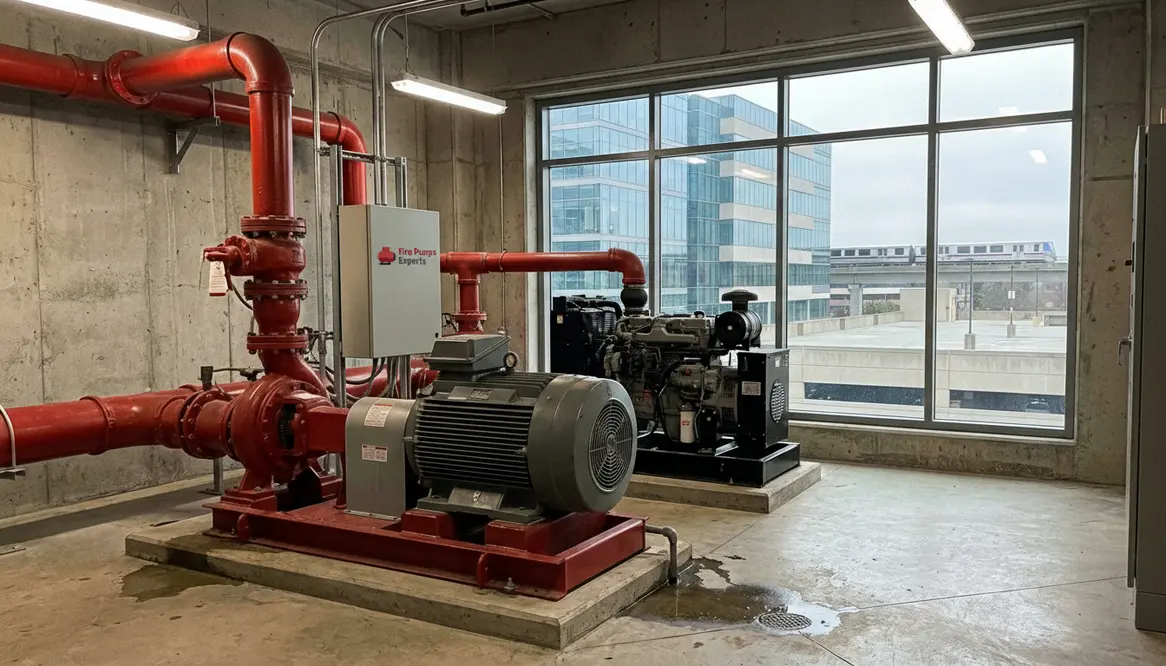
I like to break things down into parts because that is where the real story lives. A fire pump system is not just one machine. It is a coordinated setup designed for reliability.
Core equipment
- Pump unit that drives water pressure
- Controller that manages startup and operation
- Driver such as electric motor or diesel engine
- Jockey pump to maintain baseline pressure
Support systems
- Water supply connection and storage
- Valves for control and isolation
- Monitoring systems for performance tracking
- Backup power for uninterrupted operation
Each component plays a role. If one fails, the entire system feels it. Therefore, integration and testing are not optional. They are essential.
Designing for Scale, Not Just Code Compliance
I have seen too many systems designed just to pass inspection. That is like buying a sports car and never driving above 30. Technically fine, but missing the point.
In business parks, I focus on real world performance. That means accounting for peak flow scenarios, future expansion, and redundancy. Additionally, layout matters. Long pipe distances require careful pressure calculations, and elevation changes can complicate delivery.
Furthermore, I consider how systems will be maintained over time. Easy access, clear labeling, and smart monitoring tools reduce downtime and keep operations smooth. Because let us be honest, no facility manager wants surprises. Unless it is cake in the breakroom.
Maintenance and Testing Keep Systems Honest
Even the best system needs regular attention. Fire pumps are no exception. In fact, they demand consistency.
I recommend routine inspections, weekly churn tests, and annual performance testing. These checks confirm that the system responds correctly under simulated demand. More importantly, they reveal small issues before they become big ones.
And yes, testing can feel repetitive. However, it is far better than discovering a failure during an emergency. That is the kind of plot twist nobody enjoys.
Smart Technology and Modern Monitoring
Today, I see more facilities adopting intelligent monitoring systems. These tools provide real time data on pressure levels, pump activity, and system health.
As a result, facility teams can respond faster and make informed decisions. Alerts notify teams before conditions become critical. This proactive approach reduces risk and improves reliability across the campus.
It is not quite Jarvis from Iron Man, but it is getting close enough to make engineers smile.
FAQ: Fire Pump Systems for Business Parks
Across corporate campuses and mixed-use projects, questions always come up about how transit-oriented development fire pumps fit into broader safety strategies. The answers often decide whether a system merely passes inspection or actually performs when it matters.
Conclusion: Building Confidence Into Every System
I see fire pump systems as the quiet backbone of every successful business park. They protect people, preserve infrastructure, and support continuity when it matters most. If you manage or develop large commercial properties, now is the time to evaluate your system. Work with experts who understand scale, complexity, and performance. Because when safety is handled right, everything else runs smoother. And that is a story worth investing in.