Transit Station Fire Pump Oakland Systems Guide
I have spent enough time around transit infrastructure to know one truth that never changes. Water, when guided with purpose, becomes the quiet hero of every station. In Oakland, where transit stations hum with constant movement, the transit station fire pump Oakland systems stand ready behind the scenes, calm and patient, like a seasoned firefighter who has seen it all and still shows up early. Today, I am going to walk you through the types of fire pumps used in these facilities, and yes, I will keep it informative, but I might sneak in a joke or two. After all, even serious systems deserve a little personality.
What fire pump types are used in Oakland transit stations?
Let me answer this the way an engineer would, but with a bit more charm. Transit stations in Oakland rely on several core fire pump types, each chosen for performance, reliability, and the ability to handle large scale commercial demands.
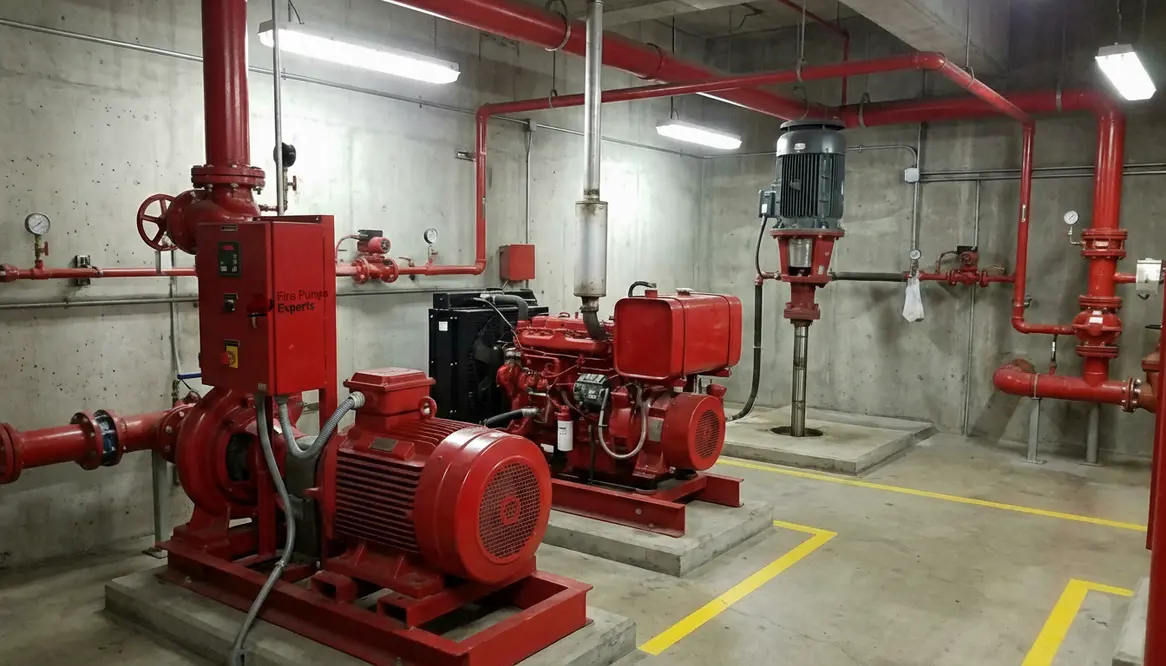
Electric fire pumps lead the pack. They are efficient, dependable, and ideal for stations with stable power. However, when the lights go out, things get interesting.
Diesel fire pumps step in as the backup heroes. They do not care if the grid takes a nap. They start up and deliver water with authority. Think of them as the action movie star who walks away from explosions without looking back.
Vertical turbine pumps are often used when water comes from underground sources. They are built for depth and endurance, pulling water like a pro without complaint.
Each of these systems plays a role in keeping large transit properties safe, especially in high traffic environments where response time is everything.
Inside transit station fire pump Oakland systems
When I look at a modern transit station fire protection setup, I see more than machinery. I see coordination. Every pump connects to a larger system of alarms, sprinklers, and control panels.
Electric pumps usually serve as the primary system. Meanwhile, diesel units stand ready as backup, ensuring compliance with strict fire codes. In addition, jockey pumps maintain pressure in the system, preventing unnecessary starts. They are like the quiet assistant who keeps everything running smoothly so the main act does not have to step in.
Moreover, these systems are designed for commercial scale. We are not talking about small buildings. These are major transit hubs with thousands of daily passengers, and the fire pump systems must match that demand.
Primary Roles
- Maintain water pressure
- Support sprinkler systems
- Deliver high flow rates
Key Benefits
- Reliable fire response
- Compliance with safety codes
- Protection for large scale assets
Why system selection matters in large transit facilities
Choosing the right fire pump is not a guessing game. In fact, it is closer to casting a movie. Pick the wrong lead, and the whole production suffers.
Transit stations in Oakland require pumps that can handle high demand and continuous readiness. Therefore, engineers consider flow rate, pressure requirements, and power availability. Additionally, redundancy is critical. If one pump fails, another must take over instantly.
I have seen facilities try to cut corners, and let me tell you, fire safety is not the place for budget shortcuts. A properly designed system ensures that even in worst case scenarios, water reaches every corner that needs it.
Matching pump performance to station risk
Every transit property carries its own risk profile. Deep platforms, long concourses, and mixed-use spaces all change how a transit station fire pump Oakland design should be engineered. Higher ceilings, longer hose runs, and underground areas demand more pressure and capacity than a simple surface-level building.
How maintenance keeps fire pumps ready at all times
Now here is where things get real. A fire pump that is not maintained is like a gym membership you never use. It looks good on paper, but it will not help when you need it.
Routine testing ensures pumps start instantly and perform at full capacity. Weekly churn tests, monthly inspections, and annual flow tests all play a role. Moreover, diesel engines require fuel checks and battery monitoring, while electric pumps depend on stable connections and control systems.
In large commercial transit properties, maintenance is not optional. It is part of the operational rhythm. And honestly, it is what separates a reliable system from a liability.
Typical maintenance rhythm in busy stations
- Weekly no-flow tests to confirm starting and running.
- Monthly visual inspections of controllers, gauges, and valves.
- Quarterly checks of sensing lines, pump alignment, and relief valves.
- Annual full-flow testing to verify that performance still matches the original design.
Transit station fire pump Oakland compliance and standards
Oakland transit facilities follow strict codes, including NFPA standards. These guidelines define how fire pumps should be installed, tested, and maintained.
For example, NFPA 20 outlines pump installation requirements, while NFPA 25 covers inspection and testing. Together, they create a framework that ensures systems perform when it matters most.
In addition, local regulations may add another layer of requirements. Therefore, working with experienced professionals who understand both national and regional standards is essential for large scale facilities.
Documentation and ongoing proof of performance
Authorities do not simply want to know a pump was installed correctly; they want proof that it still performs years later. That is why accurate logs for each test, inspection, and repair are so important for any transit station fire pump Oakland installation. When inspectors arrive, detailed records turn a stressful visit into a quick confirmation that the system is ready.
For more in-depth technical discussions on commercial fire pump strategies, resources such as https://firepumps.org provide broader context on design approaches and best practices.
FAQ about fire pumps in transit stations
Transit operators, designers, and maintenance teams tend to ask similar questions when they start reviewing their systems or planning an upgrade. Below are answers to some of the most common topics around performance, redundancy, and day-to-day reliability.
Closing thoughts and next steps
If you manage or design a transit facility, the right fire pump system is not just a requirement. It is a long term investment in safety and reliability. I encourage you to evaluate your current setup, consult with experienced professionals, and ensure your system meets modern standards. When everything is in place, you gain more than compliance. You gain peace of mind, and that is something every major facility deserves.