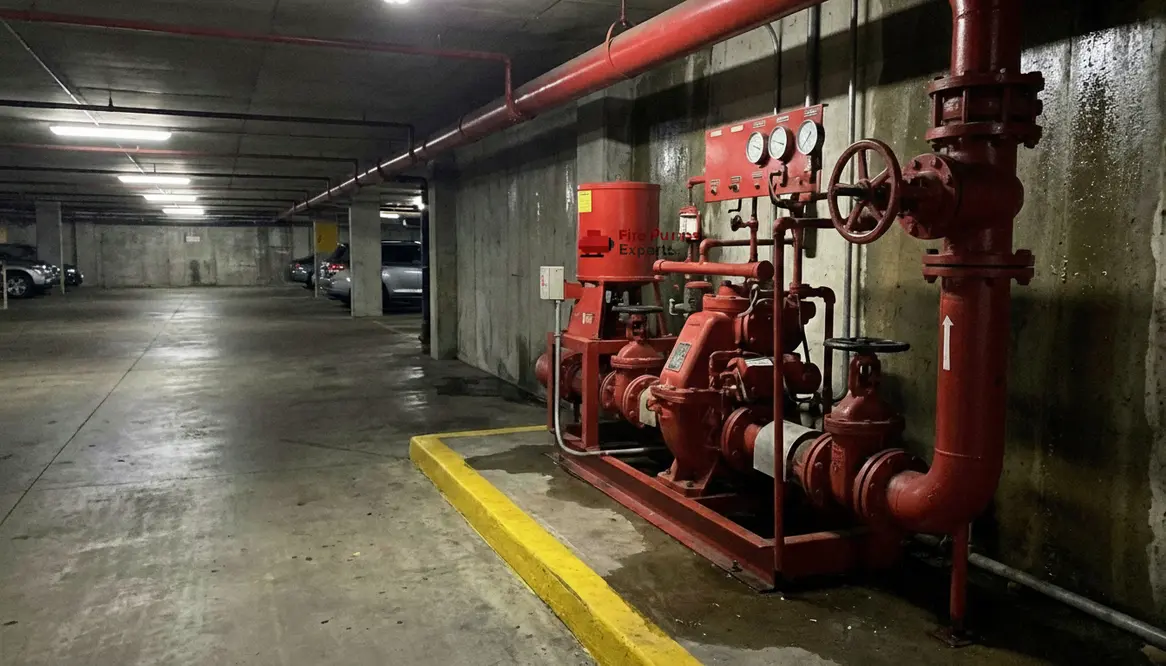
Underground Garage Fire Pump Requirements Guide
I have walked through enough subterranean parking structures to know one truth. Fire behaves differently underground. It lingers, it traps heat, and it turns a routine day into a scene straight out of a disaster film. That is why underground garage fire pump requirements matter so much in commercial and industrial facilities. These systems are not optional luxuries. They are the quiet guardians that stand ready when everything else goes loud. Today, I will guide you through what really keeps these spaces safe, with a steady hand and, yes, the occasional chuckle to keep things human.
Why Fire Safety in Subterranean Parking Areas Demands Respect
First, let me set the stage. Underground parking areas trap smoke and heat like a closed oven. Unlike open lots, ventilation is limited, and access points are few. Therefore, a small fire can escalate quickly.
Moreover, modern vehicles bring added risk. Electric vehicles burn hotter, while fuel powered ones still carry flammable liquids. It is a bit like hosting both dragons and gasoline tanks in the same cave.
Because of this, fire protection systems must act fast and decisively. In commercial properties, delays are not just dangerous. They are costly. Business interruptions, structural damage, and liability stack up quickly.
What Are Underground Garage Fire Pump Requirements?
Simply put, these requirements define how fire pumps must perform in below grade parking structures. I see them as the heartbeat of a fire protection system.
They ensure water reaches sprinkler systems with enough pressure and flow, even at the lowest levels. Without them, sprinklers can turn into expensive decorations.
In large scale facilities, these systems must account for:
- Vertical distance and pressure loss
- Simultaneous system demand
- Backup power reliability
- Integration with alarms and detection systems
Additionally, compliance is not just about passing inspection. It is about real world performance under stress. Because fire does not care about paperwork.
Key Design Elements That Actually Make a Difference
Now, let us move from theory to practice. I have seen systems that look impressive on paper but fail in execution. The difference lies in thoughtful design.
First, proper pump sizing is critical. Too small, and it cannot meet demand. Too large, and it creates pressure issues. It is a delicate balance, like tuning a guitar. Get it right, and everything sings.
Next, redundancy matters. Commercial facilities should always include backup pumps or power sources. Because relying on a single system during an emergency is like bringing one flashlight into a cave and hoping the batteries last.
Also, placement plays a role. Fire pumps should be easily accessible for maintenance but protected from hazards. Flooding, heat, and vibration can all compromise performance if ignored.
Underground Garage Fire Pump Requirements in Real Operations
Here is where things get interesting. Meeting underground garage fire pump requirements is not just about installation. It is about ongoing performance.
Regular testing ensures pumps activate instantly when needed. Weekly churn tests and annual flow tests are not just routine. They are essential.
Furthermore, integration with building systems is key. Fire alarms, ventilation controls, and suppression systems must work together. When they do, response becomes seamless.
In large commercial properties, automation helps. However, I always recommend human oversight. Technology is brilliant, but it still benefits from a watchful eye.
Common Pitfalls I See in Commercial Facilities
Design Oversights
- Underestimating water demand
- Ignoring pressure loss over distance
- Poor system integration
Operational Gaps
- Infrequent testing
- Delayed maintenance
- Lack of trained personnel
On the surface, these may seem minor. However, in a fire event, they become major failures. I often say that fire safety is like insurance. You only notice the gaps when it is too late.
How I Future Proof Fire Safety in Underground Parking
I always look ahead. Because buildings evolve, and so do risks.
For instance, the rise of electric vehicles requires updated suppression strategies. Higher heat output means systems must respond faster and sustain longer durations.
Additionally, smart monitoring is becoming standard. Sensors now track pump performance in real time. Therefore, issues can be addressed before they escalate.
And yes, sustainability plays a role. Efficient pump systems reduce energy use without sacrificing performance. It is a rare win win.
At the end of the day, future proofing is about staying proactive. Because reacting to a fire is never as effective as preparing for one. In the context of underground garage fire pump requirements, that means designing now for the vehicles, occupancy patterns, and regulations that are already on the horizon.
FAQ: Fire Safety in Subterranean Parking Areas
Final Thoughts and Next Steps
Fire safety in subterranean parking is not a background detail. It is a frontline defense. If you manage or own a commercial property, now is the time to review your systems, test performance, and ensure compliance. Work with experts who understand the stakes and the science. Because when the moment comes, preparation is everything. And trust me, that is one scene you want ending quietly.