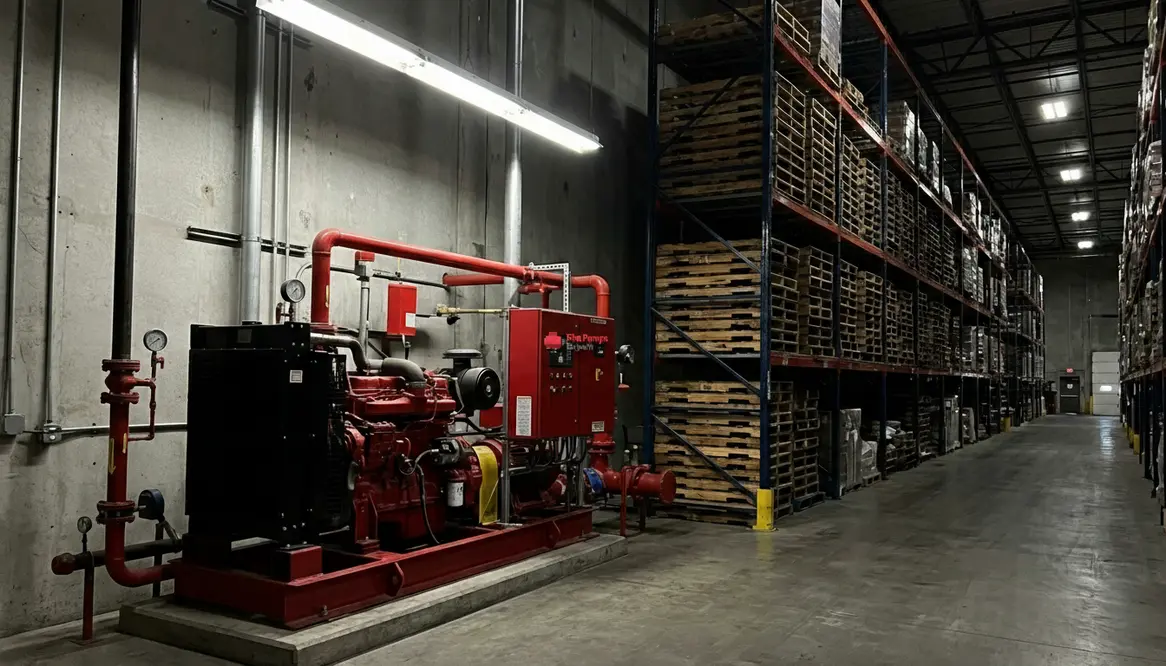
Warehouse Fire Protection with Fire Pump Systems
I have spent years around large facilities where a single spark can turn inventory into ash faster than you can say “insurance claim denied.” That is where warehouse fire protection steps in, quiet and ready, like the hero who does not need a cape. In distribution centers packed with high value goods and tight logistics timelines, fire pump systems are not just equipment. They are the backbone of a facility’s survival plan. And yes, they are far more reliable than hoping someone finds a working fire extinguisher in the breakroom.
How Fire Pump Systems Quietly Guard Your Operation
I like to think of fire pumps as the heartbeat of a fire protection system. Without them, everything else just sits there looking important. Sprinklers, standpipes, and hydrants depend on strong, consistent water pressure. When municipal supply falls short, the fire pump takes over instantly, keeping warehouse fire protection from becoming warehouse fire clean-up.
Moreover, these systems are built to respond without hesitation. The moment pressure drops, the pump engages. No meetings. No approvals. No “let me circle back.” Just action. That reliability is what keeps a small incident from becoming a headline.
In large scale facilities, where square footage stretches like a movie marathon, maintaining pressure across the entire system is not optional. It is essential. Fire pumps ensure water reaches the farthest corner, even if that corner feels like another zip code.
The role of fire pumps in warehouse fire protection
In practical terms, fire pumps turn a passive system into an active one. They make sure that when a sprinkler head opens, it is not just air and wishful thinking coming out. For high value operations, that difference is everything.
What Happens Inside a Fire Pump System During an Emergency?
From pressure drop to full response
Let me walk you through it in plain terms. When a sprinkler activates, system pressure drops. That drop signals the fire pump controller to start the pump. Within seconds, water flow increases and stabilizes.
Additionally, most systems include a jockey pump. Think of it as the system’s personal trainer, maintaining pressure so the main pump does not have to jump in for every minor fluctuation. It keeps things efficient and ready.
The real magic lies in coordination. Controllers, valves, and sensors all work together. It is less like chaos and more like a well rehearsed orchestra, except instead of violins, you get thousands of gallons of water doing exactly what they are supposed to do.
Why high piled storage changes everything
Warehouses today stack inventory higher than ever. Pallets rise like skyscrapers, and while that is great for storage capacity, it also creates serious fire risk. Heat builds quickly, and flames travel vertically with alarming speed.
Because of this, warehouse fire protection must account for both height and density. Fire pumps provide the pressure needed to penetrate these stacked configurations. Without that force, water might never reach the core of the fire.
Furthermore, modern commodities such as plastics burn hotter and faster. That means systems must deliver water at higher densities. Fire pumps make that possible, ensuring suppression efforts actually work instead of just looking good on paper.
Choosing the Right Fire Pump Setup for Large Facilities
Not all fire pumps are created equal. Selecting the right one depends on facility size, hazard level, and water supply conditions. I always tell clients that guessing here is like casting a superhero without powers. It might look right, but it will not end well.
Common pump types
- Electric driven pumps for reliable, steady performance
- Diesel driven pumps for backup when power fails
- Vertical turbine pumps for underground water sources
Key selection factors
- Required flow and pressure levels
- Building size and layout complexity
- Water supply reliability
In addition, redundancy plays a major role. Facilities often install backup pumps to ensure continuous operation. Because when it comes to fire protection, “Plan B” should already be running before Plan A even thinks about failing.
For facilities that want expert support choosing and maintaining systems, working with a specialized fire pump service provider such as Kord Fire Protection’s fire pump team can keep warehouse fire protection aligned with code, performance expectations, and real world risk.
Maintenance Keeps Systems Ready, Not Rusty
I have seen impressive systems fail for one simple reason. Neglect. Fire pumps require regular testing and inspection to stay effective. Weekly churn tests, annual flow tests, and controller checks are not optional tasks. They are the difference between readiness and regret.
Also, maintenance ensures compliance with codes and insurance requirements. Skipping it might save time today, but it can cost millions later. And trust me, explaining that to stakeholders is not a conversation anyone enjoys.
Consistent upkeep keeps the system responsive. When an emergency hits, there is no time for second chances. The system either works or it does not. That is why serious operations treat maintenance as a non negotiable part of warehouse fire protection, not an afterthought on a budget spreadsheet.
Testing rhythms that keep pumps trustworthy
- Weekly churn tests to verify the pump starts and runs
- Monthly visual inspections to catch leaks, corrosion, or damage
- Annual flow testing to confirm real world performance matches design
FAQ: Fire Pump Systems in Warehouses
What is the main purpose of a fire pump?
It boosts water pressure so fire suppression systems can operate effectively.
Do all warehouses need a fire pump?
Not always. Facilities with insufficient water pressure or high hazard storage typically require one.
How quickly does a fire pump activate?
It usually starts within seconds after detecting a pressure drop.
What powers a fire pump?
They are commonly powered by electric motors or diesel engines.
How often should fire pumps be tested?
Weekly and annual testing is standard to ensure proper performance.
Protect the Facility Before the Fire Starts
At the end of the day, I see fire pump systems as silent guardians. They do not ask for attention, yet they deliver when it matters most. Investing in a properly designed and maintained system is not just about compliance. It is about protecting operations, people, and reputation.
If your facility depends on uptime and safety, then it is time to make sure your fire protection strategy is as strong as your business ambitions. When fire shows up, preparation should already be in control. Building that preparation around reliable pumps, smart design, and disciplined maintenance gives your warehouse fire protection a fighting chance to keep your inventory, schedules, and people where they belong: safely in operation, not in an after incident report.