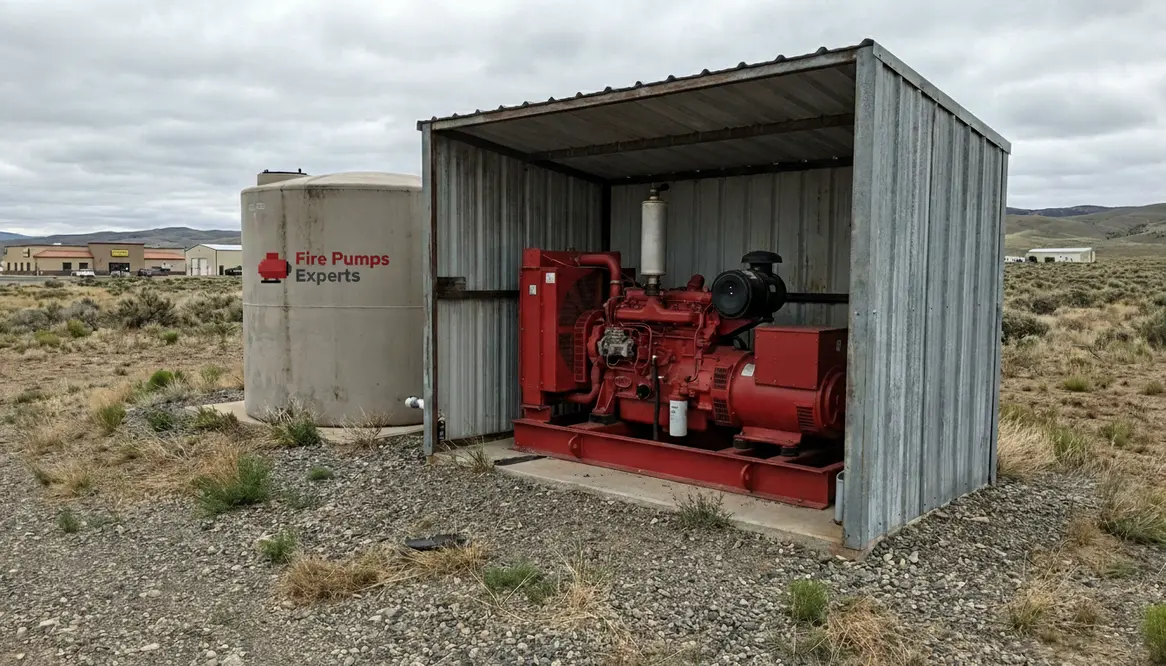
Distribution Hub Fire Pumps for Rural Buildings
I have spent years walking through quiet industrial corridors where the only thing louder than the machinery is the risk no one talks about. Fire protection in rural commercial buildings often lives in that silence. And yet, when I think about reliable solutions, distribution hub fire pumps come to mind almost immediately. They are not glamorous. They do not win awards. However, they stand ready like a seasoned night watchman who never blinks. In areas where municipal water systems hesitate or simply do not exist, these systems step in and do the heavy lifting.
So let us take a steady walk through what really matters here, with a bit of wit along the way. Because if we cannot smile while talking about fire safety, we are doing something wrong.
What fire pump requirements apply to rural commercial buildings?
I will answer this plainly. Rural commercial facilities must meet the same core fire protection codes as urban properties, but the execution looks very different. Since water supply is often limited, I always design around independence and reliability.
First, I ensure compliance with NFPA 20, which governs fire pump installation. Then, I look at NFPA 13 for sprinkler systems and NFPA 25 for maintenance. However, the real twist comes from the environment. Rural sites demand:
- A dedicated water source such as tanks, ponds, or reservoirs
- Redundant power supply often diesel driven pumps instead of electric
- Accessible placement for emergency response teams that may be miles away
And yes, this is where properly designed pump distribution systems earn their keep. Because when the nearest hydrant is a distant memory, your system must be self sufficient.
Designing for low water pressure and limited infrastructure
Now here is where things get interesting. Rural infrastructure rarely plays nice. Low pressure is common, and sometimes the available flow feels like it is coming through a coffee straw.
So I compensate. I size pumps not just for current demand, but for worst case scenarios. I also prioritize storage capacity. If a facility burns through its water supply in ten minutes, that is not a system. That is a countdown.
Additionally, I plan for long suction lines and elevation changes. These details matter. A poorly designed intake can turn a powerful pump into an expensive paperweight.
Think of it like casting a superhero. You do not just pick someone strong. You pick someone who can actually show up to the fight.
Distribution hub fire pumps in large scale property protection
When I work with expansive commercial or industrial properties, I lean toward centralized pumping strategies. Distribution hub fire pumps allow me to feed multiple buildings or zones from a single, well controlled location.
This approach brings several advantages:
- Consistent pressure across large sites
- Simplified maintenance routines
- Better system monitoring and control
However, I do not treat this as a one size solution. Each facility has its own personality. A manufacturing plant behaves differently than a distribution warehouse. And both behave very differently than a data center that panics if you even look at it with humidity.
So I adapt. Always.
Key components I never compromise on
There are certain elements I treat like sacred ground. Cut corners here, and the whole system becomes a gamble.
Column A
Pump Type Selection
I choose between diesel and electric based on power reliability. Rural sites often favor diesel for obvious reasons.
Controller Reliability
A pump without a dependable controller is like a car without a steering wheel. It might start, but good luck directing it.
Column B
Water Storage Integrity
Tanks must handle environmental stress and maintain volume under all conditions.
Routine Testing Access
If it is hard to test, it will not get tested. And that is how small issues become headlines.
These are not luxuries. They are the difference between readiness and regret.
Maintenance realities in remote locations
Let me be honest. Maintenance in rural areas requires discipline. Service teams are not always around the corner, and parts do not arrive by magic.
So I build systems that are easier to inspect and maintain. I also recommend strict testing schedules. Weekly churn tests and annual flow tests are not optional. They are the heartbeat of the system.
Furthermore, remote monitoring has become a game changer. With the right setup, facility managers can track performance without driving across three counties. It is not quite sci fi, but it is close enough to make you feel like you are in a control room somewhere important.
Cost planning without cutting critical corners
Everyone asks about cost. And I get it. Budgets matter. However, I always frame it this way. You are not buying equipment. You are buying time during an emergency.
Initial costs include pump units, installation, water storage, and infrastructure upgrades. Yet long term value comes from durability and reliability. Cheaper systems often demand more repairs, which quietly inflate total cost over time.
So I guide clients toward balanced decisions. Spend wisely upfront, and you avoid writing much larger checks later.
Why distribution hub fire pumps belong in rural strategy
When you step back and look at the entire fire protection picture for rural commercial sites, distribution hub fire pumps do more than move water. They knit together scattered buildings, irregular water sources, and vulnerable edges of a property into one coordinated, disciplined response.
Whether the facility is a processing plant on a lonely county road, a logistics center far from reliable utilities, or a campus of mixed-use structures stitched together by gravel drives, the right hub strategy makes fire protection feel less like improvisation and more like a well-rehearsed play. And on the worst day a facility might face, that difference matters.
FAQ
Below are some of the most common questions that come up when planning hub fire protection for rural properties, especially when distribution hub fire pumps are part of the conversation.
Final thoughts and next steps
If you manage a rural commercial or industrial property, now is the time to take fire protection seriously. I encourage you to evaluate your system, question its reliability, and explore stronger solutions like distribution based pump systems. The right setup does more than meet code. It protects your people, your operations, and your future. Reach out, ask the hard questions, and let us build something that stands ready when it matters most.