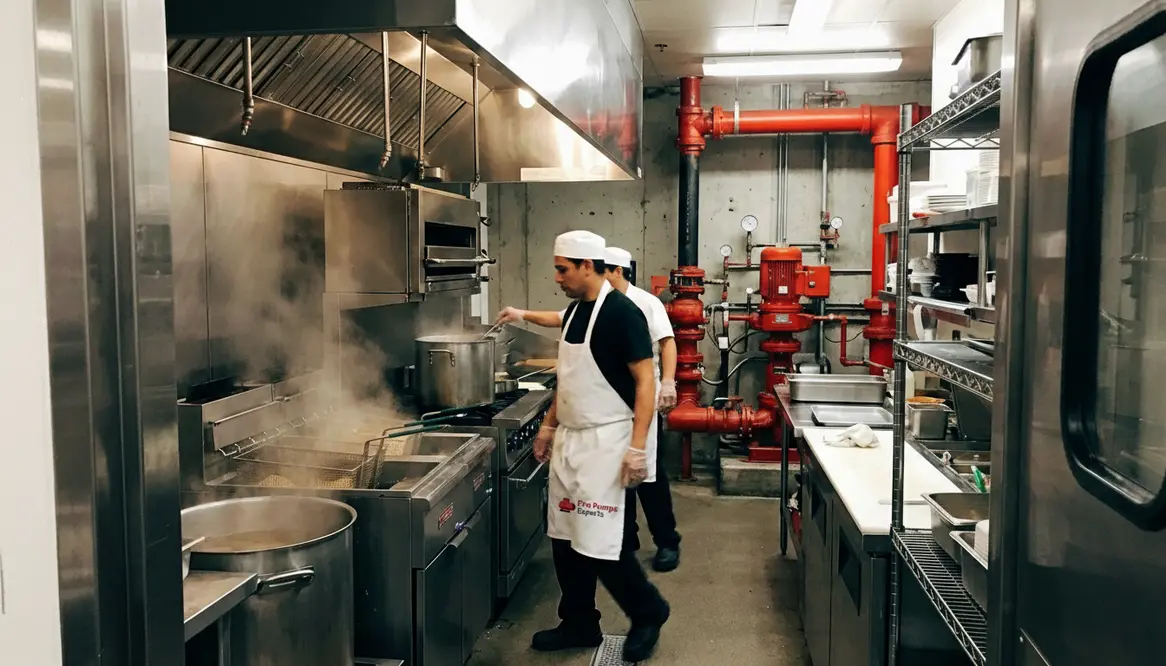
Fire Pump Systems for Commercial Kitchens Guide
A practical, no-nonsense walkthrough of how serious kitchens stay ready when the heat gets out of control.
I have spent enough time around commercial kitchens to know one simple truth. Fire does not ask for permission. It shows up fast, loud, and hungry. That is exactly why I always bring up Fire Pump Systems for Commercial Kitchens early in any serious conversation about protection. Within the first few minutes of stepping into a high volume cooking space, you can feel the heat, hear the constant sizzle, and smell the risk. So while chefs are busy crafting perfection, I am thinking about what happens when things go sideways. Because eventually, something always tries.
Now, let us walk through how to stay ahead of that moment, calmly and confidently.
In a hurry?
- Serious kitchens have layered fire risk, not just “some” risk.
- Fire Pump Systems for Commercial Kitchens boost pressure so suppression can actually do its job.
- Design, training, and maintenance matter as much as the hardware.
- Ignoring testing is like ignoring that weird sound in your car. It will not end well.
Why Cooking Heavy Spaces Demand Serious Fire Protection
In my experience, cooking heavy environments operate like controlled chaos. There is oil, open flame, electrical equipment, and constant motion. Therefore, the fire risk is not just present. It is layered. Grease builds up in places no one sees. Heat sources run all day. And distractions happen because, well, humans are involved.
Moreover, commercial kitchens in hotels, stadiums, and large facilities run at a scale that multiplies every risk factor. One small ignition point can quickly travel through ductwork or flare up across cooking lines. Consequently, passive protection alone is not enough. You need systems that act immediately and with force.
The “blockbuster” risk level
Think of it like this. If a small candle tips over at home, you panic. If a fryer ignites in a commercial kitchen, the stakes jump to blockbuster movie levels. Less superhero, more fire marshal.
How Fire Pump Systems for Commercial Kitchens Actually Work
Straight talk on what the pump actually does
I like to keep things simple. A fire pump system boosts water pressure so that suppression systems can respond instantly and effectively. Without that push, water might not reach critical areas fast enough. And in fire scenarios, seconds matter more than opinions.
These systems connect to sprinklers, standpipes, and suppression equipment designed for grease fires. Additionally, they ensure consistent pressure even when building demand fluctuates. That means no weak spray when you need a strong response.
What makes them essential in cooking heavy spaces is reliability. Kitchens do not shut down easily. Therefore, fire protection cannot hesitate. It has to work every time, without drama.
And yes, while the system itself is not glamorous, it is the quiet hero. Like that one character in every movie who saves the day without asking for applause.
What Do I Need for a Safe Commercial Kitchen Setup
Core protection elements I always look for
I get this question a lot, and I appreciate the directness. Here is how I approach it when evaluating a facility.
- High performance fire suppression systems over cooking equipment
- Properly maintained exhaust and duct cleaning schedules
- Reliable water supply supported by a dedicated fire pump unit
- Heat resistant materials around high risk zones
- Clearly marked and accessible emergency shutoffs
Operational habits that reduce risk
Operational behavior can either support your equipment or quietly sabotage it.
- Routine staff training that goes beyond basic compliance
- Daily inspections for grease buildup and equipment issues
- Immediate response protocols that are actually practiced
- Clear communication during peak service hours
When these elements come together, the kitchen becomes not just productive, but resilient. And that is the goal.
Designing Fire Protection Into Large Scale Kitchen Operations
When I work with large facilities, I do not treat fire protection as an afterthought. Instead, I build it into the design from the beginning. This approach changes everything.
Layout, integration, and worst case thinking
First, I consider layout. Equipment spacing, ventilation paths, and suppression coverage must align. Otherwise, you create blind spots. Next, I focus on integration. Fire pump systems, alarms, and suppression units need to communicate seamlessly.
Additionally, I plan for worst case scenarios. What happens if multiple zones ignite? Can the system handle simultaneous demand? If the answer is uncertain, I adjust until it is not.
Do not forget the people in the middle of it
There is also a human factor. Staff need to understand the systems around them. Because even the best equipment cannot compensate for confusion during an emergency.
And yes, while this level of planning might sound intense, it beats explaining to stakeholders why their kitchen turned into a scene from a disaster film.
Fire Pump Systems for Commercial Kitchens and Long Term Reliability
Here is where many facilities fall short. Installation gets attention. Maintenance gets forgotten. That is a mistake I never recommend making.
Fire pump systems for commercial kitchens must be tested regularly. Not occasionally. Not when someone remembers. Regularly. These systems depend on mechanical precision, and even small issues can reduce performance.
Furthermore, inspections should go beyond surface checks. I look at pressure levels, flow rates, and system responsiveness. If something feels off, I address it immediately.
Over time, this discipline pays off. Systems remain reliable, response times stay sharp, and risk stays controlled. It is not exciting work, but it is essential. Kind of like flossing. You do not think about it until you regret not doing it.
Where Fire Pump Systems for Commercial Kitchens fit in your bigger picture
Fire Pump Systems for Commercial Kitchens are not one more gadget on a long shopping list. They are central to whether your suppression systems show up with real force or just file a polite complaint while the fire keeps growing.
FAQ: Quick Answers for Fire Protection in Cooking Heavy Spaces
Fire Pump Systems for Commercial Kitchens raise a lot of practical questions, especially once you start looking at real-world kitchens instead of glossy brochures. Here are direct answers to the ones that come up the most.
Final Thoughts and Next Steps
Fire protection is not a checkbox. It is a commitment to safety, continuity, and peace of mind. When you invest in the right systems, including dependable fire pump solutions, you protect more than property. You protect people, reputation, and operations. If your facility handles serious cooking volume, now is the time to act. Strengthen your setup, refine your strategy, and make sure your kitchen is ready for anything.
If you want to compare options, see real system layouts, or understand how Fire Pump Systems for Commercial Kitchens are applied in environments similar to yours, resources like https://firepumps.org can be a useful starting point before you meet with your fire protection team.