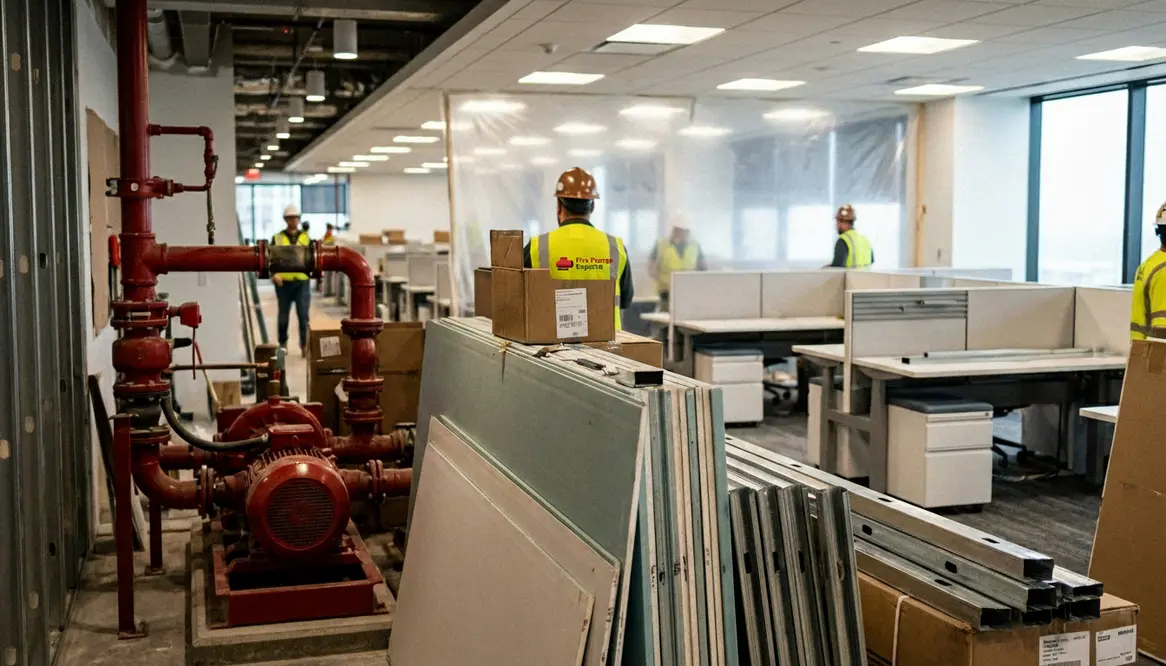
Office Expansion Fire Pump Requirements Guide
I have seen it happen more times than I can count. A company grows, the walls move outward, desks multiply, and suddenly the building feels alive in a new way. Yet, right there in the middle of all that progress sits a quiet question that too often gets ignored. How do office expansion fire pump requirements change when space and occupancy increase? It is not the flashiest topic, I admit. It will never trend like the latest superhero reboot. Still, if safety had a voice, it would sound calm, steady, and very serious about this exact issue.
So let me walk you through it, slowly and clearly, with just enough humor to keep us awake.
Why expanding office space changes fire protection demands
When I step into an expanded commercial building, I do not just see more desks. I see increased fire load, longer hose runs, and higher water demand. In other words, growth brings pressure, and not the good kind.
As a result, your existing fire pump system may no longer meet demand. The added square footage often requires higher flow rates or extended coverage. Moreover, if additional floors or renovated layouts are involved, pressure requirements shift as well.
Think of it like upgrading from a small coffee maker to a full espresso bar. Sure, both make coffee, but one is built for a crowd. Your fire pump needs to keep up with the crowd too.
office expansion fire pump requirements for commercial buildings
I always tell facility managers this first. Codes do not care how smooth your expansion went. They care whether your system performs under stress.
Typically, when office space grows, I evaluate three critical areas:
- Water flow demand increases due to larger sprinkler coverage
- Pressure requirements rise, especially in taller or denser layouts
- System redundancy becomes more important in high value properties
Furthermore, local fire codes and NFPA standards often require reassessment after any major modification. That means your original pump curve might no longer be valid. And yes, that can feel like discovering your phone charger does not fit your new device. Frustrating, but fixable.
What happens if the fire pump is undersized after expansion
Let me be blunt here. An undersized fire pump is not just inefficient. It is risky.
First, sprinkler systems may fail to deliver adequate water during a fire event. Consequently, fire suppression becomes delayed or ineffective. Second, insurance providers may flag the property, which can lead to higher premiums or compliance issues.
In large commercial and industrial facilities, this risk multiplies quickly. More people, more equipment, more exposure.
And here is the kicker. Many systems appear fine during routine checks. However, under real demand conditions, they fall short. It is a bit like trusting a gym membership to do the workout for you. It does not quite work that way.
How I evaluate fire pump capacity during office upgrades
When I assess a property, I take a structured approach. I start with hydraulic calculations, then move into real world system performance.
Left Column
- I review updated building layouts
- I calculate new sprinkler demand
- I verify water supply availability
Right Column
- I test pump performance curves
- I inspect controller and backup systems
- I confirm compliance with current codes
After that, I compare the existing system against the new demand. If there is a gap, I recommend either upgrading the pump, adding a parallel unit, or redesigning portions of the system.
Each building tells a different story. Some need small adjustments. Others need a full rewrite.
office expansion fire pump requirements and code compliance
Now, this is where things get serious. Codes are not suggestions. They are enforced standards that protect lives and assets.
Whenever office space expands, I ensure compliance with NFPA 20 for fire pumps and NFPA 13 for sprinkler systems. Additionally, local authorities often impose stricter rules depending on occupancy type and building height.
Therefore, ignoring updated office expansion fire pump requirements can result in failed inspections, delayed occupancy approvals, or even operational shutdowns.
No one wants their grand opening postponed because the fire pump could not keep up. That is not the kind of ribbon cutting anyone remembers fondly.
Smart upgrades that support long term growth
I always encourage clients to think beyond the current expansion. Growth rarely stops at one phase.
So, I often recommend scalable solutions. These include variable speed fire pumps, modular system designs, and enhanced monitoring systems. As a result, future upgrades become easier and more cost effective.
Additionally, integrating modern controllers allows real time performance tracking. That means fewer surprises and better system reliability.
Planning for phased expansion
When I look at office expansion fire pump requirements in buildings that plan to grow in phases, I focus on flexibility. It is not just about this year’s layout. It is about what happens when another floor gets leased, or when that warehouse space becomes a data center.
By sizing the system with a bit of strategic headroom, you avoid ripping everything apart every time the business succeeds. That makes your board happy, your insurer calm, and your facility team a lot less stressed.
It is a bit like buying a suit with room to breathe. You may not need it today, but you will be glad you planned ahead.
If you want a deeper technical breakdown of fire pump behavior during expansion, you can explore resources like https://firepumps.org along with your local fire code guidance. Pair that with a site-specific review, and you will have a clear roadmap for handling office expansion fire pump requirements without guesswork.
FAQ about fire pump impacts from office expansion
Below are some of the questions I hear most often when people start asking about office expansion fire pump requirements instead of just assuming the old system will cope.
Conclusion
Growth should feel exciting, not uncertain. When you address fire pump impacts early, you protect your investment and everyone inside your building. I recommend taking a close look at your system before expansion becomes reality. If you are planning changes to a commercial or industrial property, now is the time to act. Reach out, evaluate your system, and make sure your fire protection keeps pace with your ambition.