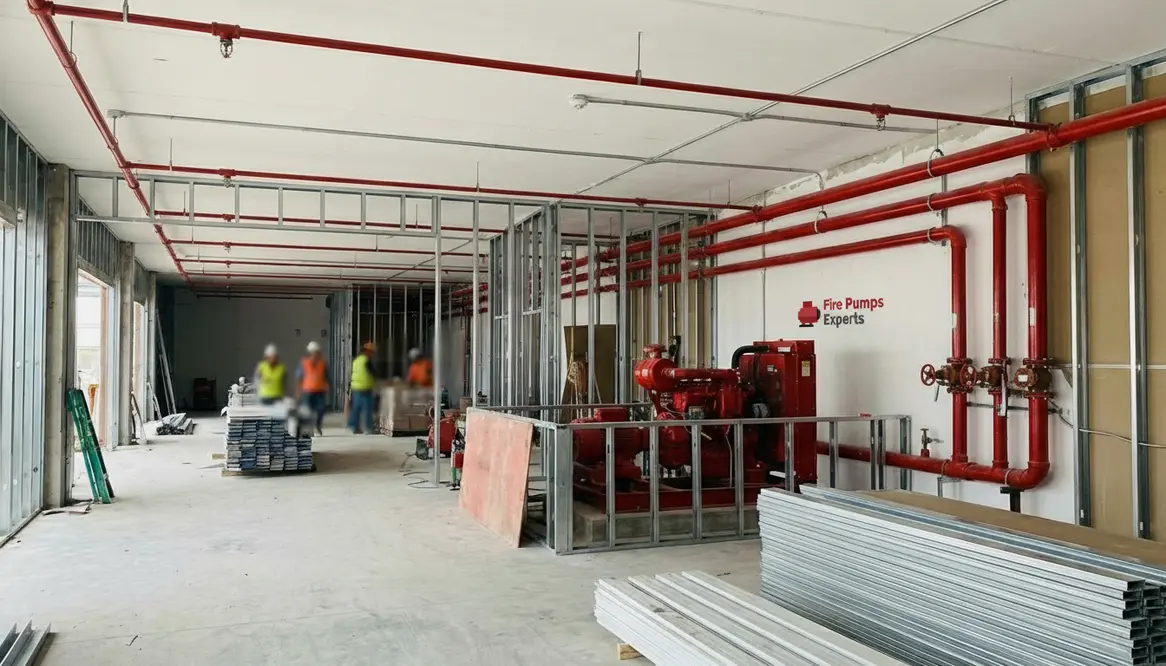
Retail Tenant Fit Out Fire Pump Systems Guide
A practical field guide to making retail tenant fit out fire pump systems as dependable as the rest of your design is beautiful.
I have walked through more commercial buildouts than I can count, and if there is one thing that always hums quietly beneath the surface, it is fire safety. Not flashy. Not glamorous. Yet absolutely essential. When I talk about retail tenant fit out fire pump systems, I am talking about the beating heart of a building’s fire protection plan. Without it, everything else is just decoration. And while sprinklers and alarms get the spotlight, the pump is the one doing the heavy lifting when things get real. Calm, steady, and always in control.
In other words, the best retail tenant fit out fire pump systems are the ones nobody notices on opening day, but everybody is grateful for on the worst day the building will ever see.
Why Fire Safety Planning Starts Before the First Wall Goes Up
Before a single fixture is installed or a sign is hung, I always focus on the fire protection strategy. Because once walls go up, changes get expensive fast. More importantly, they get complicated.
So I look at water supply, pressure requirements, and system demand early. Then I align those with local codes and the building’s existing infrastructure. While that might sound routine, it is where most costly mistakes begin.
Additionally, I coordinate with architects and engineers right away. That way, fire protection is not squeezed in later like the last piece of a puzzle that does not quite fit. Because trust me, nothing ruins a clean design faster than a last minute pipe reroute.
Retail Tenant Fit Out Fire Pump Systems in High Demand Spaces
In large commercial properties, demand is everything. Restaurants, retail anchors, and industrial tenants all pull different water loads. As a result, I evaluate whether existing systems can handle the added pressure or if upgrades are needed.
Sometimes, the base building system works fine. Other times, it needs reinforcement. And yes, that is where retail tenant fit out fire pump systems step in to carry the load.
However, I do not just look at capacity. I also look at reliability. Because a system that works most of the time is about as useful as a smoke detector with dead batteries. Technically present, practically useless.
That is why retail tenant fit out fire pump systems are evaluated not only for today’s menu of tenants, but for the inevitable reshuffle a few years down the line.
What Should I Check First During a Tenant Buildout?
I always start with three things, and I do not deviate from this order.
- Water supply: Is it sufficient for the new hazard classification
- System compatibility: Will new layouts affect sprinkler coverage
- Code compliance: Are we aligned with current fire codes, not last decade’s version
Then, I verify pump performance against projected demand. Because even if everything looks good on paper, real world conditions can tell a different story.
After that, I review alarm integration. Fire pumps, sprinklers, and alarms must work together like a well rehearsed band. If one is out of sync, the whole performance falls apart. And unlike a bad concert, this has real consequences.
Balancing Design, Compliance, and Real World Function
Now here is where things get interesting. A tenant wants aesthetics. The building owner wants cost control. And I want a system that performs under pressure. Literally.
So I balance all three.
For example, I may reroute piping to preserve a clean ceiling line while still maintaining proper coverage. Or I might recommend a pump upgrade that seems like overkill until you factor in future tenants.
Because here is the truth. Buildings evolve. Tenants change. Demands increase. A system designed only for today becomes a problem tomorrow.
And while I enjoy a good plot twist in movies, I prefer predictability in fire protection systems, especially when those systems include retail tenant fit out fire pump systems that may be called upon decades after installation.
Two Perspectives That Must Align
Column One: The Property Owner View
I often hear owners say they want efficiency and minimal disruption. That makes sense. Downtime costs money. However, cutting corners in fire protection is not efficiency. It is deferred risk.
Column Two: The Fire Protection View
From my side, I prioritize performance and compliance. Every valve, every connection, every calculation matters. Because when a system activates, it has one job. Work flawlessly.
When these two perspectives align, the result is a buildout that is both safe and sustainable. And honestly, that is the sweet spot.
Avoiding the Mistakes I See Far Too Often
I have seen patterns over the years. And while each project is unique, the same mistakes show up like reruns of an old sitcom.
- Ignoring pump capacity until late in the project
- Assuming existing systems can handle new demands
- Overlooking inspection and testing requirements
- Failing to coordinate across trades
However, the biggest mistake is treating fire safety as a checkbox. It is not. It is a system that must perform under extreme conditions.
So I approach every buildout with a simple mindset. Plan thoroughly. Verify everything. Assume nothing. That mindset applies doubly to retail tenant fit out fire pump systems, because they tie together so many moving pieces at once.
FAQ: Fire Safety for Tenant Buildouts
These are the questions I hear most often when a team realizes the fire pump is just as important as the floor plan.
Conclusion: Build Smart, Protect Better
When I look at a completed tenant buildout, I do not just see walls and finishes. I see systems working quietly in the background, ready when needed most. Fire safety is not the headline, but it is the foundation. So if you are planning a project, take the time to get it right. Invest in proper design, verify your systems, and make sure every component performs. Because in the end, safety is not an upgrade. It is a responsibility.
If you want to go deeper on best practices for fire pumps, inspections, and code references, resources like https://firepumps.org can be a useful technical companion to your design and construction team. Pair that knowledge with a disciplined approach to planning retail tenant fit out fire pump systems, and you give every project a quietly powerful backbone of protection.