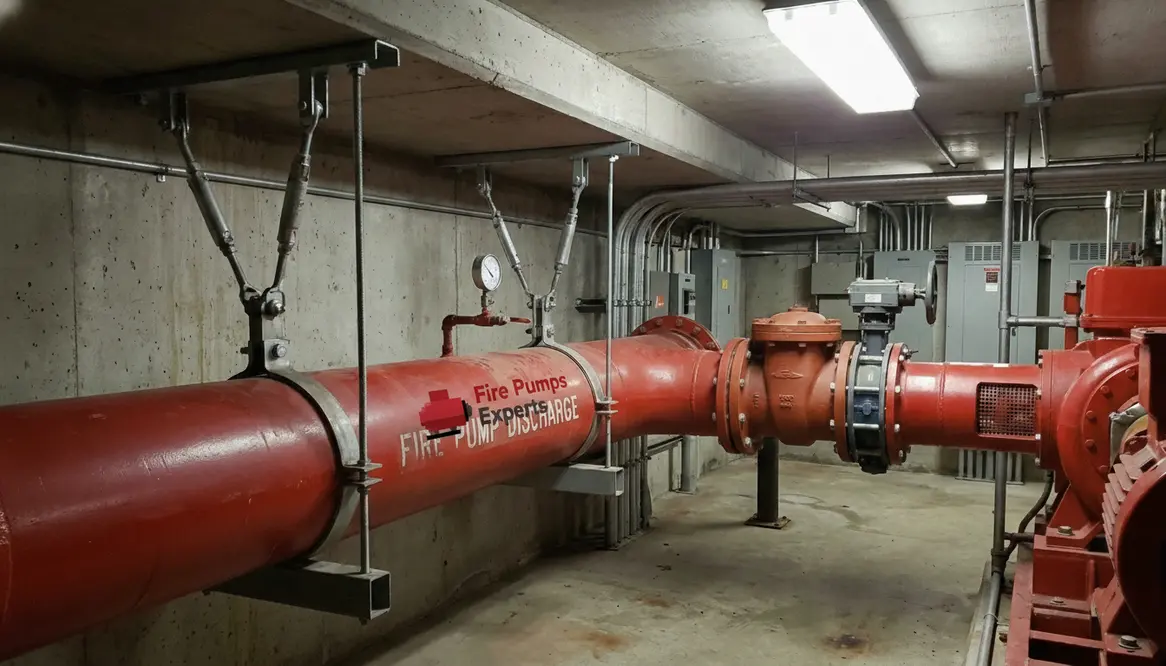
FM DS 3 7 Fire Pump Discharge Piping Guide
FM Data Sheet 3 7 Fire Pump Discharge Piping Guide: What I Look For in the Real World
When I work through FM DS 3 7 discharge piping, I focus on one thing first: keeping the fire pump able to do its job without drama. That means the piping must handle flow, pressure, vibration, and inspection with calm confidence. In a commercial tower or an industrial plant, the discharge side is not the place to improvise. It is the plumbing version of a lead actor, and if it flops, the whole show gets awkward fast. So, I keep my eye on layout, support, valve placement, and testing access from the start.
For large properties, the goal is simple: build a discharge line that moves water safely and predictably from the pump to the system. That sounds basic, yet the details matter a lot. A small mistake can create pressure loss, damage, or trouble during fire pump testing. So, let me walk through the parts that matter most.
What the FM guide wants from the discharge line
The FM guide pushes me to treat the pump discharge as a controlled path, not just a pipe run. First, I look at pipe size and the expected flow. Then I check that the line stays short and direct where possible. This helps reduce friction loss, which is just a fancy way of saying the water does not get tired before it reaches the system. Even water needs a decent commute.
Next, I confirm that the discharge piping supports the fire pump without stress. A pipe that hangs wrong or pulls on a flange can cause leaks or wear. Also, I make sure the design allows for inspection and service. In a busy industrial site, shutdown time costs money, so easy access matters. Finally, I verify that the discharge line matches the facility demand and the pump curve. If those two do not line up, the system may sound fine on paper but act grumpy in the field.
How I plan FM DS 3 7 discharge piping layout
I always start with the route. I want a layout that avoids extra bends, strange offsets, and long unsupported spans. Every elbow and fitting adds resistance, so each one should earn its place. After that, I check the valve arrangement. The discharge side usually needs the right mix of control, check, and test features so the pump can operate, be isolated, and be tested without chaos.
Layout checks I use
- Keep the line as direct as the building allows
- Limit unnecessary fittings and sharp turns
- Provide clear access to valves and gauges
- Support the pipe so vibration does not travel through the system
- Leave room for testing, maintenance, and future service
Planning for future changes
When I review a plan for a high rise or plant, I also think about expansion. Buildings change. Tenants grow. Production shifts. Therefore, the discharge piping should not box the owner into a corner. A smart layout gives the facility room to adapt without turning the mechanical room into a scene from a bad action movie.
Why support, restraint, and vibration control matter
Once water starts moving, the piping feels it. That is why support and restraint are not small details. They keep the line stable during normal service and during pump startup. The pump can create strong forces, so I check for proper anchors, guides, and supports that can handle those loads. If the pipe moves too much, it can strain joints, loosen fittings, or damage nearby equipment.
Vibration control matters for the same reason. Fire pumps do not whisper. They shake, they surge, and they work hard. So, I want the discharge line to stay firm without transferring too much movement into the building frame. In many commercial and industrial sites, I also watch for long pipe runs that can act like a lever. That is where good support design keeps the whole system calm and steady.
| Design Item | What I Check |
| Supports | Spacing, load strength, and location |
| Anchors | Ability to hold thrust and movement |
| Valves | Easy access and correct direction |
| Testing point | Safe use during inspection and flow testing |
What I check during inspection and testing
Testing tells the truth. Design drawings may look polished, but water does not care about pretty lines on paper. During inspection, I check for leaks, pressure issues, and valve function. I also verify that gauges are readable and that the test arrangement works for the facility’s required flow checks. If the discharge piping does not allow proper testing, then the system becomes hard to verify, and that is not a fun surprise for anyone.
For owners and facility teams, this step is critical because it proves the pump can perform when needed. It also helps spot weak points before an emergency does the spot checking for us. And trust me, emergencies have poor bedside manners.
For a deeper look at the standard, I often recommend reviewing FM Global data sheets for fire protection systems alongside the project specs. That helps tie the pump room design to the larger fire protection plan for commercial and industrial buildings.
FM DS 3 7 discharge piping in practice
Real-world priorities
In the field, FM DS 3 7 discharge piping is where design intent meets concrete walls, odd beam locations, and the occasional “creative” past renovation. I focus on respecting the intent of the data sheet while navigating real constraints, keeping the discharge route readable at a glance even years after commissioning.
Coordination with the rest of the system
Good FM DS 3 7 discharge piping design also respects riser locations, sectional control valves, and test header placement. The discharge line should feel like the backbone that ties those elements together without tangling the mechanical room or blocking service aisles.
FAQ
Conclusion
If you want a fire pump discharge line that works when the pressure rises, I recommend treating FM DS 3 7 discharge piping as a design priority, not an afterthought. Keep the run direct, support it well, and make testing easy. Then check the details again before startup. If your project involves a commercial tower, plant, or major property, reach out to a qualified fire protection team and review the layout now, while the fixes are still simple and the cost is still civilized.