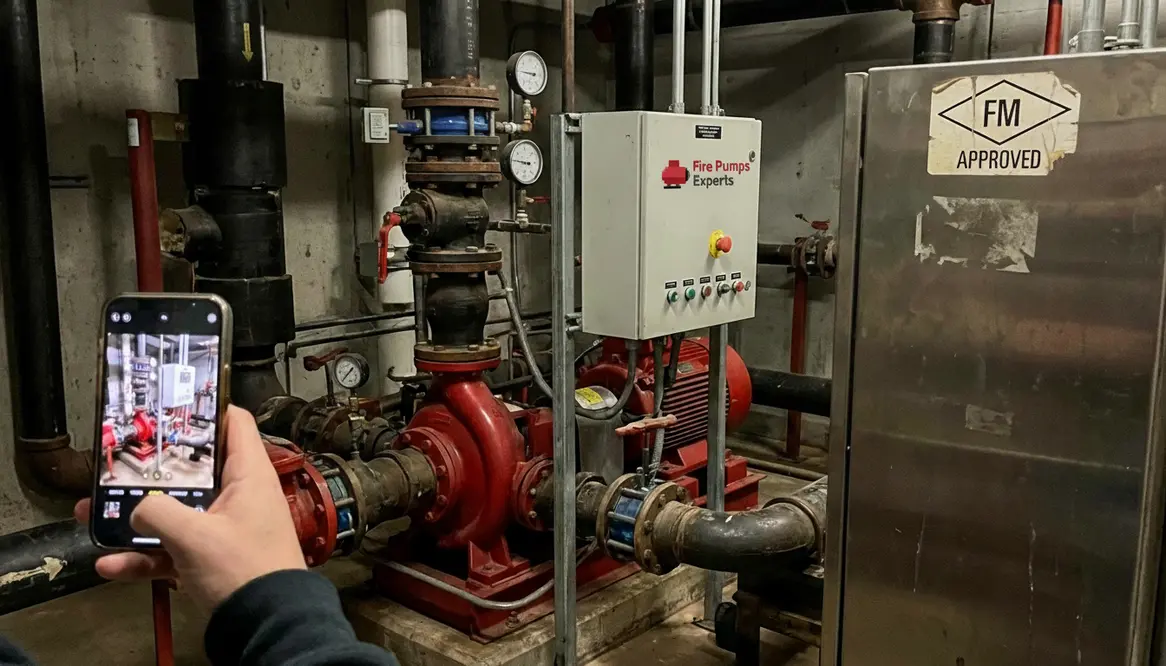
FM Global Fire Pump Requirements for Critical Facilities
Why the quiet room in the basement may be the only thing standing between your operation and a very costly pause.
When I look at a critical facility, I see more than walls, wires, and gear. I see a place that cannot afford a pause. That is why FM Global requirements matter so much for fire pumps in commercial and industrial buildings. They help make sure water arrives fast, steady, and ready when fire threatens the operation. In a world where downtime can cost more than a movie sequel no one asked for, these standards give owners a clear path for protection, reliability, and peace of mind. And yes, the pump room may not be glamorous, but it can save the whole show.
In this guide, I will walk through what these requirements mean, why they matter, and how I approach them for major properties and mission critical sites. The goal is simple: keep water moving, pumps spinning, and your doors open, even when everything else is going wrong.
What I look for first in a fire pump setup
Before I even think about the fine details, I start with the big picture. FM Global wants the fire pump system to support the sprinkler demand with enough pressure and flow for the hazard in the building. That sounds simple, yet the real work begins with site review, water supply review, and pump selection. I always check whether the building has enough water source capacity, because a fire pump cannot create water out of thin air. If only life worked like that.
I also look at the building use, the stored commodities, and the level of risk. A data center, a warehouse full of high rack storage, and a large office tower all need different thinking. As a result, the pump must match the real hazard, not some guess made during a coffee break.
Big-picture checks
- Is the water supply dependable and sized for real fire demand?
- Does the building’s use and storage match the assumed hazard?
- Are future expansions or storage changes likely to increase demand?
Early red flags
- Undersized mains counted on to “somehow” perform
- Pump rooms used as storage closets
- No clear plan tying FM Global requirements to actual site conditions
FM Global requirements for pump sizing and reliability
Here is where the rules get serious. FM Global requirements call for a fire pump that can deliver the needed pressure and flow under real fire conditions. I focus on the full system, not just the pump nameplate. The driver, suction source, valves, controls, and power supply all matter. If one part fails, the whole system can wobble like a folding chair at a family cookout.
I also pay attention to reliability features. That means strong supervision, proper room conditions, and protection from common failure points. For electric pumps, the power supply must stay dependable. For diesel pumps, fuel, cooling, batteries, and ventilation must all stay in good shape. In addition, the pump room must allow clear access for testing and service. A blocked pump room is a bad joke with a very expensive punchline.
System design
- Pump size must match the hazard and the sprinkler demand
- Water supply must support the needed flow and pressure
- Controls and valves must be easy to reach and inspect
Long term performance
- The room must stay dry, warm enough, and secure
- The driver must remain ready at all times
- Testing must verify the pump can perform when needed
How I match the pump to the building risk
Once I know the hazard, I can align the pump design with the property. For critical facilities, I do not chase a one size fits all answer. Instead, I look at the actual fire protection demand. For example, a large industrial plant may need higher flow because of exposed processing areas, while a major commercial property may need careful pressure support for taller risers and dense coverage.
FM Global requirements also push me to think about water supply stability. If the public main is weak or unreliable, I have to consider tanks, fire water storage, or other approved supply methods. Therefore, I compare the available source against the expected demand and the duration needed for fire protection. This step matters because the best pump in the world still needs a strong supply behind it.
I also check whether the system has room for future risk changes. Buildings evolve. Storage grows, tenants change, and equipment gets upgraded. So, I prefer a design that can hold up when the property changes, not just when the ink dries on the plan.
Design choices that age well
- Allowing margin in pump selection for realistic future changes
- Choosing water storage that matches both flow and duration expectations
- Documenting how FM Global requirements tie to each major system component
What testing and maintenance need to cover
Testing is not a box to tick and forget. It is the only way to know the system will work when the alarm sounds. I look for regular churn tests, weekly or monthly checks where needed, and full performance testing at set intervals. In addition, I want records that show flow, pressure, vibration, fuel condition, and controller behavior. Good records tell a clear story; bad records just whisper, “We meant to get to that.”
Maintenance also matters a great deal. A pump can lose reliability if seals wear out, batteries weaken, or valves drift out of position. So, I make sure the program covers the full system, not just the obvious parts. Moreover, staff should know what normal looks like, because a small change today can become a major problem tomorrow.
Key testing actions
- Regular churn tests to keep the pump exercised
- Documented performance curves at approved flow points
- Alarm, indication, and controller function checks
Maintenance must-haves
- Battery health, fuel quality, and lubrication checks
- Routine valve position verification
- Cleaning and securing the pump room so people can actually reach the equipment
Why critical facilities need a tighter standard
Critical facilities cannot treat fire protection as an afterthought. A shutdown can hurt revenue, damage equipment, and interrupt services that many people depend on. That is why FM Global requirements are so valuable for commercial and industrial properties. They bring discipline to the process and reduce weak spots before a fire exposes them.
I have found that the strongest fire pump programs do three things well. First, they match the hazard. Second, they stay easy to inspect and test. Third, they keep the water source and driver ready for action. When those three pieces line up, the building stands on much firmer ground.
Bringing it all together for major properties
If you need a deeper look at FM Global fire pump standards for commercial and industrial facilities, it helps to work with a team that understands major property risks, system design, and ongoing compliance. That kind of support can turn a confusing requirement into a clear plan and keep your fire protection program aligned with evolving FM Global requirements instead of constantly playing catch-up.
For additional reference material on fire pumps and system design, resources like https://firepumps.org can support the detailed work that sits behind your strategy.
FAQ
Conclusion
If your facility depends on uptime, then your fire pump system deserves careful attention. I would treat FM Global requirements as a working guide, not just paperwork. Review the hazard, confirm the water source, test the pump, and keep the room ready. If you manage a commercial or industrial property, now is the time to tighten the plan and protect the building before trouble arrives. The safest time to fix a fire pump issue is long before smoke shows up.