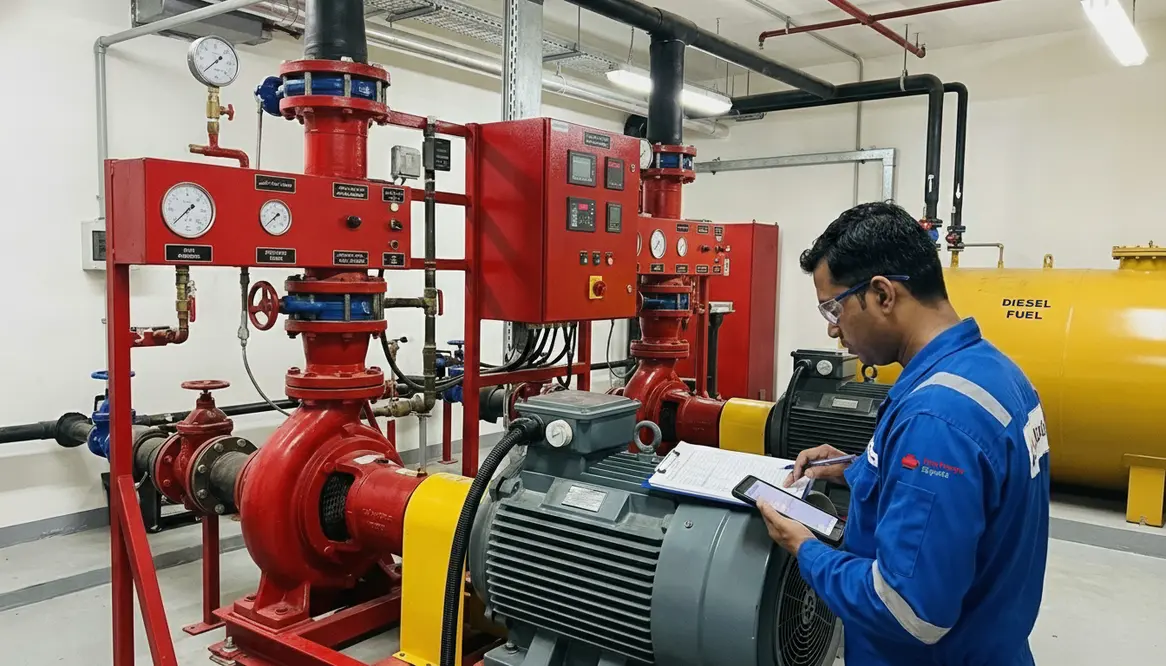
UAE Fire Code Fire Pump Maintenance Checklist
UAE Fire Code Fire Pump Maintenance Guide
I have seen many building systems look impressive on paper and then quietly fail when it matters most. That is why UAE Fire Code maintenance for fire pumps deserves serious attention, especially in commercial and industrial facilities and major property buildings. A fire pump is not just another machine in the plant room. It is the heart of the fire protection system, and when it sleeps on the job, everyone notices. In this guide, I will walk through the practical steps, the checks that matter, and the habits that keep your system ready without turning the process into a circus. Well, unless the pump starts acting like a diva.
What fire pump maintenance means for UAE buildings
Fire pump maintenance means I inspect, test, clean, and verify every part that helps the pump deliver water during an emergency. In the UAE, I must align that work with local fire safety rules and the wider expectations of UAE Fire Code maintenance. For large commercial towers, warehouses, factories, and mixed use assets, this process protects people, assets, and business continuity. It also helps me catch weak points before a real alarm turns the room into a very expensive surprise.
In practice, I focus on pump condition, power supply, jockey pump performance, valves, pressure levels, suction lines, and control panels. I also check for leaks, rust, loose fittings, vibration, and unusual noise. If a fire pump sounds like it is auditioning for a horror movie, I already know I need to investigate.
How I inspect a fire pump step by step
I start with a visual review. First, I confirm the pump room stays clean, dry, and easy to access. Then I check the control panel for warning lights, fault codes, and signs of heat damage. After that, I inspect the suction and discharge lines to make sure no blockages, cracks, or leaks are hiding in plain sight.
Next, I test the pump under proper conditions. I record pressure readings, flow behavior, and start up response. I also verify the diesel driver or electric motor works as it should. Because fire pump systems often sit idle for long periods, regular tests matter more than people think. A machine can look fine and still fail with the confidence of a side character in a disaster film.
Here is the simple flow I follow:
Inspection and testing checklist
- Visual checks for leaks, rust, noise, vibration, and access issues
- Control checks for alarms, battery health, and panel condition
- Pressure checks for suction, discharge, and jockey pump balance
- Operational checks for start up, run time, and shutdown behavior
- Documentation checks for logs, faults, and corrective actions
Weekly, monthly, and annual tasks I never skip
I use a layered schedule because different issues appear at different times. Weekly checks help me catch obvious faults. Monthly checks give me a fuller picture of performance. Annual checks go deeper and help confirm long term reliability.
Weekly, I look at pressure levels, run the pump as required, and confirm no alarms stay active. Monthly, I review the diesel fuel level, battery condition, engine readiness, and valve position. I also look for evidence of corrosion or wear. Then, once a year, I carry out a deeper inspection with more detailed testing and calibration.
These tasks support compliance with fire safety standards and help me stay ahead of breakdowns. More importantly, they protect the buildings that depend on the system every day. In large facilities, one missed check can grow into a costly repair, and costs, as we all know, enjoy arriving uninvited.
Why documentation matters more than people expect
I treat records as part of the system, not an afterthought. If I test a fire pump and do not record the result, I leave a gap in the maintenance history. That gap can create trouble during audits, inspections, insurance reviews, or emergency investigations.
Good records show me when the pump was tested, what the readings were, what faults appeared, and how I fixed them. They also help me spot patterns. For example, if pressure keeps dropping on the same schedule, I know I need to look deeper. Clear logs also support UAE Fire Code maintenance by showing that the facility takes fire protection seriously and follows a disciplined process.
I see documentation as insurance for your insurance. When the question changes from “Did you maintain the system?” to “Can you prove it?”, strong records answer before anyone needs to clear their throat.
Who should handle fire pump maintenance in major properties
I strongly recommend trained technicians or qualified fire protection teams handle this work. Major properties and industrial sites need people who understand pump systems, control logic, water supply issues, and local compliance needs. A general handyman can do many things, but a fire pump is not the place for guesswork. This is not a “watch a quick video and improvise” situation.
For facilities that want outside support, I suggest working with specialist fire pump service providers that focus on commercial and industrial buildings. For more technical guidance and service support, a useful resource is the UAE commercial fire pump maintenance specialists. That kind of support can help owners keep systems ready and reduce the risk of failure when it matters most.
Common problems I watch for before they become failures
I pay close attention to a few repeat offenders. Low pressure often points to leaks, poor suction, or pump wear. Battery failure can stop a diesel pump from starting. Corrosion can weaken fittings and affect flow. Air leaks can reduce performance and make the system unstable. In some cases, dirty strainers or blocked lines cause the pump to work harder than it should.
When I find a problem early, I save time, money, and stress. That is the whole point of fire pump care: not drama, not panic, just readiness. The system should behave like a trusted bodyguard, not like a sleepy extra in the background.
Predictable problems are the easiest to prevent. A disciplined approach to UAE Fire Code maintenance turns those “surprise” failures into routine corrections long before anyone smells smoke.
FAQ
Conclusion
I never treat fire pump care like a routine checkbox. Instead, I treat it like a promise that the system will work when lives and assets depend on it. If you manage a commercial, industrial, or major property building in the UAE, now is the time to review your maintenance plan, tighten your records, and bring in the right support. A strong fire pump program keeps you ready, compliant, and far less likely to meet disaster with a blank stare. When UAE Fire Code maintenance sits at the center of your fire protection strategy, the pump room stops being a mystery and starts being a reliable line of defense.