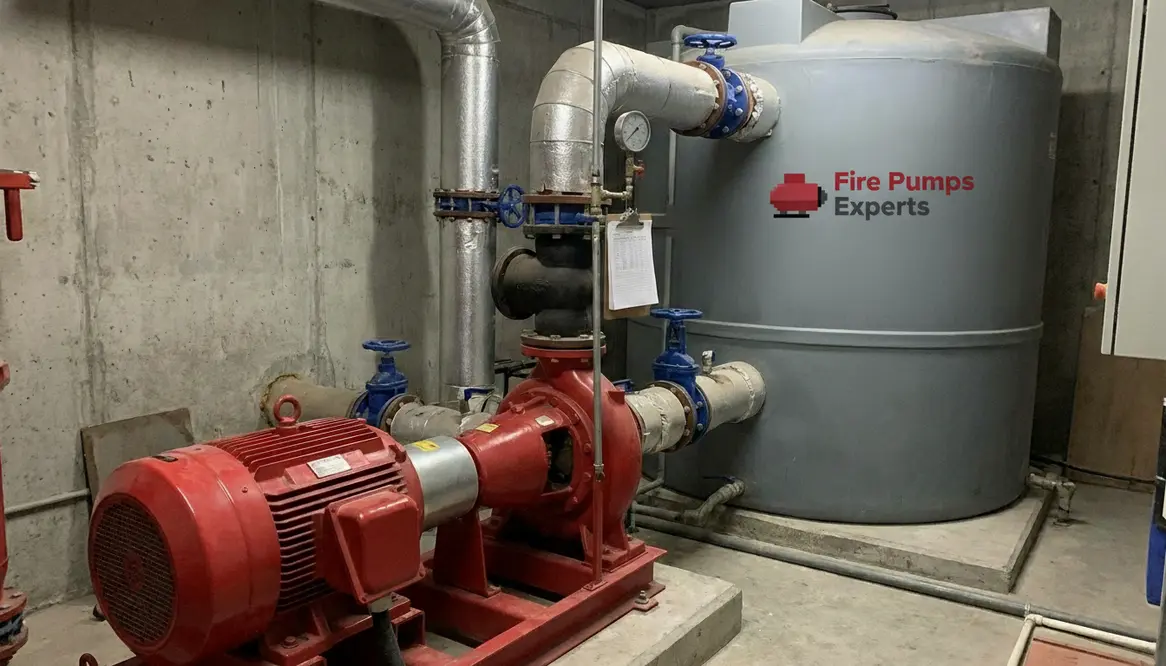
UAE Fire Code Fire Pump Water Supply Checklist
UAE Fire Code Fire Pump Water Supply Requirements: What I Always Check First
When I look at UAE Fire Code water supply rules for fire pumps, I start with one simple truth: a fire pump is only as good as the water behind it. That sounds obvious, yet many commercial towers, industrial plants, and major property buildings still treat the supply side like a side character in a big movie. It is not. It is the lead role. In the UAE, the fire code expects a water source that can support the pump under real emergency demand, not just look neat on paper. So, if you manage a large property, I want to walk you through the parts that matter most, without the fluff, and without the usual fire safety sermon that makes people check their phones.
Quick Reality Check
- Fire pumps fail more often from bad water supply than bad machinery.
- Paper calculations do not save buildings; real, reliable water does.
- If you cannot explain where the water comes from and for how long, you have homework.
What the UAE Fire Code Expects From a Fire Pump Water Source
I always begin by checking the water source type. The code expects a reliable supply for commercial and industrial buildings, and that means the system must feed the fire pump with enough water for the required duration and flow. In practice, this often means a dedicated tank, a dependable public main, or a combined setup with backup capacity. However, I do not trust a setup just because it exists. I ask whether it can deliver the needed flow when the building actually demands it.
The water source must also stay available during peak use and emergency conditions. That means I look at storage, refill rate, pressure stability, and any risk of interruption. If a site depends on a weak municipal line, I treat that like asking a paper umbrella to fight a monsoon. It will not end well.
Reliability Questions I Ask First
- Is the water source dedicated to fire use, or shared with domestic/irrigation loads?
- Can it supply the required fire flow for the full design duration?
- What happens if the public main pressure drops during a real incident?
- Is there on-site storage that protects the UAE Fire Code water supply from everyday consumption?
How I Check Water Storage for UAE Fire Code Water Supply
Storage is where many projects either stay calm or start sweating. For major property buildings, I check the fire water tank size against the sprinkler, hydrant, and standpipe demand. I also review whether the tank serves only fire use or whether other systems tap into it. The best setup keeps fire water protected from casual use, because nothing ruins emergency planning like shared supply habits.
Here is the practical breakdown I use:
- Dedicated volume for fire protection only
- Sufficient duration to support the required fire event
- Refill support if the design depends on incoming water
- Low level alarm to warn of trouble before it becomes a problem
Also, I look at tank location and access. A tank that sits too far from the pump, or one that complicates suction piping, can create avoidable losses. And yes, a bad layout can turn a simple check into a small engineering drama.
Tank Design Red Flags
- Fire and domestic storage combined with no protected fire reserve
- Tank outlets arranged so the pump “runs dry” while water is still sitting in the tank
- No way to verify levels easily during inspection
- Refill lines sized for convenience, not for actual UAE Fire Code water supply demand
Fire Pump Suction and Pressure Details I Never Skip
Now let’s talk suction, because this is where the water actually enters the pump. I always verify that the suction line stays short, direct, and properly sized. If the line strangles flow, the pump will not perform as expected. I also check the suction pressure and make sure the pump can operate under the most demanding conditions the site may face.
For large facilities, stable inlet pressure matters just as much as tank size. If the pressure drops too far, the pump may cavitate, lose efficiency, or fail to deliver the needed output. That is why I review the full water path, not just the pump tag.
Suction Line Essentials
- Short runs with minimal elbows and restrictions
- Valves that are full bore and clearly locked or supervised open
- Strainers, where used, sized so they do not throttle the UAE Fire Code water supply at high flow
- Suction pressure monitored where it actually matters, not just where it looks nice
Dual Column View of What I Verify on Site
What I Inspect
- Suction pipe size
- Valve position
- Water level
- Pump room access
Why It Matters
- Supports smooth flow
- Prevents blockage
- Protects pump operation
- Helps during emergency service
Why Commercial and Industrial Properties Need Backup Planning
I never assume one water source is enough for a large site. Commercial towers, factories, warehouses, and mixed use buildings often need backup water planning because risk does not wait for a convenient hour. It shows up at night, during heat, or right after the maintenance team leaves for lunch. Naturally.
That is why I pay close attention to redundancy. If a building relies on one source, I ask what happens if that source drops. If a tank serves the pump, I ask whether the refill line can keep up. If a public supply feeds the system, I ask whether the network can sustain fire demand without a pressure dip. Good planning means the system stays ready even when one piece fails.
I also recommend a clear testing routine. Regular pump tests, flow checks, and water level checks help confirm the system still meets the design intent. In other words, the real world gets a vote, and the system must pass that vote.
Simple Backup Moves That Make a Difference
- Ensuring refill lines can restore full fire storage within the required time
- Providing alternate valves or connections for firefighting vehicles to supplement supply
- Documenting exactly how the UAE Fire Code water supply is maintained if one source fails
- Scheduling tests that simulate real failure scenarios, not just “press start and hope” drills
Where I See the Most Common Mistakes
In my experience, the most common problems are not dramatic. They are small, slow, and quietly annoying until they become expensive. A tank gets repurposed. A valve gets left partly closed. A refill line gets undersized. A pump room gets packed with storage, as if fire safety and office clutter decided to share a tiny apartment.
So, I always focus on these mistakes first:
- Using a water source that cannot meet fire demand
- Ignoring tank reserve levels
- Poor suction pipe design
- Skipping routine testing
- Mixing fire water with non fire use without clear control
When I help owners or facility teams, I push for early review, because fixing water supply issues during commissioning costs far less than fixing them after a compliance check or, worse, after an emergency.
Practical Checklist for UAE Fire Code Water Supply Compliance
- Confirm storage volume and duration match the most demanding system (sprinklers, hydrants, standpipes).
- Verify that fire reserves are clearly marked and protected from other uses.
- Check that suction piping, strainers, and valves do not choke the pump at full flow.
- Test refill capacity and document how long it takes to restore fire reserves after a test.
- Inspect pump room access, lighting, and clear space for real emergency work.
- Log every test and inspection where the fire authority and insurers can actually find it.
FAQ
Conclusion
If you manage a commercial or industrial property, I strongly suggest you review your fire pump water supply before someone else reviews it for you. Check the tank, suction line, pressure, refill path, and backup plan with a sharp eye. Then, if you want a system that actually supports compliance and real protection, take action now. For expert help with major properties, speak with a team that understands UAE Fire Code water supply needs from the ground up. Your building deserves more than hope. It deserves readiness.