UAE Fire Code Fire Pump Requirements for Malls
When I look at UAE Fire Code malls, I see more than a rulebook. I see the quiet machinery behind a safe, busy building. A mall can feel like a small city, with food courts, parking levels, anchors, cinemas, and crowds moving like they are late for the same movie. Because of that, fire pumps do serious work behind the scenes. They help deliver water pressure fast, so sprinklers, hydrants, and hose reels can do their job when every second matters.
In the UAE, mall fire protection must follow local civil defense rules and the wider fire code. So, if you manage, design, or own a commercial property, you need to understand the pump setup early. Otherwise, you may end up redesigning systems after the drawings are already married to the ceiling. That is not a fun date.
What UAE fire code expects from mall fire pumps
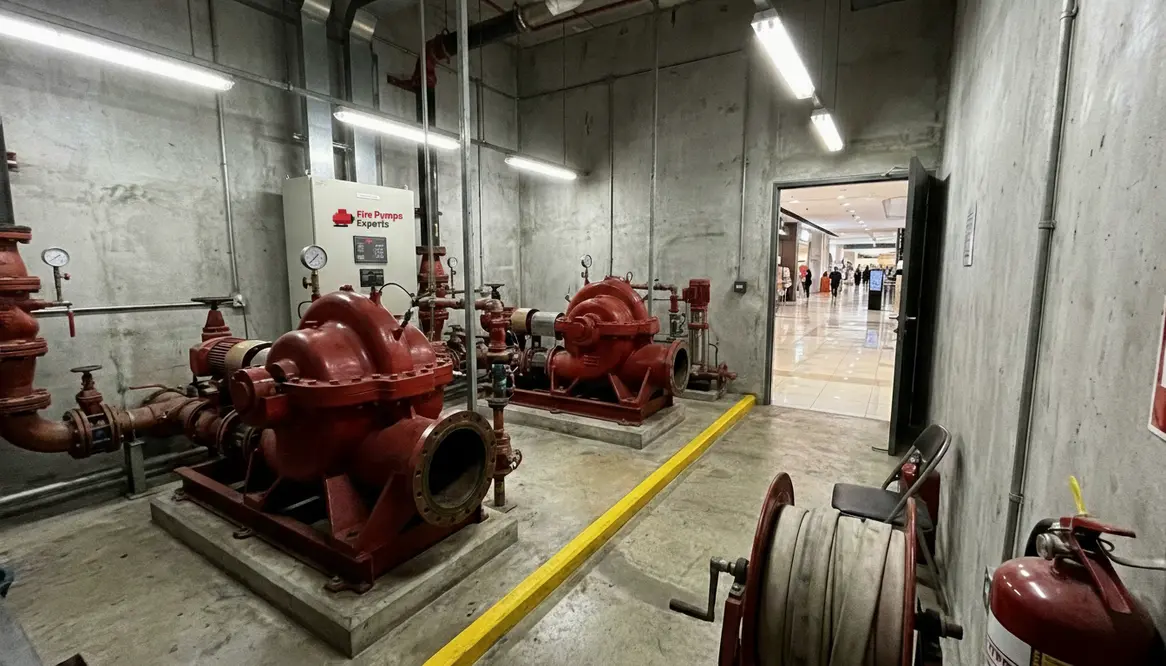
I always start with the basics. Fire pumps in malls must support the full firefighting system under the worst likely demand. That means they must keep enough pressure and flow for sprinkler lines, standpipes, and hydrants. In many cases, the code expects a duty pump, a standby pump, and a jockey pump. The duty pump handles normal fire demand. The standby pump steps in if the main unit fails. The jockey pump keeps pressure steady and stops small drops from turning into false alarms and needless wear.
Also, pump rooms must sit in a protected area with proper access, ventilation, drainage, and fire separation. If the room gets hot, flooded, or blocked by storage, the system loses reliability. And yes, I have seen storage creep into pump rooms like a guest who missed the exit sign. It never ends well.
How I check pump sizing for a mall
Here, the real work begins. I do not size a pump by guesswork or by copying the last project. Mall size, layout, occupancy, hazard level, and water demand all shape the final choice. Large malls often need higher flow because they cover wide open retail areas, back of house zones, parking decks, and mixed use spaces. In addition, the system must match the sprinkler design density and the pressure loss across long pipe runs.
To keep things clear, I usually split the review into two parts:
Fire pump sizing checks
- Required flow based on the biggest fire demand zone
- Required pressure at the most remote point
- Pressure loss from elevation, pipe length, and fittings
- Tank capacity and water supply reliability
- Redundancy for critical commercial operation
Support checks
- Electric and diesel backup arrangement
- Controller type and power source stability
- Acceptance testing access and discharge piping layout
- Monitoring alarms and fault signals
And because malls do not enjoy downtime, I always think about maintenance access as part of sizing, not as an afterthought. A pump that nobody can service is like a superhero locked in a closet.
Why mall pump rooms need strong backup and testing
Fire protection in malls must keep working even when one part fails. That is why redundancy matters so much. If the main pump loses power, the backup must take over without drama. If the pump controller fails, the system should still send alarms and allow fast response. In a high traffic commercial building, there is no room for guesswork.
Testing also matters. The UAE fire code and local authorities expect regular inspection, flow testing, alarm checks, and maintenance logs. I always tell clients that a fire pump is not a one time purchase. It is a living system. It needs exercise, records, and someone responsible for noticing when pressure drops or vibration changes. Think of it like a mall scale gym membership, except nobody joins for the fun of it.
For a deeper technical reference on commercial fire pump systems, I recommend reviewing commercial fire pump guidance for major properties, especially if your project involves large retail or mixed use space.
Dual column view of common mall fire pump needs
Below is a simple side by side view I use when comparing the core requirements for a mall project.
Left column
- Reliable water supply
- Duty and standby pump setup
- Jockey pump for pressure control
- Protected pump room
Right column
- Correct flow and pressure rating
- Backup power or diesel support
- Regular testing and maintenance
- Clear access for service teams
This kind of checklist helps teams avoid costly redesign later. It also keeps engineers, consultants, and mall operators speaking the same language instead of three different versions of “it should be fine.”
How I keep UAE Fire Code malls compliant during operation
Compliance does not stop after handover. In fact, that is where the real discipline begins. I make sure the mall team keeps inspection schedules, test reports, and service records updated. Civil defense review can focus on pump performance, alarm function, emergency power, and system condition. If one item slips, the whole approval chain can slow down.
Good operation also means training staff. Security and facility teams should know what a pump alarm means, where the room sits, and who to call when a fault appears. Even a fast response team needs a simple plan. After all, panic makes poor engineers of us all.
If you are responsible for UAE Fire Code malls, keeping this awareness alive during daily operation is just as important as getting the initial design approved.
FAQ
Conclusion
If you manage a mall, I urge you to treat fire pumps as a core life safety asset, not a box to tick. The right setup protects people, property, and business continuity all at once. So, review your pump design, confirm your backup plan, and keep your records tight. If you want expert support for a commercial or major property project, now is the right time to act and get the system checked properly. Keeping UAE Fire Code malls properly protected starts with a fire pump system that performs when the building needs it most.