UAE Fire Code Fire Pump Requirements Warehouses
UAE Fire Code Fire Pump Requirements for Warehouses may sound like the kind of topic that only wakes up when someone waves a clipboard in the air. Still, I treat it as one of the most important parts of warehouse safety. In the UAE, a warehouse is not just a box full of goods. It is a busy commercial or industrial site with real fire risk, real people, and real money on the line. So, when I look at UAE Fire Code warehouses, I focus on how fire pumps support fast water delivery, stable pressure, and full system performance when every second matters.
Let me walk you through the rules, the logic behind them, and the key details I check when I help a site stay ready. No fluff. No drama. Just the practical stuff that keeps a warehouse standing while fire tries its best to ruin the day.
Why fire pumps matter in UAE warehouse design
I always start with one simple idea: if water cannot reach the fire system with enough force, the whole protection plan starts to wobble. Fire pumps solve that problem. They push water through sprinklers, hose reels, and hydrants at the pressure the system needs. In a warehouse, that matters even more because large floor areas, high storage racks, and open layouts can let fire spread quickly. That is not a Hollywood scene. That is a very bad Tuesday.
The UAE Fire Code expects the fire pump setup to support the full fire protection system, especially in large commercial and industrial buildings. I look at the building size, storage height, commodity type, and water demand before I think about pump selection. In other words, I do not guess. I match the pump to the risk.
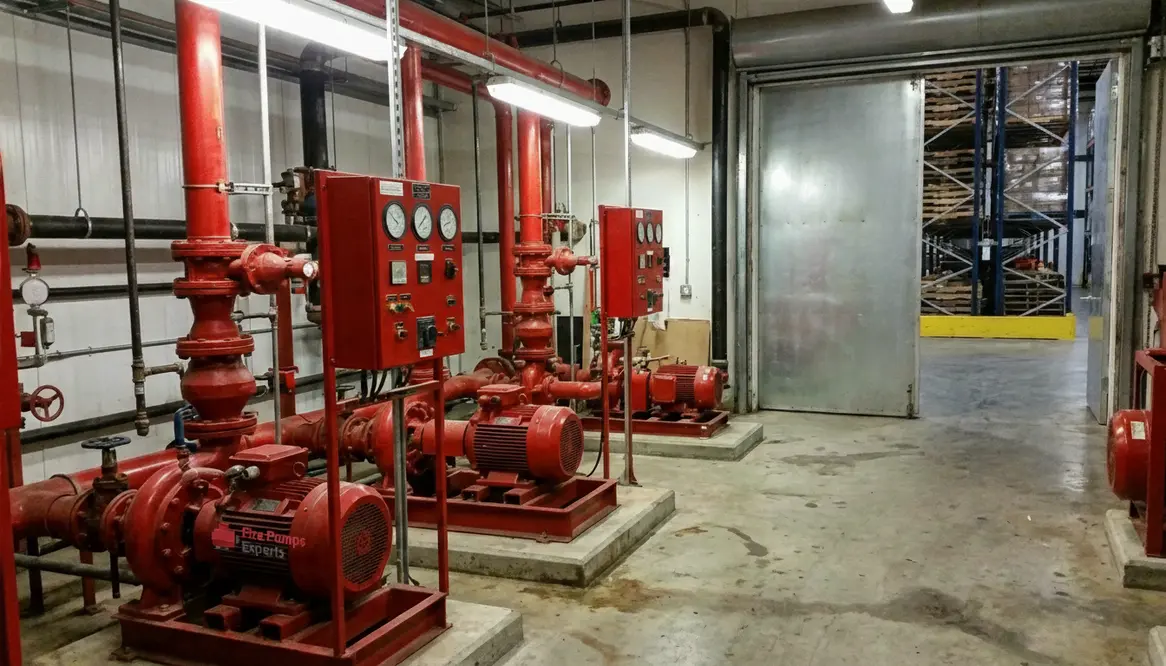
Fire pumps usually work with a main electric pump, a backup pump, and often a jockey pump to hold pressure in the line. That mix helps the system stay ready without cycling too much. And yes, the little jockey pump does the boring work no one applauds, much like the sound engineer at a concert.
How I check UAE Fire Code warehouses for pump compliance
When I review UAE Fire Code warehouses, I follow a practical checklist. First, I confirm the fire pump room location. It must stay easy to reach, protected from damage, and safe from flood or heat. Next, I check the pump capacity against the hazard level and the required flow. Then I verify the power source, control panel, and water supply. If one piece fails, the system loses its edge.
I also look at the type of warehouse use. A storage facility with light goods does not always need the same setup as a high piled industrial warehouse with plastics, chemicals, or dense storage. The fire code pushes me to size the system for the real risk, not the polite version of the risk. Fire does not read the brochure.
The checklist I rely on
- Confirm the fire risk level and storage arrangement
- Check the required fire flow and pressure
- Verify the main pump, standby pump, and jockey pump arrangement
- Review the pump room access, ventilation, and drainage
- Test the power backup and control signals
That process keeps the design grounded in code and in common sense. Both matter.
Fire pump room layout, power, and water supply
Pump room layout
The pump room is not a storage closet, and I say that with love. It must hold the pumps, controllers, and valves in a space that allows inspection, repair, and emergency use. I always check ventilation because heat builds fast in the UAE. I also make sure the room has proper drainage, since water from testing or leaks can create problems if it has nowhere to go.
Power and water supply
Power supply matters just as much. The main fire pump often runs on electric power, while a backup pump may run on diesel if the design requires it. Either way, the system must stay reliable during a fire event. I also look for automatic start features, alarm signals, and clear manual controls. If the system acts like a puzzle every time it starts, that is not confidence. That is a liability with buttons.
Water supply sits at the heart of the setup. The pump needs a source that can support the required duration and flow. So, I review tanks, connections, and suction arrangements carefully. If the water supply cannot feed the pump well, the pump becomes a very expensive noise maker.
UAE Fire Code Fire Pump Requirements for Warehouses in simple terms
Here is the short version. The code asks for a fire pump system that matches the warehouse hazard, delivers enough pressure and flow, and stays dependable under fire conditions. I always check the full building profile before I size or review the system. That means I look at storage height, rack layout, floor area, fire load, and sprinkler design. Then I make sure the pump supports the whole network, not just part of it.
Key design focus points for UAE Fire Code warehouses
| Design focus | What I check |
|---|---|
| Pump capacity | Flow and pressure match the hazard |
| Pump room | Safe access, ventilation, and drainage |
| Power supply | Main and backup power reliability |
| Water source | Tank size and suction stability |
| Control system | Auto start, alarms, and manual override |
I also remind clients that warehouse fire protection is not a one time job. It needs testing, inspection, and maintenance. A pump that works on paper but fails in real life is about as useful as a cape in a wind tunnel.
Fire pump testing and maintenance I always recommend
I never trust a fire pump just because it looks serious. I test it. Regular testing confirms that the pump starts, reaches pressure, and runs as expected. I also watch for vibration, leaks, pressure drop, and alarm faults. Over time, small issues can grow into big ones, and warehouses do not need surprise plot twists.
Maintenance should include weekly, monthly, and annual checks, depending on the system and site plan. I focus on fuel levels, battery condition, controller health, valves, gauges, and pump performance. If the warehouse runs large operations, I push for a clear logbook and a responsible team member to track each check. That way, the system stays ready instead of just looking confident from far away.
For complex commercial and industrial sites, I also suggest using a trusted fire protection expert. For more guidance on commercial and industrial fire pump support, I recommend reviewing fire pump solutions for major properties from a specialist source that focuses on large facilities, not small side projects.
FAQ
Bringing it all together
In the end, I treat fire pump compliance as a core part of warehouse survival, not a side task. If you manage a commercial or industrial site, I can help you review the system, spot weak points, and align the design with the UAE Fire Code. So, if your warehouse needs a fire pump check, a compliance review, or a stronger protection plan, take action now and get the setup right before fire makes the first move.
When UAE Fire Code warehouses are supported by well-designed, well-maintained fire pumps, the difference during an emergency is measurable in minutes, pressure, and damage avoided. That is the kind of quiet performance that keeps operations running, people protected, and the worst stories from ever being written.