UAE Fire Code Mixed Use Fire Pump Requirements
UAE Fire Code mixed use buildings bring a special kind of planning challenge. I see it all the time: one tower, many uses, and one fire system must keep pace with all of them. A retail podium, office floors, apartments, parking, maybe a gym or hotel wing, all sharing the same structure. That mix is exactly why fire pump design matters so much. If the pump fails, the whole system starts looking like a superhero with a flat tire. In this article, I break down the fire pump requirements for mixed use buildings in the UAE, in plain language, with a focus on commercial, industrial, and major property projects.
What the UAE Fire Code expects from fire pumps
In mixed use buildings, I treat the fire pump as the heart of the sprinkler and hose reel system. It must deliver the right pressure and flow during a fire, even when the building is busy and demand is high. The UAE Fire Code mixed use rules push designers to check the highest risk use, the tallest demand point, and the largest system load. That means I do not size a pump for one floor only. Instead, I look at the full building profile, because fire does not care if the space below is a café or a data room.
Core performance expectations
- The pump must support the full fire water demand of the building zones it protects.
- The pump must keep pressure steady at the most remote outlet.
- The pump room must stay accessible, secure, and ready at all times.
- The design must match the approved fire strategy for the entire mixed use structure.
Also, the system should include a main fire pump, a standby pump where required, and a jockey pump to handle small pressure drops. That jockey pump does the quiet work. It is the unsung hero, like the stage manager in a Broadway show.
Why mixed use changes the game
In a single-use warehouse, the fire pump calculation is usually straightforward. In a UAE Fire Code mixed use tower, every new function adds another layer of demand and another “what if” scenario.
A high-end restaurant on the podium, an office with dense equipment, and serviced apartments high above do not behave the same in a fire. The pump has to be ready for the worst credible case, not the average Tuesday afternoon.
That is why early coordination around the UAE Fire Code mixed use strategy is so important. The sooner the design team agrees on the “worst day” scenario, the cleaner the pump selection becomes.
Think of the fire pump as the building’s emergency heart: it cannot skip a beat when every other system is under stress.
How I size a fire pump for a mixed use building
I always start with the building use mix. A mixed use tower can have very different fire loads from one level to the next. Retail areas may need different coverage than offices or apartments. So, I check each zone, then compare the highest water demand case. That is the case the pump must meet.
Step-by-step sizing logic
- Identify all protected areas and their fire system type.
- Calculate the sprinkler and hose reel demand together if the code requires it.
- Add the required pressure loss from pipes, fittings, and height.
- Confirm the pump can deliver the duty point without strain.
- Verify backup power and starting method.
Then I check whether the building needs separate fire zones. In many mixed use cases, one pump may serve multiple zones, but the water supply and pipe network must still support the full demand. If the project is large, I often see the need for careful coordination between civil, MEP, and fire consultants. And yes, that is where the real fun begins.
Common mixed use sizing traps
- Sizing the pump for a “typical” floor instead of the most demanding combination of uses.
- Forgetting vertical pressure loss at the highest outlets in tall UAE Fire Code mixed use towers.
- Ignoring future tenant fit-outs that may increase fire load and water demand.
UAE Fire Code mixed use pump room and system layout
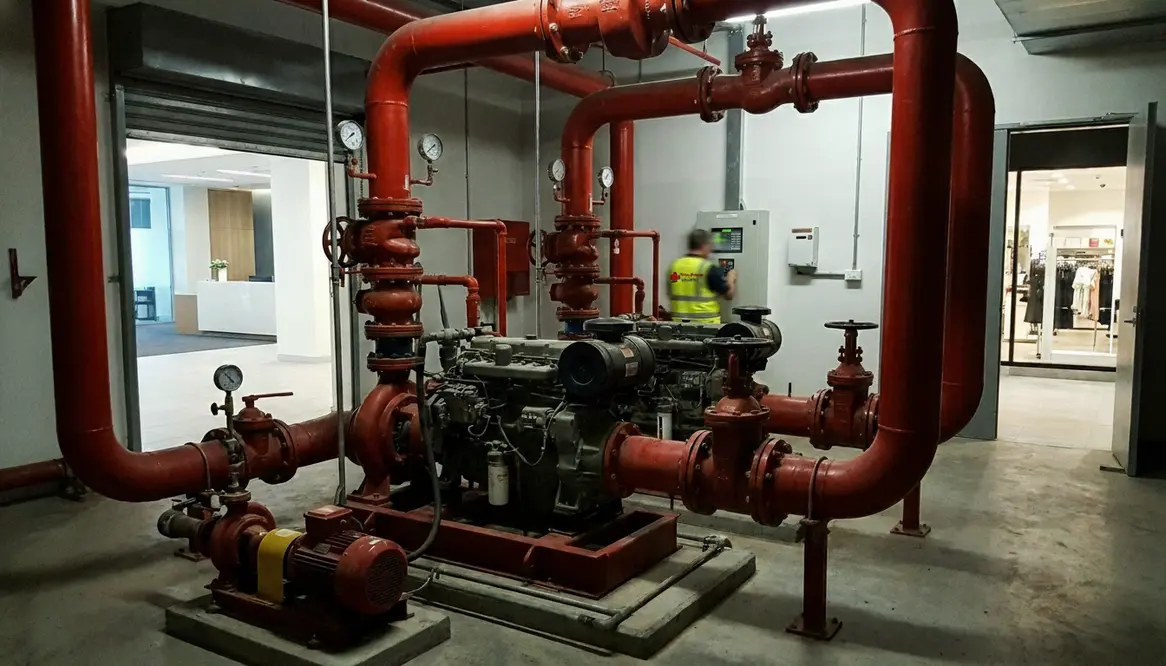
The pump room is not just a box with equipment inside. It is a critical safety space. The UAE Fire Code mixed use approach expects the room to stay safe, dry, ventilated, and easy to access. I always look for good separation from public spaces, proper drainage, and enough room for maintenance. If the room feels like a storage closet with a fire pump in it, that is a problem. A serious one.
First checks and why they matter
| First check | Why it matters |
| Pump room access | Emergency crews and maintenance teams need fast entry |
| Pump room ventilation | Equipment must stay cool and reliable |
| Power supply | The pump must start when mains power fails |
| Water supply | The pump needs enough water to perform under fire load |
| Control panel location | Operators must see alarms and status fast |
Details that make or break performance
I also pay close attention to the tank connection, suction line, test line, and pressure gauges. These parts may look small, yet they decide whether the pump performs well or turns into expensive décor.
Routing of pipes, flood protection for the room, and clear access in front of every valve all support the larger fire strategy. When each of these details respects the UAE Fire Code mixed use requirements, inspection and handover become much smoother.
Testing, approval, and maintenance for long term safety
Once the pump is installed, the work is not done. In fact, that is when the real proof begins. I expect full testing before handover, and I want clear records for the authority review. The system should prove that it can start, run, and deliver the needed pressure under real test conditions.
Typical fire pump testing scope
- Main pump start and run test
- Jockey pump operation check
- Standby pump start test, if installed
- Flow and pressure verification
- Power failure response test
After approval, routine maintenance keeps the system ready. I recommend regular inspections of valves, pressure, electric supply, fuel supply for diesel units, and pump performance logs. A mixed use building changes over time. Tenants move in. Layouts shift. Occupancy rises. So I treat fire pump maintenance as an ongoing duty, not a one time chore. Kind of like brushing your teeth, but with more paperwork and fewer minty rewards.
Maintenance habits that actually help
- Keep a simple log of every test and alarm event.
- Review pump curves against test results at least annually.
- Revisit demand calculations when major tenant changes occur.
When to get expert support on mixed use fire pump design
I bring in expert support when the building includes high rise elements, large retail zones, basements, or unusual water demand. I also do it when the project sits close to code limits or when the design team needs help aligning with authority expectations. For commercial and industrial facilities, major property buildings, and complex towers, the right fire pump plan can save time, cost, and a lot of stress.
If you want a useful technical reference, I suggest reviewing fire pump design guidance for commercial properties through a trusted industry source like https://firepumps.org. That kind of reference helps teams stay focused on practical compliance, not guesswork.
Projects that benefit most from early UAE Fire Code mixed use input
- High-rise towers with a mix of retail, office, and residential floors.
- Industrial or logistics hubs with attached commercial or office wings.
- Large developments with shared basements, car parks, and podiums.
FAQ
Conclusion
If you are planning a project under the UAE Fire Code mixed use rules, I strongly recommend treating the fire pump as a core life safety asset, not a box to tick. The right design protects people, supports approval, and keeps your building ready when it matters most.
If your project involves a commercial tower, industrial site, or major property development, get the fire pump strategy reviewed early. That move can save time, reduce risk, and keep your building on the right side of the code.