Qatar Fire Pump Requirements for Compliance
Qatar Fire Pump Requirements Explained
When I look at Qatar requirements for fire pumps, I see more than a checklist. I see a life safety system that has to work when the pressure rises and the heat does not care about excuses. For commercial and industrial facilities, and for major property buildings, the rules focus on reliable water flow, correct pump sizing, proper power backup, and tested performance. In other words, the system must be ready before the alarm ever sounds. And yes, that is the kind of preparation that makes firefighters breathe easier and building owners sleep better.
What I focus on first in Qatar fire pump planning
I always start with the building risk profile. A warehouse, a tower, and a large industrial plant do not need the same setup, because each one carries different fire load, height, and water demand. Therefore, I review the occupancy, total floor area, hazard class, and sprinkler or standpipe needs before I touch the pump schedule.
The Qatar requirements usually expect a fire pump system that supports the full fire water demand without dropping below the needed pressure. That means I do not guess. I calculate. Then I verify the water source, because a great pump with a weak supply is like a superhero with a flat tire. Not ideal.
I also check whether the project needs a main fire pump, jockey pump, and standby pump. In many large facilities, that structure helps keep pressure steady and reduces wear on the main unit. As a result, the system stays ready for the long haul, not just the first dramatic minute.
How I size a fire pump for commercial and industrial buildings
Proper sizing sits at the heart of compliance. I use the fire protection demand, system loss, elevation, pipe length, and the required residual pressure at the most remote point. Then I match those numbers to the pump curve. That curve matters more than a dramatic movie soundtrack, because it tells me what the pump can truly deliver.
What I check
- Required flow rate
- Required pressure
- Water source capacity
- Pump curve match
- Standby power support
Why it matters
- Keeps sprinklers effective
- Protects high level areas
- Prevents pump starvation
- Avoids weak performance
- Supports emergency operation
In Qatar, I pay close attention to high rise and large plant conditions, because long pipe runs and tall structures create extra pressure loss. Therefore, I often recommend a margin that still fits the approved design, while giving the system room to perform under real conditions.
Qatar requirements for pump room layout and power backup
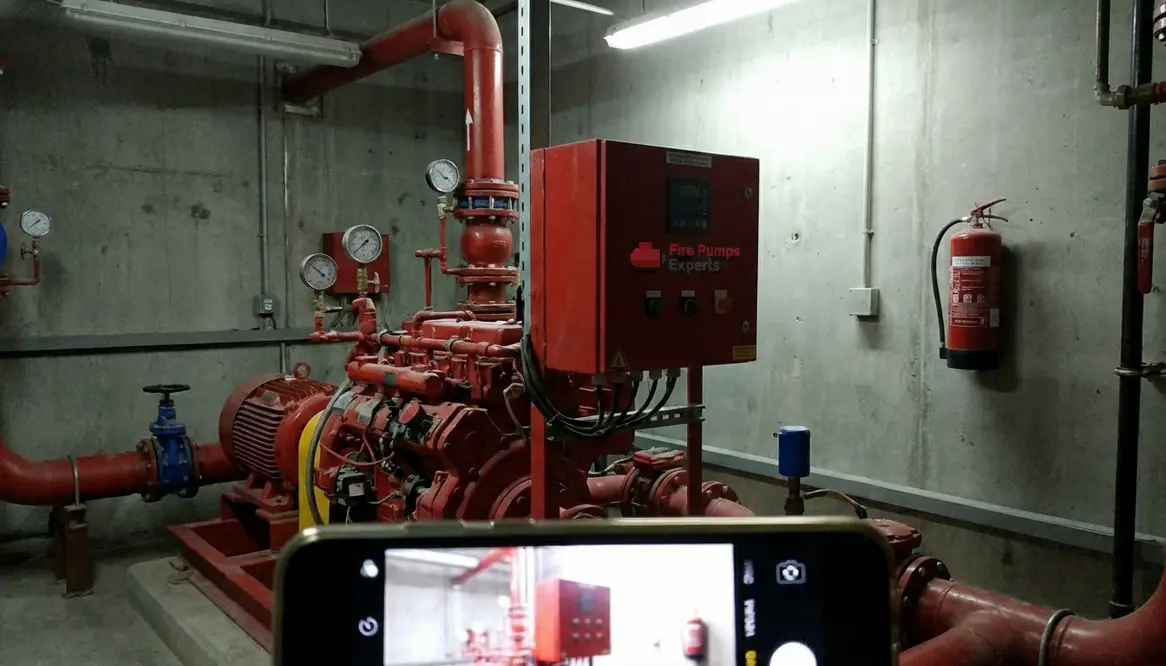
The pump room does not need glamour. It needs space, access, cooling, drainage, and clear service paths. I make sure technicians can reach valves, controllers, gauges, and test lines without playing a game of mechanical Tetris. Also, the room must stay protected from flooding, damage, and heat buildup.
Power backup matters just as much. If the main power fails, the fire pump still has to run. So I look for reliable emergency power support, often through a generator or approved alternate supply. In addition, the controller must start the pump automatically when pressure drops. That simple action can save a building while everyone else is still finding the exit signs.
For bigger commercial and industrial facilities, I also make sure the system includes alarms, pressure switches, and clear status indication. Because when a pump fails, silence is not golden. It is a problem.
Testing, approval, and maintenance I never skip
I treat testing as proof, not paperwork. Before handover, I confirm flow, pressure, start sequence, and control response. After that, I check for leaks, vibration, and valve position. If the pump can pass a full performance test, I know it can support the system when needed.
Approval in Qatar often depends on proper documents, certified equipment, and site tests that show the installed system meets the design intent. Therefore, I keep records of pump data sheets, test results, as built drawings, and maintenance logs. That way, the building team does not have to search for proof later like they are hunting for a lost phone in the sofa.
Maintenance is not optional. I recommend regular weekly and monthly checks, plus full performance testing at set intervals. This helps spot wear, air leaks, control faults, and valve issues before they become expensive drama.
Qatar fire pump compliance in real projects
In real projects, I see the same pattern: strong design, weak follow through, then last minute stress. So I stay focused on integration. The fire pump must work with sprinklers, hydrants, standpipes, and the overall fire strategy. If one part fails, the whole chain weakens.
I also keep the final design tied to the project use. A logistics hub, an energy facility, and a large mixed use tower each demand a different approach. Therefore, I look at the actual hazard, not the guesswork. That is how I keep the system practical, compliant, and ready for inspection.
For teams who want deeper guidance, I often suggest reviewing a trusted commercial fire pump resource for Qatar projects before final design and procurement. It helps align technical choices with the needs of major properties and industrial sites.
In many of these discussions, I highlight how the Qatar requirements influence layout, water storage, and long term maintenance planning. Designing around those expectations early saves arguments, redesigns, and delays when final inspections begin.
How Qatar requirements shape practical decisions
When I walk through a design review, the Qatar requirements are in the back of my mind with every choice: where the tank sits, how the suction line runs, which controller gets used, and how the test header connects. These are not abstract rules; they turn into pipe routes, cable sizes, and floor space that facilities live with for decades.
FAQ
Conclusion
If you are planning a project in Qatar, I recommend treating fire pump design as a core safety decision, not a side task. The right setup protects people, assets, and operations, while also making approval smoother. So, if you want a system that performs under pressure, review your fire pump plan early, test it properly, and keep it maintained. That is how I help major facilities stay ready when every second counts.