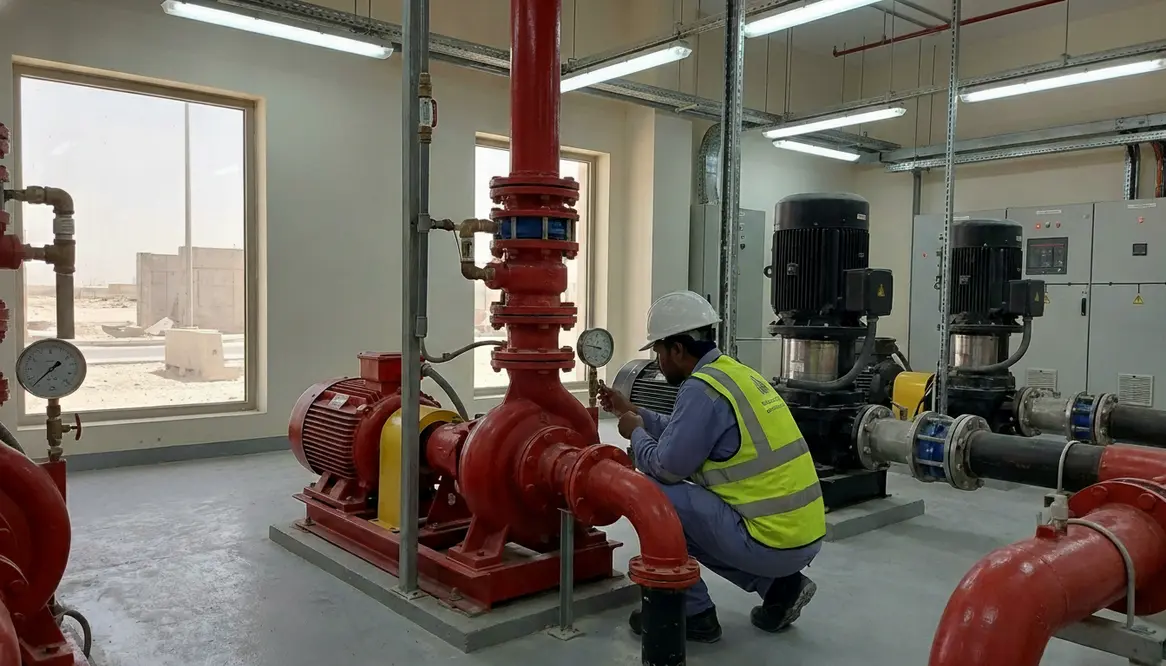
Qatar Fire Pump Testing Requirements Explained
I have seen plenty of safety topics try to sound important and end up about as thrilling as a tax form in a rainstorm. But Qatar testing for fire pumps is different. It keeps commercial towers, industrial plants, and major property buildings ready when real danger shows up. In Qatar, fire pump checks are not a nice extra. They are part of a serious fire protection plan, and I treat them that way. If a pump fails, the whole system can wobble like a side character in a bad action movie.
Qatar testing for fire pumps also proves whether a site is truly ready or just pretending. When sprinklers and hydrants depend on one mechanical heart, I want proof that heart can keep beating under pressure. That proof comes from planned inspections, measured performance, and records that show exactly how the pump behaves, not how everyone hopes it behaves.
What I Need to Know About Qatar testing for fire pumps
I start with the basics. Fire pump testing in Qatar checks whether the pump can deliver the right pressure, flow, and response when the fire system activates. I look at the full setup, not just the pump itself. That means the driver, valves, suction line, discharge line, controls, and power source all matter. If one part slips, the pump may not perform under stress.
In commercial and industrial buildings, I focus on regular proof that the system can protect life and property. Therefore, testing should confirm that the pump starts fast, runs smoothly, and holds stable output. I also make sure the results match the building’s fire design. After all, a pump that sounds good on paper is nice, but fire does not care about paperwork.
Across many sites, Qatar testing is also my early warning system. A slow start, a small pressure drop, or a noisy bearing today can become a full-scale failure when the sprinklers need every bit of performance they were designed for.
That is why I never treat Qatar testing as a box-ticking routine. It is a stress test for the entire fire protection backbone, not just a quick look at a spinning shaft and a few gauges.
How I check compliance for commercial and industrial sites
I first review the site type, since a warehouse, tower, hospital, and plant each carry different risks. Then I compare the pump setup with the fire safety plan and local code needs. In Qatar, I expect testing to support both routine readiness and emergency use. That means I do not stop at a quick start test. Instead, I look for evidence of proper operation over time.
I usually check these key items:
- pump start and stop function
- electric or diesel driver performance
- pressure and flow readings
- jockey pump support
- control panel alarms and signals
- valve position and line condition
Moreover, I pay attention to the building use. For major property buildings, downtime can hit hard, so I plan tests with care. Still, I never let convenience outrun safety. That would be like asking Batman to skip the suit because he had a meeting.
Risk profile and occupancy
High-rise offices, malls, data centers, and industrial plants push fire pumps differently. I match Qatar testing frequency and depth to that risk profile, so the pump is not overestimated just because the building looks modern.
Code alignment
I line up the actual test procedures with local requirements and widely accepted fire pump standards. The goal is simple: if there is a fire, nobody should be surprised by what the pump can and cannot do.
What the test plan should include
I like a test plan that tells the full story. First, it should state the pump type and system layout. Next, it should list the test method, the expected values, and the pass or fail limits. Then it should name the people involved and the date. Simple, clear, and useful. No drama. No mystery. Just facts.
For deeper fire pump verification, I look at suction pressure, discharge pressure, pump speed, and run time. I also check if the system can sustain performance during real load conditions. In many cases, I recommend a full flow test for a better picture of health. A startup check alone is helpful, but it does not show how the pump behaves when the system demands more. That is the difference between “looks fine” and “is fine.”
Core elements of a solid fire pump test plan
- clear description of pump type, capacity, and driver
- layout of suction and discharge paths and test headers
- step-by-step procedure for weekly, monthly, and annual tests
- target values and acceptance ranges for pressure and flow
- roles, responsibilities, and sign-off points
- how deviations and failures are documented and followed up
What results should I record after testing
I always record the test results right away. That includes the date, time, weather if relevant, gauge readings, flow values, abnormalities, and corrective actions. Then I store the report in a place that the building team can find without a treasure map. Clear records help during audits, insurance reviews, and future maintenance planning.
Testing and reporting checklist
| Item | What I note |
| Startup | How fast the pump begins operation |
| Pressure | Inlet and outlet readings during test |
| Flow | Measured output at test points |
| Controls | Alarm, signal, and automatic response |
| Issues | Leaks, noise, vibration, or delays |
Because fire pump testing in Qatar often supports large sites, I also note any factor that could affect future service. For example, heat, dust, vibration, or poor access can all cause trouble later. The small stuff always tries to sneak back in, like the sequel nobody asked for.
How often I schedule fire pump testing
I follow a routine schedule so the system stays ready. Weekly or monthly checks can help confirm basic readiness, while deeper performance tests happen at planned intervals. The exact timing should fit the site’s fire strategy, local rules, and pump type. However, I never treat routine checks as a box to tick and forget. I treat them as proof that the system still wants to do its job.
For industrial and commercial properties, I also plan follow up action after any fault. If a pump misses pressure, makes odd noise, or fails to start, I move fast. Then I repair, retest, and document the fix. Fire protection should never rely on hope. Hope is great for plot twists, not for pump readiness.
For a trusted service reference, I suggest reviewing Qatar fire pump testing services for commercial and industrial facilities as a helpful starting point for building owners and facility teams.
FAQ
What I want you to do next
If you manage a commercial or industrial property in Qatar, I want you to treat fire pump testing as a serious part of your safety plan. Do not wait for a fault to make the first move. Review your current test schedule, check your records, and make sure your pump system can perform when it matters most. If you want dependable support, reach out now and keep your building ready, compliant, and protected.