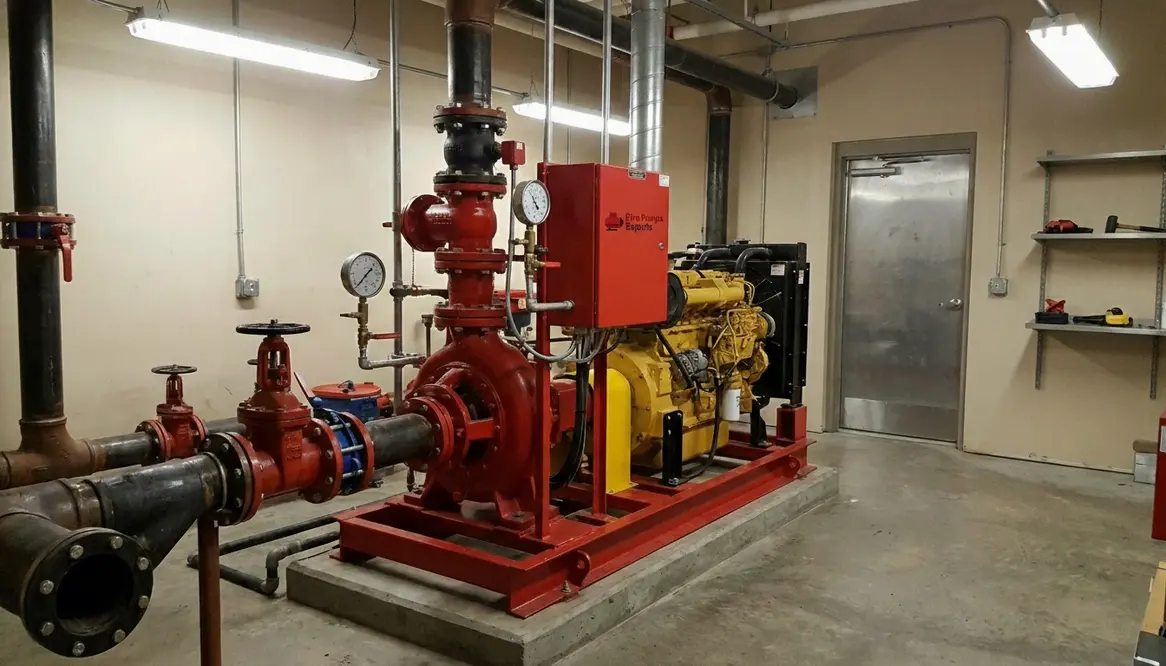
Saudi Fire Pump Requirements Guide for Compliance
Saudi Fire Pump Requirements Explained
When I look at Saudi requirements for fire pumps, I see one simple goal: keep commercial and industrial properties ready when fire shows up uninvited. That sounds obvious, yet the details matter more than people think. A pump is not just a box of steel and pressure gauges. It is the part that helps a sprinkler system do its job when the stakes are high and the drama is not the good kind, like a season finale nobody asked for.
In Saudi Arabia, fire pump rules follow strict safety standards for major buildings, factories, warehouses, and large commercial sites. So, in this guide, I will break down what these rules mean, how they affect design and setup, and what I check first when a project needs a compliant pump system.
Why these rules matter
Saudi fire pump standards are designed to keep water moving at the right pressure when everything else is going wrong. When I review a site, I am not just reading a checklist. I am picturing the worst five minutes of the building’s life and making sure the system is ready for it.
That is why cutting corners on design, installation, or maintenance is never just a “cost saving.” It is a future problem waiting for the worst possible timing.
What Saudi fire pump requirements mean for commercial sites
I always start with the building type, because Saudi requirements depend on risk level, water demand, and site use. A shopping center does not need the same setup as a logistics warehouse or a high rise tower. However, all these sites must support fire protection systems with enough water pressure and flow.
In most cases, the fire pump system must work with the sprinkler and standpipe system. It must also support the building’s peak demand during a fire event. As a result, I look at the water source, the pump rating, the tank size, and the backup power setup together. If one part fails, the whole plan gets weak fast. And fire safety does not forgive weak plans. It never has, and it never will.
Key factors compliance teams should track
- Building classification and fire risk profile
- Required flow and pressure for sprinklers and standpipes
- Available water supply and storage strategy
- Power reliability and backup options that satisfy Saudi requirements
- Access routes for fire response and maintenance crews
Saudi requirements for fire pump design and installation
When I review pump design, I focus on the parts that make the system reliable under pressure, both literal and emotional, because yes, fire protection can make even calm people sweat a little.
Design points I check
- Pump capacity matches the fire load of the property
- Suction supply stays stable and clean
- Pump room stays accessible and protected
- Controls allow fast manual and automatic start
Installation points I check
- Pipe layout reduces friction loss
- Valves and gauges sit in the right places
- Foundation supports vibration control
- Backup source meets the site need
Saudi standards also expect the pump room to stay safe, dry, and easy to reach. In other words, no storage boxes, no random mop buckets, and no “we meant to clean this corner someday” energy. I also make sure the pump has room for service access, because maintenance only works when people can reach the equipment without playing obstacle course.
Typical mistakes that ruin a good design
- Designing the pump perfectly, then shoving it into a room that doubles as a storage closet
- Ignoring local Saudi requirements and assuming “near enough” is good enough
- Underestimating future expansion, then discovering the pump is undersized when a new wing opens
- Skipping proper vibration isolation and listening to the pump complain for years
Saudi requirements for testing, backup, and maintenance
Testing matters as much as installation. In fact, I treat testing like the final soundcheck before a big show. If the system cannot perform under test, it probably will not perform under fire.
Saudi fire pump rules usually expect regular checks for pressure, flow, power, and alarm response. I also look at the jockey pump, the main pump, and the backup pump if the site uses one. Moreover, if the pump depends on electricity, I confirm that the emergency power source can carry the load. If it runs on diesel, I check fuel supply, engine readiness, and auto start function.
Testing rhythm that keeps systems honest
- Weekly: quick runs, pressure readings, basic visual checks
- Monthly: full operational tests including alarms and automatic start
- Annually: documented performance tests that confirm compliance with Saudi requirements
Backup power that does not quit early
- For electric pumps, verify that emergency power can deliver full load
- For diesel pumps, track fuel quality and fuel quantity, not just “there is fuel”
- Confirm auto start sequences actually start when the system calls for help
- Document every test so auditors can see a clear history of reliability
Maintenance must stay planned and recorded. That means site teams need clear logs for weekly, monthly, and annual checks. I also recommend simple training for staff, because a system only helps if the right people know how to read it. Even Batman would want a proper checklist.
How I compare pump options for Saudi projects
When I help evaluate pump options for major properties, I do not just ask, “Will it work?” I ask, “Will it work here, under these conditions, with this water source, and with this fire risk?” That question saves time, money, and future headaches.
Here is the short version of how I compare options:
First, I confirm the demand of the building. Then, I check whether the water source can support that demand. After that, I review whether the system needs electric, diesel, or combined backup. Finally, I look at service access, spare parts, and inspection support.
If a project serves a large industrial zone or a major commercial tower, I usually suggest a design review before purchase. That step helps avoid the classic “we bought the wrong unit and now everyone is looking at each other in silence” moment. Nobody enjoys that meeting. Not even a very patient engineer.
For teams that want more technical depth on fire pumps and layouts that satisfy Saudi requirements, detailed guides at resources such as https://firepumps.org can help frame the right questions before anything is ordered.
Saudi fire pump requirements for compliance teams
Compliance teams should keep three things in mind: documentation, coordination, and proof. First, they need drawings, pump data, and test results. Next, they need to coordinate with fire consultants, civil teams, electrical teams, and the site operator. Finally, they need clear proof that the system meets the needed standard for the property type.
Documentation that survives an audit
- Approved design drawings, clearly marked for fire protection
- Pump data sheets, curves, and nameplate information
- Commissioning reports and initial acceptance tests
- Ongoing logs that show compliance with Saudi requirements over time
Coordination that avoids last-minute chaos
- Align fire pump room location early with architecture and civil works
- Confirm electrical feed and backup capacity before finalizing pump size
- Agree on testing responsibilities between contractor, operator, and safety team
- Keep the pump room inside the overall fire strategy, not parked as a side issue
I also tell teams to keep the pump room part of the overall fire strategy, not a side note. The best pump in the world still needs proper space, proper access, and proper support. That is why I always push for a full view of the fire protection plan instead of a patchwork fix.
FAQ
Conclusion
If you manage a commercial or industrial property in Saudi Arabia, I recommend treating fire pump planning as a core safety task, not a box to tick and forget. The right system protects people, assets, and business continuity. So, review your design, check your backup, and confirm your testing plan now. If you need support with fire pump selection, compliance review, or system planning for a major property, act early and build with confidence.