Kuwait Fire Pump Requirements for Buildings
I write about fire protection for commercial and industrial properties, and I can tell you this much: Kuwait fire pump requirements are not the kind of detail you want to leave for “later.” In a large building, a fire pump is the quiet hero in the back room, waiting like a Batman sidekick to do the heavy lifting when pressure drops. And in Kuwait, where heat, demand, and building size can all work against your system, the rules matter even more. So, in this article, I will break down the main requirements, the design logic, and the checks that keep major properties ready for action.
What Kuwait fire pump requirements mean for my building
When I look at Kuwait fire pump requirements, I think about one main goal: keeping water pressure strong enough for fire suppression systems to work during an emergency. That sounds simple, but the actual setup often involves careful sizing, backup power, test lines, valves, controls, and proper room conditions.
For commercial towers, warehouses, factories, and other major properties, the pump must support the full fire protection system. That often includes hydrants, sprinklers, standpipes, and fire hose reels. Because of that, I always treat the pump as part of a larger safety chain, not a lone machine sitting in a corner feeling important.
In practice, the design must match the building risk, water demand, and local approval needs. So, if the property has high fire load, tall floors, or wide coverage areas, the pump setup becomes more critical. In other words, the building size does not just affect rent; it also affects how hard your fire pump has to work.
How I size a commercial fire pump in Kuwait
Size matters here, and I mean that in the most professional way possible. A pump that is too small will not deliver enough pressure. On the other hand, a pump that is too large can create waste, stress the system, and complicate operation. So, I always start with the building’s fire flow demand.
The sizing process usually looks at:
| Factor | What I check |
| Water demand | How much flow the fire system needs during peak use |
| Pressure loss | Losses from pipes, fittings, height, and system layout |
| Building type | Warehouse, factory, mall, tower, or mixed use site |
| Risk level | Fire load, occupancy, and protected area size |
| Supply source | Main tank, municipal feed, or dedicated storage |
In Kuwait, I also pay close attention to temperature and operating conditions. Heat can affect components, so the pump room and related equipment need proper ventilation and access. If the room feels like a sauna, the system will not thank you. I can promise that.
Which fire pump setup works best for Kuwait requirements
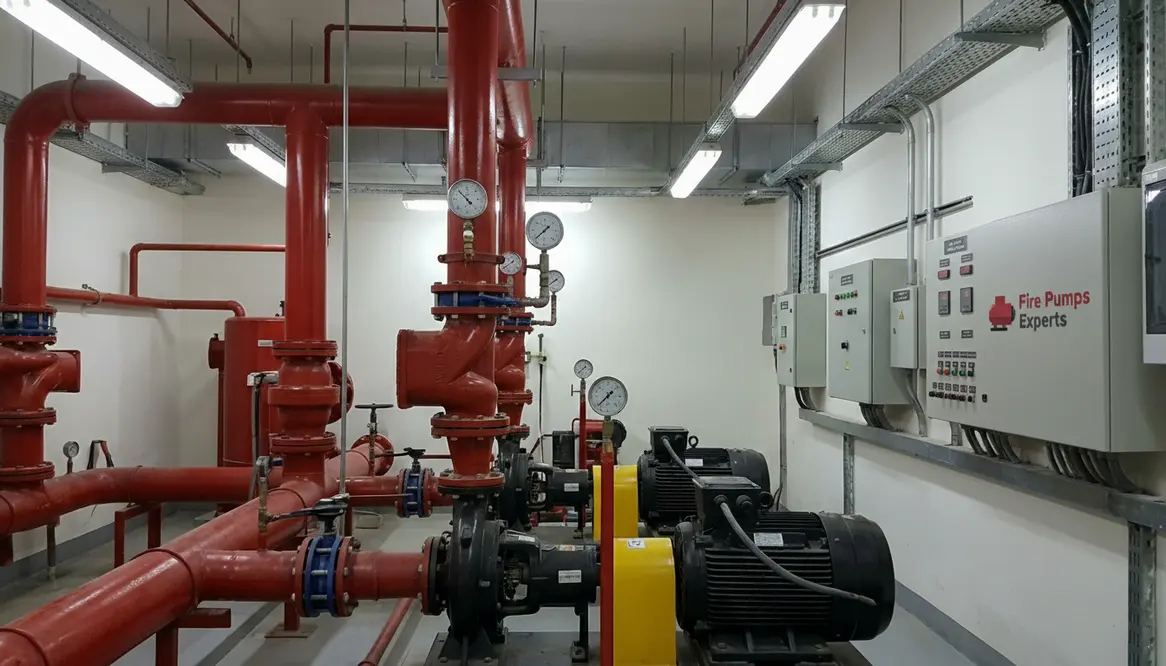
The best setup depends on the property, but most large sites use a main fire pump, a backup pump, and a jockey pump. The main pump handles the heavy job. The backup pump steps in if the main one fails or if demand stays high. Meanwhile, the jockey pump keeps pressure stable and stops the main pump from switching on for every small drop.
Core components of a typical setup
- Main pump: Runs during a fire event and supplies the required flow
- Backup pump: Supports continuity if the primary pump fails or cannot keep up
- Jockey pump: Maintains pressure and reduces unnecessary cycling
- Controller: Starts and monitors pump operation
- Water tank or source: Stores the water supply for the system
Why reliability dominates Kuwait requirements
Because major properties depend on uptime, I always push for a design that supports reliability first. A fire pump is not a laptop you can restart and hope for the best. It needs a robust plan, clear controls, and a water source ready to serve the full system demand.
What inspectors usually look for in Kuwait requirements
When inspections happen, they focus on whether the pump system can actually do its job. That means the system must not only exist on paper; it must perform under real conditions. Therefore, inspectors often review pump capacity, controller function, water level, valve position, battery or power backup, room access, and test records.
Testing and documentation focus
I also see a strong focus on testing and maintenance. A pump that looks good but has no recent test history is like a sports car with no fuel. Nice to stare at, not great in a crisis. Regular flow testing, alarm checks, visual inspection, and performance logging help keep the system ready.
For commercial and industrial sites, this matters even more because downtime can be expensive. A poor fire pump setup can slow approval, delay occupancy, or create serious risk later. So, I always advise owners to treat inspection as a routine business task, not a surprise plot twist.
How I keep fire pump compliance simple for major properties
To keep compliance simple, I follow a practical path. First, I confirm the building risk and system demand. Next, I check that the pump package matches the design need. Then, I make sure the room, power source, piping, and controls all support long term operation. Finally, I keep documentation organized so approvals and audits move smoothly.
For property owners and facility teams, this approach saves time and reduces confusion. It also keeps the project aligned with Kuwait fire pump requirements without turning the process into a maze of guesswork. And let us be honest, nobody wakes up excited to chase missing paperwork.
Using guidance that matches Kuwait requirements
If you want a deeper technical reference, I recommend using a trusted industry source like fire pump compliance guidance for commercial facilities when comparing system expectations and project scope. That kind of reference helps align design decisions with real world protection goals.
FAQ
Why I recommend acting now
If you manage a commercial tower, factory, warehouse, or other major property, I recommend reviewing your fire pump setup now, not after a problem appears. I can help you think through the right capacity, layout, and compliance steps so your system stays ready, practical, and approved. Reach out, review your current design, and make sure your fire protection does its job before anyone has to find out the hard way. As you work through Kuwait requirements, keep your focus on pressure, redundancy, and real world performance, not just paperwork.