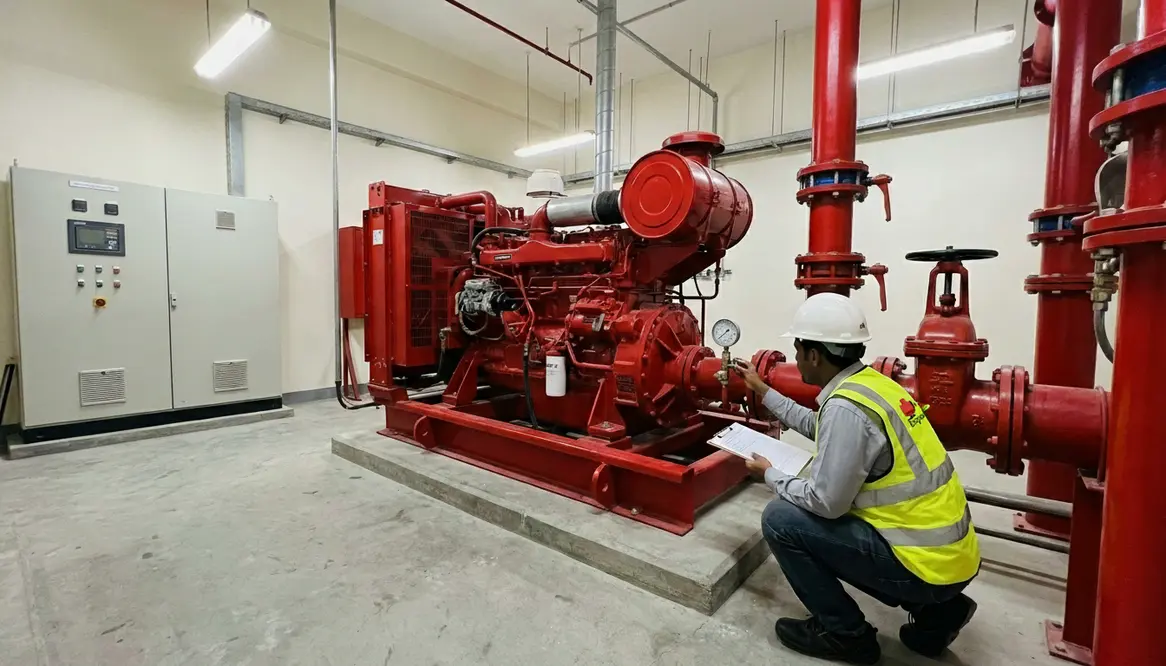
Kuwait Fire Pump Testing and Maintenance Guide
A practical, no-drama look at keeping commercial and industrial fire pumps ready for the moments that actually matter.
When I talk about Kuwait testing, I mean one thing above all: keeping commercial and industrial fire pump systems ready when the pressure rises and nobody has time for drama. In a major property, a fire pump is not just another machine in the plant room. It is the quiet guard standing by, waiting for the moment when water must move fast and hard. I have seen how a well kept pump can make all the difference, and I have also seen what happens when people treat maintenance like a “later” problem. Later, as we all know, loves to arrive at the worst possible time.
In this guide, I walk through the practical side of Kuwait testing for fire pumps, from routine checks to deeper inspections and the signs that say, “Call a professional now.” I keep this focused on commercial and industrial facilities, because those sites carry real risk, real demand, and real responsibility. Let’s get into it.
Why fire pump testing matters in commercial buildings
I always start here because the reason shapes the work. A fire pump supports sprinkler and standpipe systems when the regular water supply cannot keep up. In a tower, warehouse, plant, mall, or hospital, that extra pressure can protect lives, equipment, and operations. Therefore, testing is not a box to tick. It is proof that the system will respond when it matters.
Regular Kuwait testing also helps me catch hidden issues before they grow teeth. A weak seal, low suction pressure, tired bearings, clogged strainers, or a faulty controller can all sit quietly until the wrong day. Then the pump tries to perform like a backup dancer with a broken ankle. Not ideal.
What “ready” really means
A ready fire pump does more than start. It reaches speed quickly, holds pressure under realistic flow, and shuts down correctly when commanded. It has a reliable power or fuel source, clear suction, and valves that are actually in the right position. It also has test records that tell a clean, consistent story instead of a mystery novel.
When Kuwait testing is done consistently, it turns “I hope it works” into “I know how this system behaves,” and that shift matters when alarms start shouting.
What I check during fire pump testing
Here I keep my eyes on the parts that matter most. The goal is simple: catch trouble while it is still cheap and quiet.
Visible checks
I inspect the pump house, piping, valves, gauges, controller lights, and fuel or power supply. I also look for leaks, rust, heat, noise, and vibration. These clues often tell the story before the numbers do.
Performance checks
I verify start up time, discharge pressure, suction pressure, flow behavior, and shutdown response. I also compare the results with the required design values, because a pump that “runs” is not the same as a pump that performs.
In addition, I make sure the pump runs under load long enough to show stable behavior. Short checks can hide trouble. A proper test gives the machine time to speak up, and trust me, it usually does.
How I handle Kuwait testing step by step
I follow a simple path so nothing slips through the cracks. Kuwait testing only really works when it is methodical instead of improvised in the noise of an already busy site.
1. Prepare and review
First, I review the system records and the site layout. Then I confirm the pump type, driver type, and test method. After that, I check safety controls and notify the site team, because nobody enjoys a surprise fire pump symphony at full volume.
2. Run the test with proper instruments
Next, I perform the test with the right instruments. I record pressure, flow, speed, voltage or fuel status, and any unusual sounds. After that, I compare the results with the required standards and the previous test history. This part matters because patterns reveal more than a single reading ever can.
3. Report, recommend, and follow up
Finally, I prepare a clear report with findings, risks, and repair needs. For many facilities, I recommend following commercial fire pump testing services that focus on large properties and industrial sites. That kind of support helps keep the process consistent, documented, and useful for audits and safety planning.
Maintenance schedule that keeps systems ready
I like maintenance plans that are simple enough to follow but serious enough to work. For most commercial and industrial sites, I break the work into daily, weekly, monthly, and annual tasks.
- Daily: check controller status, power supply, pump room condition, and alarm signals
- Weekly: run the pump briefly, inspect pressure levels, and note any odd noise or vibration
- Monthly: check lubrication, seals, batteries, fuel levels, and valve positions
- Annually: carry out full flow testing, inspect internals, and review all records
This rhythm helps me spot change early. Moreover, it keeps the system from drifting into that dangerous space where “it looked fine last month” becomes “why is this an emergency now.”
Common problems I see during inspections
Some issues show up again and again. Low suction pressure can point to supply trouble or blocked lines. Corrosion can weaken fittings and move the system toward failure. Battery issues often affect diesel pump starts, while electrical faults can stop a motor driven pump before it even gets the chance to flex. Also, worn bearings and misalignment can cause noise and heat that grow worse over time.
I also watch for poor record keeping. Without good logs, I lose the story. And without the story, I lose the pattern. That makes troubleshooting slower and far more expensive. As a result, records are not paperwork for the shelf. They are part of the safety system.
FAQ about Kuwait testing for fire pumps
These are the questions I hear most often when commercial and industrial teams start taking Kuwait testing seriously.
Conclusion
I treat Kuwait testing as a routine that protects far more than equipment. It protects people, property, and business continuity. So, if your commercial or industrial site depends on a fire pump, do not wait for a failure to make a plan. I recommend building a clear schedule, tracking every result, and working with specialists who understand large property systems. If you want your fire pump ready for the real moment, now is the time to act.