Kuwait Commercial Fire Pump Requirements Guide
Kuwait fire pump requirements for commercial buildings
When I look at a Kuwait commercial building, I see more than glass, steel, and a good lobby smell. I see pressure, risk, and a system that has to work when everything else goes sideways. That is where fire pumps step in. They keep water moving when the building demand rises and the city supply cannot keep up. In a commercial site, that is not a nice extra. It is the quiet hero in the back room, doing the heavy lifting while everyone else enjoys the air conditioning. And yes, that pump matters more than the fancy coffee machine in the lobby.
In Kuwait, commercial and industrial buildings must meet strict fire safety rules, and fire pump design sits at the center of that plan. I will walk through the key requirements, how they work, and why they matter for major properties. If you own, manage, or design a Kuwait commercial property, this guide will help you understand what your system needs to do and why it must do it well.
What Kuwait commercial buildings need from a fire pump
First, I focus on the basics. A fire pump must supply enough water pressure and flow to support the fire sprinkler and hydrant system across the full building. In a tall tower, a wide mall, or a large warehouse, water does not always arrive with superhero speed. So, the pump fills the gap.
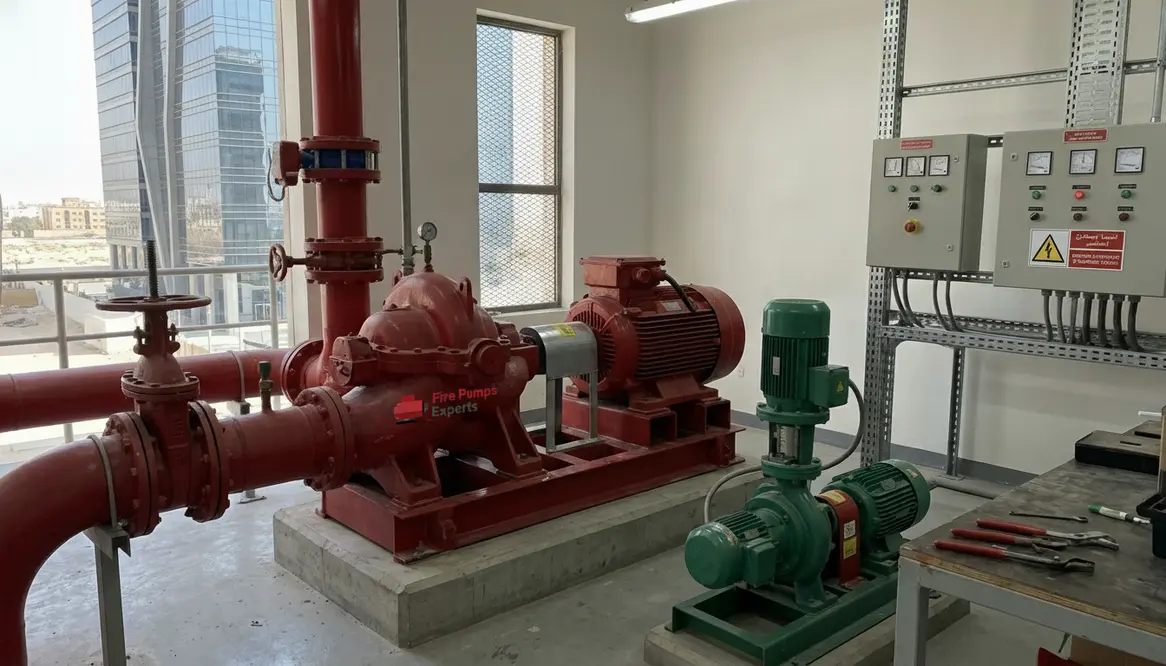
For commercial buildings, the system usually includes a main fire pump, a jockey pump, and a backup power source. The main pump handles the heavy load. The jockey pump keeps pressure steady during small drops. Meanwhile, the backup power source keeps the system alive if the main power fails. Because fire does not wait for the electricity bill to get paid.
Authorities in Kuwait also expect the fire pump to match the building size, risk level, and water demand. A small office block and a major shopping complex do not share the same setup. That would be like giving Batman the same toolkit as a traffic warden.
How I check the Kuwait commercial fire pump standards
When I review a fire pump plan, I start with code compliance. Kuwait fire safety rules require proper system design, correct pump sizing, and approved installation. The fire pump must support the required pressure at the most demanding point in the building. Otherwise, the far end of the system gets weak flow, and that creates a serious risk.
Key items on the review checklist
| Requirement | What I look for |
| Pump capacity | Enough flow for the full fire system demand |
| Pressure level | Strong enough pressure at the highest and farthest point |
| Backup power | Reliable supply if normal power fails |
| Room conditions | Safe, cool, accessible pump room with proper drainage |
| Testing access | Easy access for inspection, service, and emergency checks |
Also, the pump room itself matters. I need to see enough space for safe operation, clear access for maintenance, and protection from heat, flooding, and damage. After all, a fire pump hidden in a cramped, hot corner is not exactly setting itself up for success.
Why the pump room and backup power matter most
Now, let me get to the part people often underestimate. The fire pump does not work alone. It needs a proper room, clean water supply, correct piping, and stable power. In Kuwait, heat is no joke, and commercial buildings face long operating hours. So, the pump room must stay protected and easy to reach.
Backup power is just as important. If the main supply fails during a fire event, the pump still has to run. That usually means an electric pump with emergency power or a diesel pump with fuel support, depending on the design and approval. This is where planning separates a real safety system from a brochure with good lighting.
Dual view for fast planning
Design side: I make sure the pump matches the building demand, the water source, and the fire system layout.
Operations side: I make sure staff can test, inspect, and service the pump without delay or confusion.
Because of this, I always treat the pump room like the engine room of the building’s safety plan. If it fails, the whole system starts limping, and nobody wants that story on the morning report.
How I handle inspection, testing, and maintenance
Fire pumps need regular testing. They cannot just sit there looking important like a character in a spy movie. I need to see routine checks for pressure, flow, alarms, valves, and power supply. In commercial buildings, maintenance should happen on schedule and with proper records.
Testing usually confirms that the pump starts when needed, delivers the right pressure, and responds fast. Also, the jockey pump should keep the system stable under normal pressure loss. If the system keeps dropping pressure for no good reason, that can point to leaks, valve issues, or worn parts.
For Kuwait commercial facilities, I strongly recommend a service plan that fits the property type. A retail center, hotel, tower, or industrial site all need different attention. Therefore, the maintenance team must understand the building use, occupancy, and fire load. One size does not fit all, and fire safety never plays along with guesswork.
What I recommend for major properties in Kuwait commercial sites
If I had to give one clear view, I would say this: choose a fire pump system that matches the building, not the budget mood of the day. Major properties need proper engineering, approved equipment, and regular testing. Also, they need clean records, trained staff, and fast repair support.
I also suggest working with a specialist who knows commercial and industrial fire protection in Kuwait. That way, the system meets local rules and supports real site conditions. For more detailed standards and guidance, I would look to fire pump solutions for commercial and industrial buildings in Kuwait as a useful reference point.
In the end, a fire pump is not just another machine. It is a key part of a building’s survival plan. And in a major property, that matters every single day.
FAQ
Conclusion
If you manage a Kuwait commercial building, now is the time to take fire pump compliance seriously. I recommend reviewing your pump size, room setup, backup power, and testing plan before a problem turns into a headline. For major properties, safety depends on details done right. So, if you need a system review, upgrade, or new design, connect with a fire protection specialist and make sure your building is ready before the pressure drops.