Malaysia High Rise Fire Pump Requirements Guide
Practical requirements, real-world risks, and what it actually takes to keep a Malaysia high rise ready when things go wrong.
Malaysia Fire Pump Requirements for High Rise Buildings
When I look at a Malaysia high rise, I do not just see glass, steel, and a skyline that screams ambition. I see a building that has to stay ready when fire turns a normal day into a very bad one. That is where fire pumps step in. They keep water moving when pressure drops, and in a tall building, pressure loves to act like it has somewhere better to be.
In Malaysia, fire pump systems are not a nice extra. They are part of the life safety setup that protects people, assets, and business continuity. So, if I manage a commercial tower, industrial facility, or major property, I need to know what the rules expect, what the system must do, and why the details matter. Let me break it down clearly, without the usual snooze fest.
Why fire pumps are non-negotiable
In a Malaysia high rise, height works against water pressure. Without properly designed pumps, top floors might get water that arrives late, weak, or not at all. That is how small fires become building-wide problems.
Fire pumps keep sprinklers, hose reels, hydrants, and standpipes supplied at the pressure they need, exactly when they are needed most.
What fire pumps do in a high rise building
I use fire pumps to push water through the fire protection system when gravity alone cannot do the job. In a tall building, the upper floors need steady pressure for sprinklers, hose reels, standpipes, and hydrants. Without proper pumping, water may arrive with all the strength of a sleepy kitten. Not ideal.
The core pump lineup
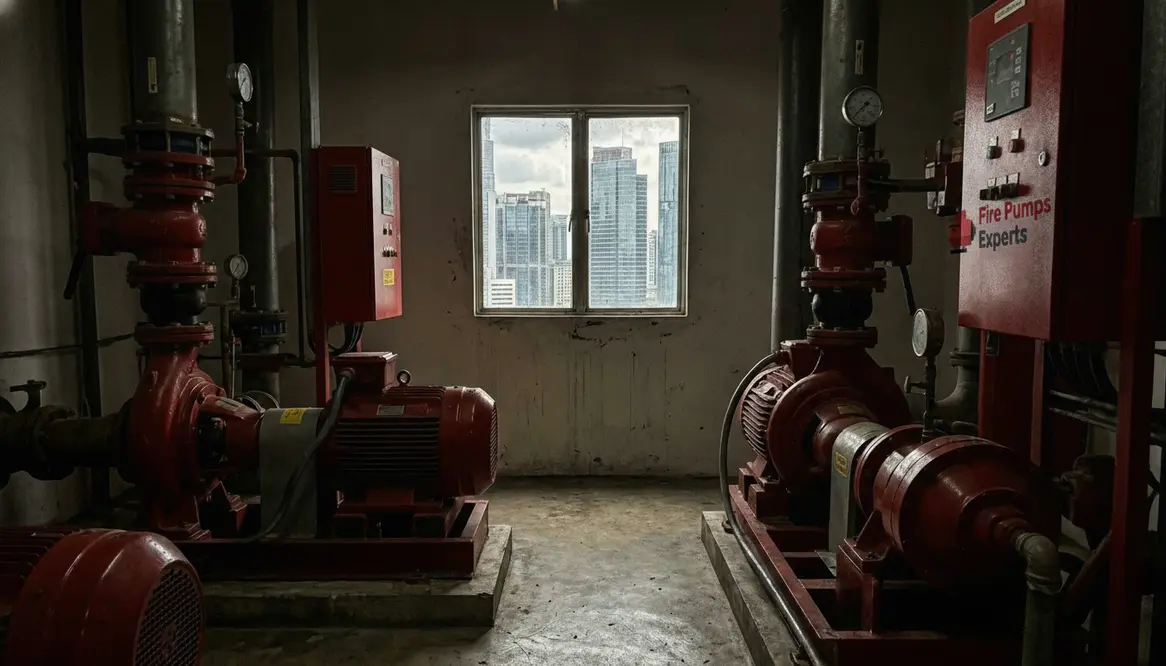
In practice, the system often includes a main duty pump, a standby pump, and a jockey pump. The duty pump handles normal fire demand. The standby pump kicks in if the first one fails. Meanwhile, the jockey pump keeps the system pressure stable and stops the main pumps from switching on for tiny drops. That small part saves wear, noise, and money. And yes, money is still a thing, last I checked.
Think of the duty pump as the main actor, the standby as the understudy ready to walk on without missing a line, and the jockey pump as the stage crew keeping everything stable in the background.
Malaysia high rise fire pump rules I check first
For a Malaysia high rise, I always start with the local fire code, the building use, and the required fire protection design. In Malaysia, fire pump systems for commercial and industrial properties must match the approved fire safety plan and the needs of the building. The system must support the full fire flow needed at the highest and farthest points of the building.
I also look at these core needs:
Key system requirements at a glance
| System need | Why it matters |
|---|---|
| Duty and standby pumps | One pump fails, the other keeps protection alive |
| Jockey pump | Maintains pressure and reduces unnecessary pump starts |
| Proper water storage | Ensures enough supply during fire demand |
| Reliable power source | Keeps the system working during outages |
| Automatic start controls | Lets the system react fast when pressure drops |
| Test and maintenance access | Makes checks easier and supports long term safety |
Each part serves a clear role. If one piece is missing, the whole system becomes a little less hero, a little more extra in a disaster movie.
How I size and place fire pumps
Getting the sizing right
I never size a fire pump by guesswork. That road leads straight to trouble, and trouble does not file paperwork. The pump must deliver the right flow and pressure based on the building height, pipe losses, sprinkler demand, and the most demanding fire scenario. For high rise buildings, I also check the pressure at the top floors, because water has to travel upward and still arrive with force.
Pump room placement
I pay close attention to pump room placement too. The room should stay protected, easy to access, and well ventilated. It should also allow safe maintenance and quick inspection. If the pump room sits in a poor spot, then every service visit becomes a small adventure nobody asked for.
For a Malaysia high rise, a well-located, protected pump room can be the difference between a smooth emergency response and chaos in the first five minutes.
Testing, backup, and maintenance I do not ignore
Routine testing
A fire pump system only matters if it works when needed. So I treat testing as non negotiable. Regular flow tests, automatic start checks, alarm checks, and pressure checks all help confirm the system will perform during an emergency. I also make sure the pump controller, valves, and power supply stay in good shape.
Backup power and redundancy
Backup matters as well. In many commercial and industrial properties, I look for dependable electrical supply with emergency support, or a suitable backup arrangement based on the building design. The idea is simple: if one source fails, the fire system must still stand up and do its job.
Maintenance that actually prevents failure
Then comes maintenance. I inspect seals, bearings, control panels, batteries, suction lines, discharge lines, and valves. I also make sure the water tank or supply source stays ready. A neglected pump can look fine on the surface, much like a villain in a Marvel movie before the third act. I do not trust appearances here.
Logs, test records, and clear maintenance reports also make audits smoother and help prove that a Malaysia high rise has its fire protection under control.
Why compliance protects business value
For me, fire pump compliance is not only about rules. It is about protecting people, avoiding downtime, and keeping a property insurable and operational. A major building that fails fire safety checks can face delays, fines, or worse, serious risk to life and business. That is not the kind of headline I want attached to a commercial tower or industrial site.
When I work with a proper fire protection team, I can align the system with Malaysian requirements, confirm the design for the building type, and keep the property ready for audit or inspection. If I need more technical support, I can also use a trusted resource like commercial fire pump solutions for major properties to explore systems built for commercial and industrial use.
Business reality check
Insurers, regulators, and tenants all expect a Malaysia high rise to meet fire pump requirements without excuses. Solid compliance supports rental value, reputation, and long-term operations.
FAQ
Conclusion
If I want a Malaysia high rise to stay safe, approved, and ready, I have to take fire pump requirements seriously. The right design, the right backup, and the right maintenance all work together to protect lives and assets. So, if you manage a commercial or industrial property, now is the time to review your fire pump system, check compliance, and make sure your building is ready before an emergency decides to make the first move.