Fire Pump Testing Frequency Concord CA Guide
I have a habit of looking at buildings the way a mechanic listens to an engine. I don’t just see concrete, glass, and steel. I hear systems quietly working behind the scenes. One of the most important is the fire pump. It waits patiently, silent most days, but when trouble shows up, it becomes the hero of the story. That is exactly why understanding fire pump testing frequency Concord CA matters so much for large commercial properties and industrial facilities.
In Concord, building owners manage everything from distribution warehouses to large office complexes. Each structure depends on reliable fire protection systems. However, a fire pump that sits idle too long can develop problems without warning. Therefore, testing keeps the system alert and ready. Think of it like stretching before a big game. Even superheroes need warm ups.
Over the years, I have walked through many mechanical rooms and pump houses across Northern California. Some hum like a well tuned orchestra. Others sound like a garage band that skipped rehearsal. The difference usually comes down to one simple factor. Consistent testing.
Understanding Fire Pump Testing Frequency Concord CA for Large Buildings
When someone asks me about fire pump testing frequency Concord CA, I give a simple answer first. Fire pumps need regular weekly, monthly, and annual testing. Yet behind that simple rule sits a deeper purpose. These tests confirm that the pump will deliver the pressure and water flow required during a real emergency.
Commercial and industrial buildings rely heavily on fire suppression systems. High rise offices, manufacturing plants, logistics centers, and large retail complexes often sit far above the pressure limits of municipal water supplies. Therefore, a fire pump boosts water pressure so sprinkler systems can do their job.
Testing verifies several critical elements.
- Motor or diesel engine startup reliability
- Water pressure performance under load
- Controller response and alarms
- Valve conditions and flow capacity
- Overall system readiness
Without regular testing, small issues slowly creep into the system. A valve sticks. A controller battery weakens. A pressure sensor drifts out of calibration. Eventually, those tiny issues become big failures. And when fire shows up, nobody wants a system that shrugs its shoulders and says, “Sorry, I’m on my lunch break.”
How Often Should Commercial Fire Pumps Be Tested in Concord
This is the question I hear most often from property managers and facility directors.
The National Fire Protection Association sets the backbone of testing schedules under NFPA 25. Local jurisdictions, including those in Concord and throughout Contra Costa County, follow these standards closely. Therefore, most commercial buildings follow three primary testing intervals.
Weekly churn test
The pump runs for about ten minutes without flowing water. This confirms that the pump starts correctly and maintains pressure. It also lets technicians listen for unusual sounds. In my experience, pumps speak through vibrations and subtle changes in tone. If something feels off, we investigate before it grows.
Monthly diesel pump checks
Diesel driven pumps need extra attention. Fuel levels, battery strength, and cooling systems all receive inspection. These engines are powerful machines, but like any engine, they prefer regular attention.
Annual flow testing
This is the big performance test. Technicians run water through the system and measure pressure at different flow levels. The results must match the pump’s design curve. If they don’t, adjustments or repairs follow.
Annual testing often feels like the system’s yearly physical exam. The pump stretches its legs and proves it still has the strength it promised when installed.
Why Regular Fire Pump Testing Protects High Value Properties
Commercial buildings hold more than walls and desks. They hold inventory, equipment, tenant operations, and sometimes entire supply chains. A single failure in a fire protection system can ripple through an entire business ecosystem.
Regular testing creates several layers of protection.
First, it protects people. Employees, tenants, and visitors rely on functioning sprinkler systems during emergencies.
Second, it protects assets. Industrial facilities often contain millions of dollars in machinery and materials. Reliable fire pumps help stop small fires before they become headline news.
Third, it protects compliance. Fire inspectors expect documented testing records. Missing records can lead to violations, fines, or insurance issues.
And finally, testing protects peace of mind. When I walk out of a facility after a successful flow test, I know the system stands ready. It’s a quiet confidence. Kind of like knowing your car has a full tank before a long road trip.
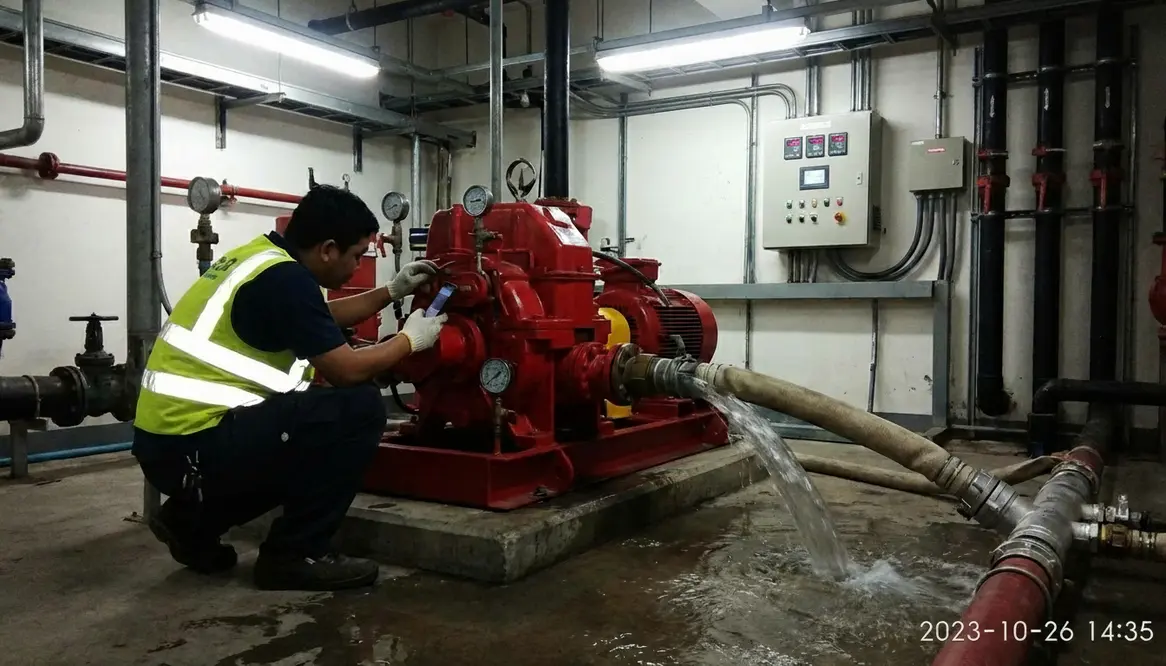
What Happens During Professional Fire Pump Testing
Many building owners imagine testing as simply flipping a switch. In reality, a proper test involves careful coordination and specialized equipment. For major commercial properties, trained technicians approach the process with precision.
System preparation
Technicians inspect valves, gauges, controllers, and suction lines. They verify that water supplies remain stable before starting the pump.
Controller activation
The controller triggers the pump automatically through pressure simulation. This confirms the system responds correctly during a pressure drop.
Performance monitoring
During flow tests, technicians measure pressure and water flow across multiple points. Each reading confirms the pump meets its rated performance.
Mechanical inspection
Technicians listen closely for vibration, overheating, or abnormal noise. Pumps tell stories through sound if you know how to listen.
Data recording
Every measurement enters a formal test report. These records help facility managers track system health over time.
Post test evaluation
Finally, the system resets and technicians review results with property management teams.
It may sound technical, and it is. Yet experienced teams move through the process with calm efficiency. After all, when a fire pump works properly, it rarely attracts attention. It simply waits for the moment when it matters most.
If you want a deeper breakdown of testing standards beyond Concord, resources like this overview of fire pump testing requirements can help frame how NFPA 25 schedules apply to real buildings.
Signs Your Fire Pump System Needs Immediate Testing
Even with scheduled inspections, I always advise property managers to watch for warning signs. Fire pumps rarely fail without giving hints first.
- Unusual vibration or rattling sounds
- Delayed startup during weekly tests
- Pressure readings that drift outside normal ranges
- Controller alarms or battery alerts
- Visible leaks around pump seals or valves
When any of these appear, testing should happen quickly. Ignoring them is a bit like ignoring the check engine light in your car. Sure, it might be nothing. But it might also be the beginning of a very expensive story.
Large industrial properties in Concord often operate around the clock. That constant activity places additional stress on infrastructure systems. Therefore, proactive testing becomes even more important.
For owners and managers comparing options, understanding fire pump testing frequency Concord CA makes it easier to budget, schedule, and coordinate with your fire protection contractor without interrupting core operations.
FAQ About Fire Pump Testing
Every facility has its own quirks, but a few questions about fire pump testing frequency Concord CA come up in almost every conversation with building teams.
Keeping Concord Buildings Prepared
Every commercial building has systems quietly standing guard. Sprinklers, alarms, standpipes, and yes, the fire pump tucked away in its mechanical room. These systems rarely receive applause. Still, when a crisis arrives, they become the difference between control and catastrophe.
If you manage a commercial or industrial property, staying ahead of maintenance is essential. Professional inspections, consistent testing, and accurate documentation ensure your fire pump system stands ready. When the moment comes, it will not hesitate. And that quiet reliability is exactly what every building in Concord deserves.
Treating fire pump testing frequency Concord CA as a core part of your facility strategy, instead of a last minute scramble when an inspection notice lands on your desk, is one of the simplest ways to protect people, property, and operations for the long haul.