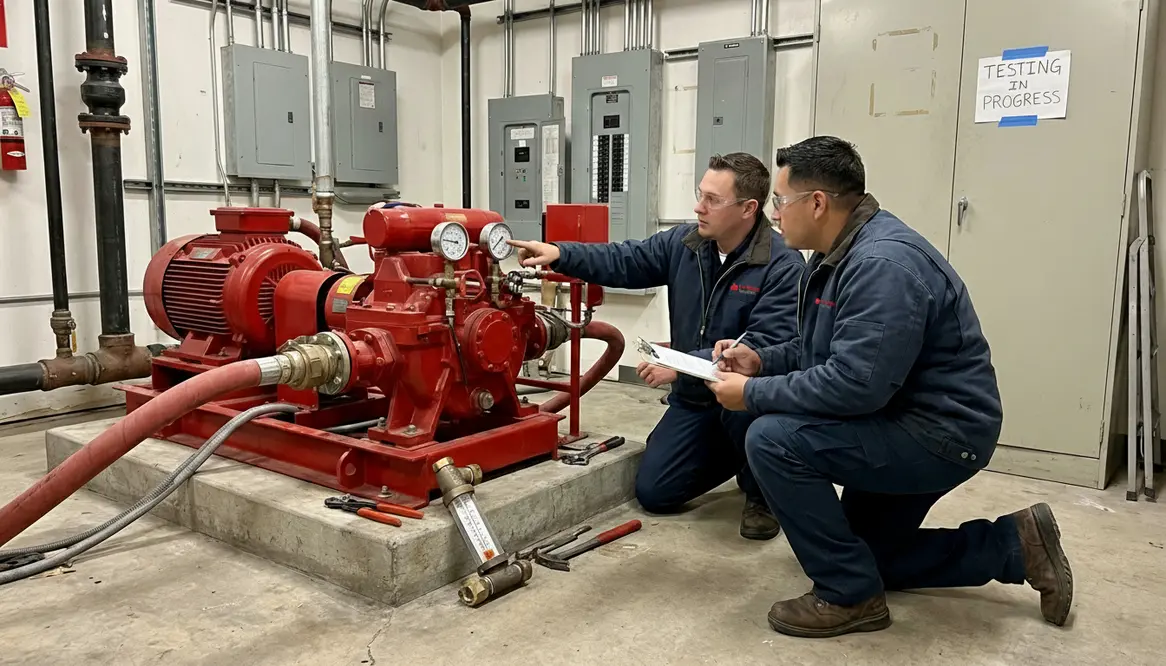
Fire Pump Testing Requirements Los Angeles Buildings
Inside the quiet mechanical rooms of Los Angeles, far from the glass lobbies and rooftop lounges, fire pumps wait for the worst day a building will ever see. Understanding the fire pump testing requirements Los Angeles buildings rely on is what separates a safe high rise from an expensive fire hazard.
I have spent a lot of time inside mechanical rooms. Not the glamorous part of Los Angeles real estate, I know. No red carpets. No paparazzi. Just the quiet hum of equipment that keeps large buildings safe when things go sideways. And when we talk about fire pump testing requirements Los Angeles buildings, we are talking about one of the most important pieces of that quiet protection.
Commercial towers, industrial facilities, hospitals, and large property complexes across Los Angeles rely on fire pumps to deliver the water pressure needed when a fire breaks out. Without that pump doing its job, sprinklers become little more than polite suggestions. So yes, annual fire pump testing matters. It keeps systems reliable, keeps inspectors happy, and most importantly, keeps people safe.
Today, I want to walk through what building owners really need to know. No jargon storm. No regulatory maze. Just the real story behind annual fire pump testing and how it protects the properties that keep Los Angeles running.
Why Annual Fire Pump Testing Matters for Large Los Angeles Properties
A fire pump sits quietly most of the year. It waits. It listens. Then when the call comes, it must deliver full pressure instantly. That is why annual testing is not just paperwork. It is performance verification.
Over time, parts wear down. Valves stiffen. Controllers drift. Even a small drop in pressure can affect how well a sprinkler system performs in a large commercial structure. Because of that, codes require routine performance testing to confirm the pump can still hit its design flow and pressure.
High Stakes In A Vertical City
In Los Angeles, the stakes are higher than most places. High rise offices, industrial plants, hospitals, and mixed use commercial complexes demand powerful fire protection systems. A fire pump failure during an emergency could mean sprinklers cannot reach upper floors or remote areas.
However, when annual testing happens on schedule, problems show up early. A worn bearing here. A pressure drop there. Fix it now, and the system stays reliable.
Think of it like going to the doctor for a yearly checkup. You might feel fine. But the test confirms everything is working the way it should.
And honestly, ignoring your fire pump is a bit like ignoring the check engine light. It might run for a while. But eventually, the bill gets bigger.
What the Fire Pump Testing Requirements Los Angeles Buildings Must Follow Actually Include
When people hear about fire pump testing, they often picture someone flipping a switch and checking a gauge. In reality, the process is far more involved.
What Annual Fire Pump Testing Really Checks
Annual testing focuses on verifying that the pump can produce the exact flow and pressure it was designed for. Technicians simulate real system demand and measure how the pump responds under different conditions.
The process usually includes several stages.
- Churn test. The pump runs without flowing water to check baseline pressure and mechanical stability.
- Rated flow test. Water flows through test headers or flow meters to measure full system capacity.
- 150 percent overload test. This confirms the pump can exceed normal demand without failure.
- Controller inspection. Electrical systems, automatic start features, and alarms are verified.
- Pressure readings. Technicians record suction pressure, discharge pressure, and net performance.
All measurements must align with the pump’s original design curve. If the numbers drift too far from expected performance, the system may require repair or recalibration.
For large commercial and industrial facilities, these tests are not optional. They help verify that the fire suppression system can support the scale of the building it protects.
How I Prepare Large Facilities for Annual Fire Pump Testing
When I work with building teams, preparation is where we avoid headaches. Fire pump testing moves a lot of water. Sometimes thousands of gallons per minute. That means planning matters.
Step 1: Coordinate With The Facility Team
First, I coordinate with building engineers and facility managers. We confirm drainage capacity, test headers, and discharge locations. Nobody wants a surprise indoor waterfall. Trust me.
Step 2: Inspect Before Test Day
Then we inspect the mechanical room before testing day. If a valve is closed or a sensor is disconnected, the test results could mislead everyone involved.
Step 3: Review Pump History
Finally, we review historical performance data. Fire pumps tell a story over time. If the pressure curve slowly drops year after year, that trend matters.
The goal is simple. Make the annual test smooth, accurate, and useful. Because the test is not just about compliance. It is about understanding how the system performs today compared to the day it was installed.
Common Fire Pump Issues I See During Testing
Fire pumps are tough machines. Still, they are not immune to wear. During annual testing across Los Angeles commercial properties, certain issues appear again and again.
Here are a few usual suspects.
- Impeller wear that reduces water pressure
- Controller relay failures or electrical faults
- Air trapped in suction lines
- Diesel engine starting problems
- Pressure sensor calibration drift
Why Annual Testing Catches These Problems
Most of these problems develop slowly. That is exactly why annual performance testing exists. However, when caught early, repairs are straightforward. Wait too long, and the cost climbs quickly. Kind of like ignoring that strange noise your car makes until the mechanic sighs deeply and disappears into the back room.
Fire Pump Testing Requirements Los Angeles Buildings Must Meet for Code Compliance
Los Angeles follows national standards for fire pump inspection, testing, and maintenance. Specifically, most commercial and industrial systems follow NFPA 25 guidelines along with local fire department expectations.
Annual flow testing is the most visible requirement, but it is not the only one tied to fire pump testing requirements Los Angeles buildings have to satisfy for long term compliance.
Operational Checks
- Automatic start verification
- Controller alarm checks
- Power supply inspection
- Fuel supply confirmation for diesel units
Performance Validation
- Flow measurement at multiple points
- Pressure readings under load
- Pump curve comparison
- Documentation for compliance records
Documentation matters just as much as the test itself. Inspectors and insurance providers expect accurate reports showing performance results, corrective actions, and system status.
For large commercial buildings and industrial facilities, those records protect both compliance and liability.
And yes, when inspectors walk into a pump room and see organized records, they smile. Not a huge smile. More like a quiet nod of approval. But in compliance terms, that is basically a standing ovation.
How Often Should Large Commercial Fire Pumps Be Tested?
Technically, annual flow testing verifies the pump’s full performance. However, routine oversight happens more often.
Testing Rhythm For Busy Los Angeles Buildings
Facility teams typically conduct weekly or monthly churn tests depending on the pump type. Electric pumps usually run weekly. Diesel pumps require weekly operation plus additional engine checks.
Meanwhile, the annual test remains the big event. That is when technicians push the system through full demand conditions and confirm it still matches the design curve.
For large Los Angeles commercial facilities, skipping these intervals is not an option. The fire department, insurance carriers, and safety regulations all expect consistent verification.
Besides, when a fire pump works correctly, nobody notices it. And honestly, that is exactly the point.
FAQ About Annual Fire Pump Testing
How often must fire pumps be tested in commercial buildings?
Full performance testing occurs annually, while operational churn tests typically happen weekly or monthly depending on the pump type.
Who performs annual fire pump testing?
Licensed fire protection professionals conduct the testing using calibrated equipment and documented procedures.
What happens if a fire pump fails its annual test?
The system must be repaired and retested until it meets its original performance curve.
Do industrial facilities require fire pump testing?
Yes. Large industrial properties follow the same inspection and testing standards as commercial buildings.
How long does a fire pump flow test take?
Most annual tests take two to four hours depending on system complexity and facility preparation.
Protecting Your Property Starts in the Pump Room
When you manage a commercial tower, hospital campus, manufacturing facility, or major property complex in Los Angeles, fire protection is not just another system. It is a responsibility. Annual testing confirms your fire pump can deliver when everything else depends on it. The fire pump testing requirements Los Angeles buildings face may feel technical on paper, but in the field they are about making sure real people can walk out of real emergencies.
If you want experienced professionals who understand large facility systems and compliance expectations, connect with a team that lives in these pump rooms every day. For a deeper look at professional testing and inspection support, you can review the services outlined at Kord Fire’s fire pump service page, then schedule your next inspection with confidence.
Quick Recap Of Fire Pump Testing Requirements Los Angeles Buildings Rely On
- Annual flow testing to confirm design flow, pressure, and performance.
- Weekly or monthly churn tests based on pump type and system design.
- Controller, power supply, and alarm verification for reliable automatic start.
- Thorough documentation to satisfy inspectors, insurers, and internal safety policies.
- Proactive repairs when test results drift away from the original pump curve.