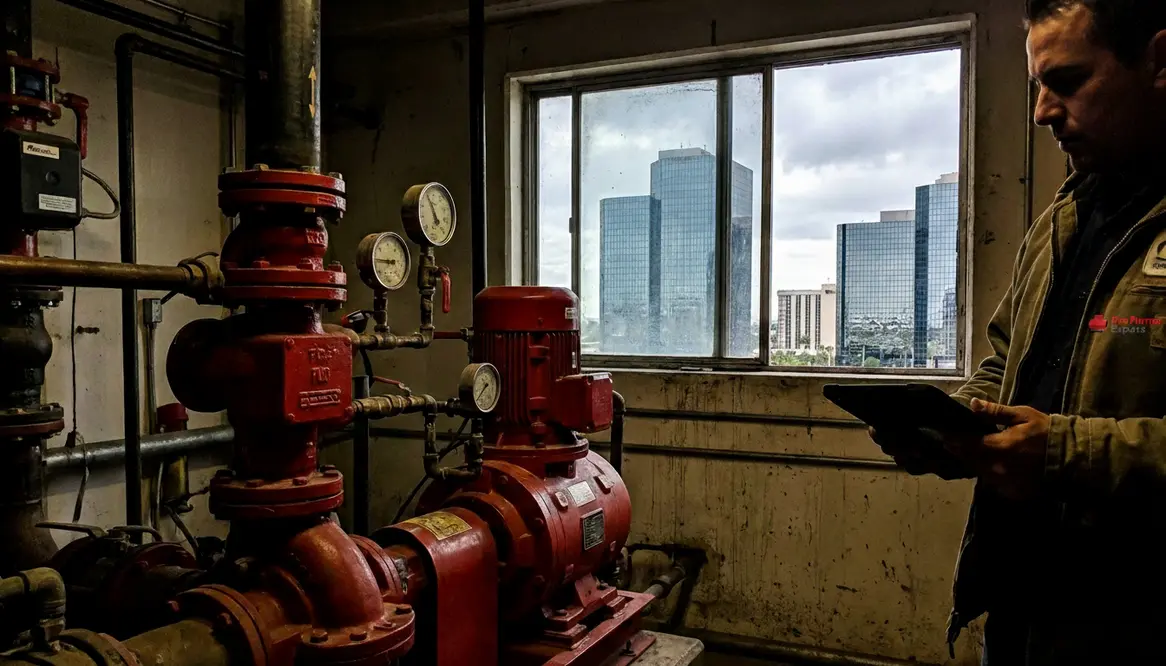
High Rise Fire Pump Maintenance Long Beach Guide
When I stand on a downtown street in Long Beach and look up at the glass towers above me, I do not just see architecture. I see responsibility stacked floor after floor. Inside those buildings are offices, data centers, medical suites, and entire companies working late into the night. And quietly, behind the walls and mechanical rooms, sits a system that rarely gets applause but absolutely deserves it. I am talking about fire pumps. More specifically, the discipline of high rise fire pump maintenance Long Beach. Without it, those towering structures would be relying on hope instead of pressure, and hope is not exactly a fire protection strategy.
Over the years, I have walked through countless commercial properties along the coast. From towering corporate headquarters to sprawling industrial campuses, one truth always holds steady. When the fire pump works exactly the way it should, nobody notices. And that is precisely the point.
Why High Rise Buildings Depend on Fire Pumps
Gravity works great when water flows downhill. Unfortunately, sprinklers in a thirty story tower live several hundred feet above the street. City water pressure alone often cannot push water that high with the force needed during a fire.
That is where a fire pump steps in. It boosts water pressure so sprinkler systems and standpipes can deliver serious flow at upper floors. Without that extra pressure, firefighters might open a valve and get something closer to a garden hose than a life saving stream.
Now imagine a large commercial tower packed with tenants, servers, and equipment worth millions. Fire protection is not just a safety feature. It is business continuity.
Because of that, property managers in Long Beach rely heavily on properly maintained pump systems. A neglected fire pump can fail to start, struggle to maintain pressure, or deliver weak flow. None of those scenarios end well. And trust me, a fire marshal does not find that funny, even if I sometimes joke that mechanical rooms are the quietest rooms in the building until inspection day.
High Rise Fire Pump Maintenance Long Beach: What Actually Happens Behind the Scenes
Many people picture maintenance as someone glancing at a machine and saying, “Yep, still red.” I wish it were that simple. Real fire pump maintenance involves a structured testing routine built around national fire protection standards.
First, technicians verify the pump controller. That panel acts like the brain of the system. It monitors pressure, starts the pump automatically, and records events. If that controller hesitates or misreads pressure signals, the pump might not activate when the building needs it most.
Next comes churn testing. During this test, we run the pump without flowing water through the system. It confirms that the pump starts smoothly and holds the correct pressure. Think of it as a heartbeat check for the equipment.
However, the most revealing step is the annual flow test. We open valves that simulate real fire demand and measure how the pump performs under pressure. The data tells a story about wear, impeller health, and system resistance.
Meanwhile, we also inspect several key components.
- Diesel or electric drivers that power the pump
- Controllers and sensors that trigger automatic operation
- Valves and check assemblies that regulate water direction
- Fuel systems and batteries for diesel driven pumps
- Pressure gauges and relief valves that verify performance
Every one of these pieces matters. A fire pump is not a single machine. It is an orchestra. When one instrument goes out of tune, the whole performance suffers.
What Commercial Property Managers Usually Ask Me
Whenever I meet with facility managers in Long Beach, the questions tend to follow a pattern. They want clarity, they want reliability, and they definitely want to pass inspections without drama.
So let me answer a few of the most common ones right away.
How often should fire pumps be tested?
Weekly visual inspections and monthly churn tests are standard. Annual flow testing is essential to confirm full performance.
Can we delay maintenance if the pump seems fine?
Technically you could. But that is a bit like skipping oil changes because the engine still starts. Eventually the bill arrives, and it rarely brings good news.
Does maintenance really impact emergency performance?
Absolutely. Pumps that receive routine inspections start faster, maintain stronger pressure, and last significantly longer.
The Hidden Risks of Neglect in Tall Commercial Structures
High rise buildings introduce unique mechanical challenges. Water must travel long vertical distances. Pressure zones must stay balanced. Valves must coordinate across multiple floors.
Therefore, when maintenance slips, small issues grow quietly.
A pressure sensor might drift out of calibration. A diesel battery might weaken. A valve might stick just enough to restrict flow.
None of those problems wave a big red flag during daily operations. Yet during an emergency, they suddenly matter more than the office coffee machine. And let us be honest, that coffee machine already gets too much attention.
Furthermore, large commercial and industrial facilities often house sensitive infrastructure. Data centers, laboratories, manufacturing lines, and logistics hubs all depend on uninterrupted operations. Fire damage in those environments can halt business across entire regions.
Consistent service routines reduce that risk dramatically. Properly maintained pumps start instantly, sustain pressure, and support sprinkler systems exactly the way engineers designed them.
High Rise Fire Pump Maintenance Long Beach: The Operational Payoff
Reliable maintenance does more than protect people. It protects the entire building ecosystem.
Operational Benefits
- Reliable sprinkler pressure at upper floors
- Smoother fire marshal inspections
- Longer equipment lifespan
- Reduced emergency repair costs
Business Advantages
- Lower liability exposure
- Better insurance compliance
- Protection of high value equipment
- Confidence for tenants and stakeholders
Additionally, proactive service helps identify wear before it becomes failure. Bearings, seals, and controllers all leave clues when they begin to age. A trained technician can spot those clues early.
That is the difference between a planned service visit and a midnight emergency call while half the building watches alarms flash. And believe me, nobody wants to meet their fire pump for the first time during an emergency.
How I Approach Fire Pump Reliability in Major Buildings
When I step into a mechanical room, I start with one guiding thought. This system must perform perfectly on the worst day imaginable.
Because of that, I treat every inspection like a rehearsal for a moment we all hope never comes.
I listen to the pump during startup. I watch pressure gauges carefully. I check controller logs that reveal past events. Then I examine valves, couplings, and driver systems. Each step tells me something about the health of the system.
Over time, patterns emerge. Pumps that receive consistent care operate with quiet confidence. Pumps that sit ignored often show signs of stress long before anyone else notices.
And while I enjoy a good superhero movie as much as anyone, real fire protection does not rely on last minute heroics. It relies on preparation, testing, and maintenance done correctly month after month.
Why High Rise Fire Pump Maintenance Matters for Long Beach Properties
City skylines like Long Beach are filled with high rise assets that depend on quiet, reliable protection. That is where disciplined high rise fire pump maintenance Long Beach really earns its keep. The work is not glamorous, but it is the backbone that keeps sprinklers and standpipes doing what they are supposed to do while tenants go about their day without thinking twice about water pressure or pump controllers.
If you want a deeper look at how these systems behave when something goes wrong, you can explore scenarios like how a faulty pump might contribute to flooding issues in a building by visiting an educational resource such as this detailed fire pump performance overview. It is a useful reminder that prevention and inspection go hand in hand.
In practice, a strong high rise fire pump maintenance Long Beach program aligns testing schedules, documentation, and corrective repairs so nothing is left to chance. From diesel fuel quality to controller settings and valve positions, the goal is simple: no surprises when an alarm sounds.
FAQ
Why do high rise buildings need fire pumps?
They boost water pressure so sprinkler and standpipe systems can deliver strong water flow at upper floors.
How often should commercial fire pumps be serviced?
Weekly inspections, monthly operational tests, and annual flow testing are standard requirements.
What happens if a fire pump fails during an emergency?
Sprinkler pressure may drop, reducing fire suppression effectiveness and increasing building damage risk.
Are fire pump tests required by code?
Yes. National fire protection standards require routine inspections, testing, and documentation.
Do large facilities benefit more from preventive maintenance?
Yes. Commercial towers and industrial properties rely heavily on reliable fire protection systems to protect people and operations.
Keeping Long Beach Towers Protected
Every high rise in Long Beach tells a story of engineering, investment, and human activity. Yet behind the scenes, a quiet machine stands ready to defend it all. With professional inspections, consistent testing, and expert service, that system stays ready when it matters most. If you manage a commercial or industrial property, now is the time to prioritize dependable fire pump care. Reach out to experienced specialists who understand high rise protection and keep your building prepared for whatever tomorrow brings through disciplined high rise fire pump maintenance Long Beach practices.