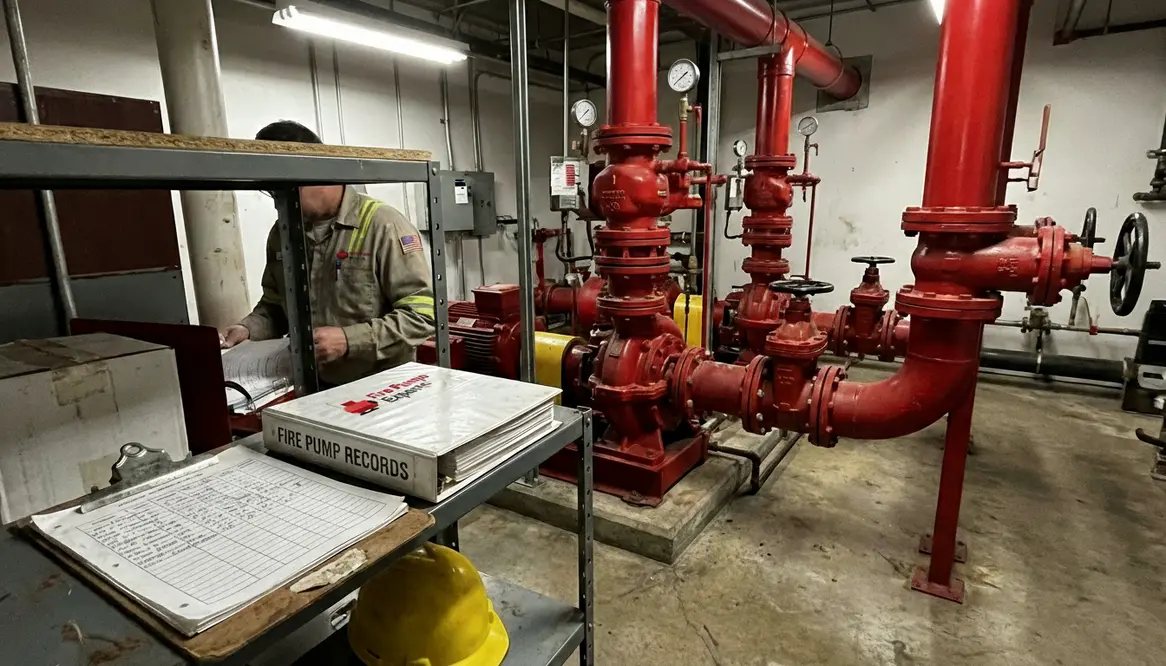
Fire Pump Documentation Requirements Santa Ana Guide
I have spent a good portion of my career walking through mechanical rooms in large commercial and industrial buildings. Some are spotless. Others look like a set piece from an action movie where the hero defuses a bomb with three seconds left. Somewhere in the middle sits the paperwork. And that paperwork matters more than most people realize.
In Santa Ana, facility managers face strict compliance standards, especially when life safety systems are involved. One of the most overlooked pieces of the puzzle is proper documentation. The fire pump documentation requirements Santa Ana facilities must follow are not just paperwork for inspectors. They are the written proof that your building can protect lives and property when everything goes sideways.
And trust me, when an inspector walks in, they will look for that documentation faster than a movie villain looking for the secret briefcase. So today I want to walk you through why documentation matters, what commercial property leaders should understand, and how strong records keep your building ready for anything.
What Are the Fire Pump Documentation Requirements Santa Ana Facilities Must Follow?
First things first. Let us answer the question facility managers often type into a search bar at 7:30 in the morning while holding a cup of coffee.
The fire pump documentation requirements Santa Ana commercial facilities must maintain include records that prove the system is installed, tested, and maintained according to fire code and NFPA standards.
These documents usually include:
- Initial installation records showing system specifications
- Weekly and monthly inspection logs
- Annual flow test documentation
- Maintenance and repair reports
- Controller and alarm test records
- Performance curves and pump data sheets
However, the key point is not simply having the documents. The key is organization, accuracy, and availability. Inspectors expect commercial and industrial properties to produce these records quickly. Meanwhile, insurance carriers often request the same information during audits.
If the paperwork looks messy or incomplete, the assumption is simple. If the records are weak, the maintenance probably is too.
And nobody wants their building safety system judged like a messy desk in a detective movie.
If you want an example of fire pump testing and documentation done right, look at how a dedicated fire pump service provider structures inspections, flow tests, and written reports at Kord Fire’s fire pump systems service page. Their approach mirrors what Santa Ana inspectors expect to see on the documentation side.
Why Documentation Protects Large Commercial Properties
A fire pump is the beating heart of a fire protection system in large buildings. Sprinklers rely on it. Standpipes rely on it. Firefighters may rely on it during a real emergency.
Because of that, documentation becomes a chain of proof.
First, it proves the system was installed correctly. Second, it proves inspections occur on schedule. Third, it confirms the pump performs at the pressure levels the building requires.
Without those records, a facility operator has no clear history of the system.
Therefore, documentation helps commercial properties avoid three major risks.
- Regulatory penalties from failed inspections
- Insurance disputes during claims
- Operational uncertainty during emergencies
I have seen situations where a property manager swore the pump was serviced regularly. However, when inspectors asked for logs, nobody could find them. The room suddenly got quieter than a library during finals week.
Meanwhile, well organized records turn inspections into routine conversations instead of stressful interrogations.
How Facility Managers Can Organize Fire Pump Documentation Without Losing Their Sanity
Now let us talk about the practical side. Because maintaining documentation should not feel like preparing a thesis for graduate school.
For large facilities in Santa Ana, the smartest approach is to treat fire pump documentation as an operational system rather than a pile of papers.
First, I recommend centralizing records. Every inspection report, repair note, and test result should live in one location.
Second, digital copies help immensely. Paper binders work, but digital backups make retrieval fast when inspectors ask questions.
Third, logs should be updated immediately after inspections or testing.
Because when someone says, “I will write that down later,” what they usually mean is “I will forget until the inspector arrives.”
That is just human nature.
Turning Operations Into Clean, Searchable Records
For commercial and industrial facilities, a simple documentation workflow often looks like this.
Operational Side
- Weekly visual inspections
- Monthly pump churn tests
- Annual flow performance tests
- Controller and alarm verification
Documentation Side
- Inspection logs completed immediately
- Service reports filed digitally
- Performance data stored with pump curves
- Maintenance history tracked for the life of the system
When both columns work together, the building always stays inspection ready and aligned with the fire pump documentation requirements Santa Ana AHJs and insurers expect you to follow.
Fire Pump Documentation Requirements Santa Ana Inspectors Expect to See
Inspectors in Santa Ana focus heavily on traceability. They want to see a clear timeline that shows the fire pump has been properly maintained over the years.
This means the fire pump documentation requirements Santa Ana properties must maintain should tell a complete story.
For example, an annual flow test report should include:
- Pump performance at churn, rated, and peak demand
- Suction and discharge pressure readings
- Driver performance data
- Controller operation verification
- Any deficiencies found during testing
Additionally, inspectors often check whether previous issues were corrected. If a repair appeared on last year’s report but never shows up again, questions start flying.
Think of it like continuity in a film series. If a character disappears between movies with no explanation, fans notice. Inspectors notice too.
Strong records show problems were identified, addressed, and verified. That level of detail builds confidence in the building’s life safety systems and keeps you aligned with the fire pump documentation requirements Santa Ana enforcement teams reference during reviews.
Why Large Industrial and Commercial Buildings Cannot Treat Documentation as an Afterthought
Large facilities have complex fire protection systems. Distribution warehouses, manufacturing plants, hospitals, and high rise office towers all rely on pumps that move enormous volumes of water.
Therefore, documentation becomes even more critical.
Maintenance teams change. Contractors rotate. Ownership groups evolve.
However, the records remain the institutional memory of the system.
Without that memory, new teams often repeat mistakes or miss warning signs.
For example, subtle pressure changes across several annual tests may reveal a developing pump issue. If those records are missing, that pattern disappears.
And unfortunately, problems that hide in mechanical rooms rarely fix themselves.
They tend to wait quietly until the worst possible moment.
Documentation as System Memory
This is exactly why the fire pump documentation requirements Santa Ana facilities follow are designed to maintain continuous visibility into system performance.
Good records keep everyone informed. Engineers understand the system history. Contractors see previous repairs. Inspectors confirm compliance quickly.
And facility managers sleep better at night.
Which, frankly, is a very underrated benefit.
FAQ About Fire Pump Documentation in Santa Ana
There are a few questions that come up repeatedly when facility teams start tightening up their documentation process.
Keeping Your Facility Ready When It Matters Most
Fire pumps sit quietly most days. They do not ask for attention. Yet when an emergency strikes, they become one of the most important systems in the entire building.
That is why strong documentation matters. The fire pump documentation requirements Santa Ana facilities follow ensure that pumps perform when lives and property depend on them.
If you manage a commercial or industrial property, now is the time to review your records, strengthen your documentation process, and make sure your fire protection systems are ready for anything.
Because when the alarm sounds and the pump starts, you want the only surprise in that mechanical room to be how calm everyone feels knowing the paperwork is as solid as the equipment.