Warehouse Fire Pump Flow Test Riverside Guide
A visual walk through the quiet mechanical rooms that silently decide how well your Riverside warehouse survives a fire.
I have walked through many large warehouses in Riverside. Steel racks stretch high, forklifts hum like busy bees, and somewhere in the mechanical room sits a quiet hero that most people never see. The fire pump. When I talk with facility managers about safety, one topic always rises to the top. The warehouse fire pump flow test Riverside. It may sound like a technical mouthful, but in truth it is one of the most important checks a commercial building can perform. And yes, while it might not sound as thrilling as a summer blockbuster, this test quietly decides whether a fire protection system will stand tall when things get hot. Literally.
Today I want to walk you through how these tests work, why they matter for industrial facilities, and what warehouse owners in Riverside should expect. Think of this as a calm guided tour through the engine room of fire protection. No hard hats required.
Along the way, we will keep our focus squarely on one thing: making sure your next warehouse fire pump flow test Riverside is more than just a box to check for an inspector. It should be a meaningful confirmation that your protection is ready for the real thing.
Quick Snapshot: Why This Test Matters So Much
- Confirms that your fire pump can move enough water at the right pressure for real fire conditions.
- Reveals hidden problems inside valves, controllers, pipes, and electrical components before they turn into failures.
- Protects employees, inventory, and operations when every second counts.
- Turns paperwork compliance into real-world confidence that your sprinklers will actually perform.
What Happens During a Warehouse Fire Pump Flow Test Riverside
First, let us slow things down and answer the question everyone asks when they hear about testing a fire pump. What actually happens?
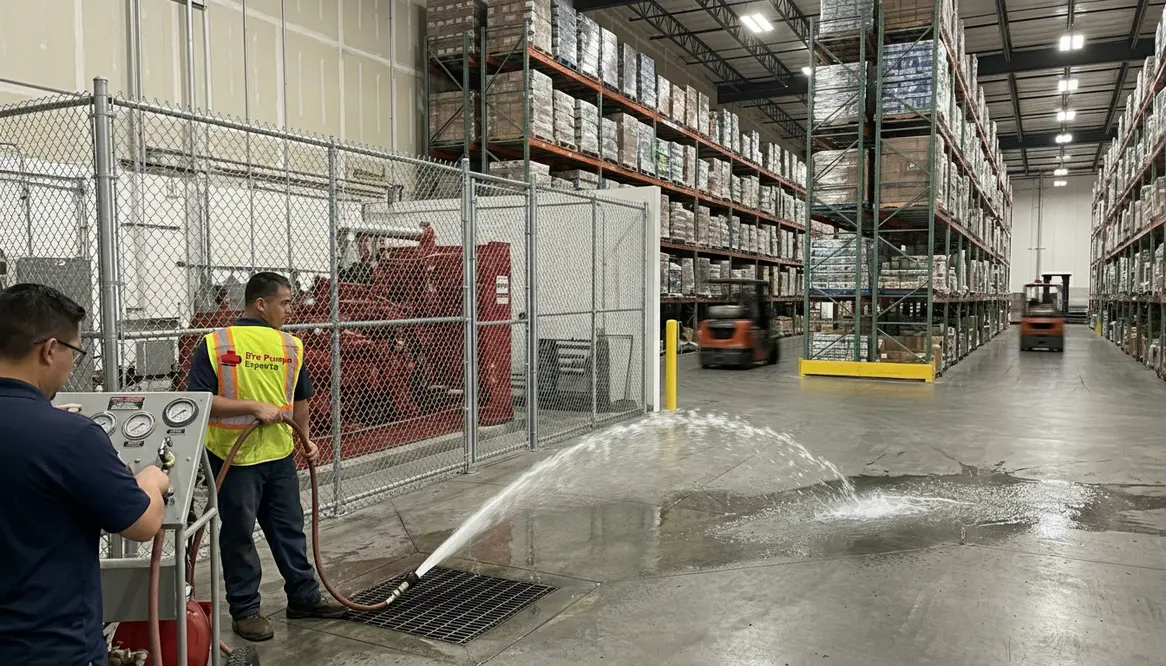
During a warehouse fire pump flow test Riverside, technicians measure how well the fire pump performs under real water demand. In simple terms, they make the pump work hard and then measure the results. If the system cannot move enough water at the right pressure, the sprinklers above your inventory will struggle when a fire breaks out.
Step 1: Instrumentation And Setup
The process starts with connecting calibrated gauges and flow meters to the system. Next, technicians open test headers or flow outlets that release water safely outside the building. As the pump runs, they record several performance points. These readings show how the pump behaves from low demand to maximum output.
Step 2: Running The Pump To Its Curve
However, the real goal is comparison. Every fire pump leaves the factory with a performance curve. That curve shows exactly how the pump should behave. During testing, we compare real world results to that original benchmark. If numbers drift too far, something inside the system needs attention.
Meanwhile, technicians also inspect valves, controllers, relief systems, and electrical components. A pump is not a lone cowboy riding into the sunset. It is part of a full team. If one piece fails, the system loses its strength.
And let me tell you, when a warehouse holds millions of dollars in goods, nobody wants the fire protection system performing like an actor who forgot their lines on opening night.
Why Large Warehouses in Riverside Cannot Skip Flow Testing
Warehouses present unique fire risks. Tall storage racks create vertical fire spread. Packaging materials add fuel. Meanwhile, large square footage means a fire can travel before anyone notices.
Because of this, commercial and industrial properties rely heavily on high capacity fire pumps. These pumps boost water pressure so sprinkler systems can reach the highest rack levels.
However, pumps change over time. Components wear. Mineral buildup forms inside pipes. Even small valve issues can restrict water movement. Therefore, regular testing confirms the system still performs as designed.
Local codes and national standards require these tests for good reason. NFPA guidelines outline strict testing intervals because fire protection equipment must prove its readiness. A system that only works on paper is about as useful as a superhero who refuses to leave the couch.
- Employee safety across large operational floors
- High value inventory and industrial equipment
- Business continuity during emergencies
When a fire pump performs exactly as designed, the sprinkler system becomes a powerful first responder long before the fire department arrives.
Inside the Numbers That Define Fire Pump Performance
When technicians conduct a commercial fire pump test, they focus on three critical measurements. These numbers tell the entire story of system health.
Pressure
|
Water Flow
|
Churn Pressure
|
Peak Performance
|
Each reading becomes part of a detailed performance record. Over the years, these reports tell a story. A slight drop in output one year might not seem alarming. However, steady decline over several tests signals the need for repair or replacement.
In other words, the numbers speak. And they usually whisper long before a problem starts shouting.
If you want to see how professional fire pump performance testing is structured beyond a warehouse fire pump flow test Riverside scenario, take a look at the broader fire pump testing requirements that shape most serious inspection programs.
How Often Should Industrial Facilities Schedule Fire Pump Testing
Facility managers often ask about timing. After all, warehouses run on tight schedules and constant movement. Nobody wants unnecessary downtime.
Annual Flow Testing
Fortunately, the testing schedule is clear. NFPA standards call for annual full flow testing of fire pumps in commercial and industrial properties. This yearly test confirms the pump still meets its rated performance curve.
Routine Supporting Checks
However, that is only part of the maintenance picture. Responsible facilities also conduct:
- Weekly or monthly pump churn tests
- Controller inspections
- Valve position checks
- Electrical system verification
These smaller checks ensure the system stays ready between major tests. Think of them as routine health checkups. The annual flow test then becomes the full physical exam.
For major warehouses in Riverside, these inspections fit neatly into a preventative maintenance strategy. And frankly, preventative work always costs less than emergency repairs. Ask any building engineer who has received a 2 AM call about equipment failure. The stories alone could fill a Netflix documentary.
What Warehouse Owners Should Expect During a Warehouse Fire Pump Flow Test Riverside
When professionals perform a warehouse fire pump flow test Riverside, the goal is precision without disrupting operations. Large facilities cannot simply shut down for half a day.
Therefore, experienced testing teams coordinate carefully with property managers and facility engineers.
Core Steps In A Typical Test
- Pre test system inspection and safety verification
- Calibration of gauges and flow measurement equipment
- Controlled water discharge through test headers
- Performance recording at multiple flow levels
- Detailed comparison with original pump curve data
- Final reporting and recommendations
Additionally, the testing team evaluates the full fire pump assembly. This includes diesel engines or electric motors, controllers, suction piping, and discharge valves. Every component must function smoothly.
From Data To Decisions
Once complete, facility managers receive a clear performance report. If results fall outside acceptable ranges, the report outlines corrective steps. Sometimes the solution is simple valve maintenance. Other times the pump requires mechanical service.
Either way, the information gives building owners something priceless. Certainty that their warehouse fire pump flow test Riverside efforts are actually delivering measurable readiness.
FAQ About Warehouse Fire Pump Flow Testing
What is a fire pump flow test?
A flow test measures how much water a fire pump can deliver and at what pressure. The results confirm whether the pump meets its original performance rating.
How often should a commercial fire pump be tested?
Industrial and commercial facilities typically perform full flow testing once per year according to NFPA standards.
Does the test interrupt warehouse operations?
Most professional testing teams plan the procedure to minimize disruption and coordinate closely with facility staff.
Why is flow testing important for large warehouses?
High storage racks and large floor areas require strong water pressure. Testing ensures the pump can supply enough water during a fire emergency.
What happens if a pump fails the test?
Technicians identify the cause and recommend repairs, adjustments, or component replacement to restore proper performance.
Keeping Riverside Warehouses Ready When It Matters Most
In the quiet mechanical room of every large warehouse sits a system designed for one purpose. Protection. A properly tested fire pump ensures that protection works when seconds matter. If you manage a distribution center, manufacturing facility, or major industrial property, professional testing is not just compliance. It is peace of mind.
Schedule a qualified inspection team, verify your system performance, and keep your building prepared for the unexpected. When the next warehouse fire pump flow test Riverside appears on your calendar, treat it like what it really is: a rehearsal for the day your sprinklers need to perform on the main stage.