Chicago High Rise Fire Pump Requirements Guide
A practical guide to chicago high rise fire pump requirements, performance, and long term risk management for commercial buildings.
Chicago High Rise Fire Pump Requirements for Commercial Buildings
I have spent many years walking through mechanical rooms, climbing stair towers, and listening to the quiet hum of fire protection systems that most people never notice. Yet in a city like Chicago, where steel and glass stretch confidently toward the clouds, those systems quietly stand between routine and catastrophe. And right at the heart of that protection sits the fire pump.
Understanding chicago high rise fire pump requirements is not just a matter of checking boxes for compliance. Instead, it is about making sure that when gravity, pressure loss, and a very bad day collide, water still reaches the highest floor with enough force to do its job. Therefore, if you manage a commercial tower, an industrial facility, or a major property complex, knowing how these systems work and why the city demands them becomes essential.
So let me walk you through it. Slowly. Clearly. And with the calm assurance that even a topic as thrilling as pump discharge pressure can still be interesting. Yes, really.
Why Chicago Requires Fire Pumps in Tall Commercial Buildings
Chicago does not build small. From the Loop to River North, commercial towers rise well beyond the height where municipal water pressure can reliably push water to the upper floors. As a result, the city fire code requires dedicated fire pump systems in many high rise commercial structures.
Now imagine trying to spray water to the top of a sixty story building using only street pressure. That is like trying to water a rooftop garden with a drinking straw. It technically involves water, but the outcome is disappointing.
Because of this, the chicago high rise fire pump requirements exist to guarantee that sprinkler systems and standpipes receive the pressure they need. The pump boosts incoming water supply and maintains consistent pressure throughout the building.
However, the goal is not simply pressure. Instead, the system must deliver reliable flow during emergencies. Therefore Chicago codes require specific pump sizing, backup power provisions, and dedicated fire pump rooms. Each element ensures that when firefighters connect to the standpipe system, the building supports them rather than working against them.
Consequently, compliance becomes less about bureaucracy and more about life safety engineering. For owners reviewing chicago high rise fire pump requirements, that shift in mindset is often what turns “code minimum” into genuinely resilient protection.
How High Rise Fire Pump Systems Actually Work
The fire pump as the muscle of the system
I often explain fire pumps as the muscle behind a building’s fire protection network. Sprinklers and standpipes act like the veins. Meanwhile the pump provides the force that keeps water moving when pressure drops.
The system typically activates when pressure in the fire protection piping falls below a preset threshold. Once that happens, the pump automatically starts and increases water pressure throughout the system.
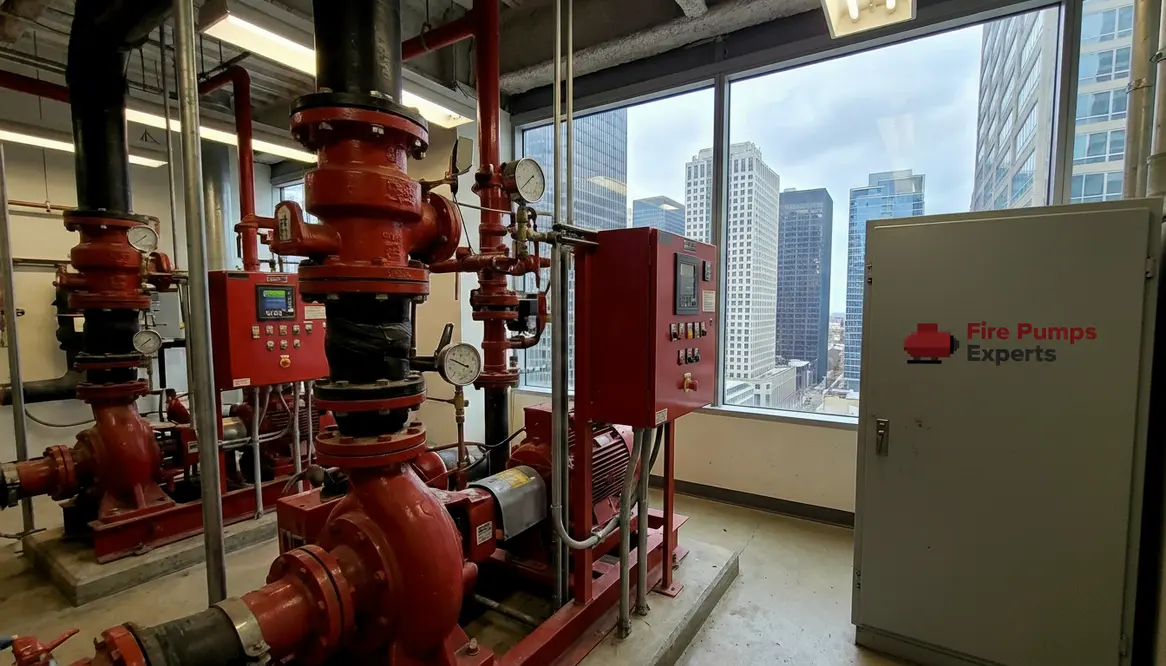
Core components you will see in the pump room
- Main fire pump that boosts water pressure to required levels
- Jockey pump which maintains pressure during minor fluctuations
- Controller that monitors pressure and starts the pump automatically
- Dedicated power supply often paired with backup generators
- Test header and valves that allow regular system testing
Additionally, Chicago codes require that pumps operate reliably during fire conditions. Therefore rooms must meet specific construction standards including fire rated separation and proper drainage.
It might sound overly technical. However the concept remains simple. When pressure drops, the pump wakes up and goes to work. No hesitation. No debate. Just water moving exactly where firefighters need it.
What Do Chicago Inspectors Look For During Fire Pump Compliance Reviews?
Capacity, configuration, and performance
If you manage a major commercial building, you already know inspectors rarely arrive with casual curiosity. They come with checklists, experience, and the quiet determination of someone who has seen what happens when systems fail.
First, they verify that the fire pump meets capacity requirements based on building height, sprinkler demand, and standpipe flow. In addition, they check installation details such as suction supply configuration and discharge pressure ratings.
Next comes operational testing. Inspectors expect pumps to start automatically, achieve rated pressure quickly, and maintain stable flow during testing. Furthermore, they review controller programming, alarm signals, and supervisory connections.
Documentation and everyday details
Then documentation enters the conversation. Maintenance records, weekly churn tests, and annual flow tests must all be available. After all, a pump that worked beautifully ten years ago does not earn automatic trust today.
And yes, inspectors notice the little things. Clearance around equipment. Drainage. Valve labeling. Even housekeeping inside the pump room. Think of it as the mechanical equivalent of your mother checking if you cleaned your room before guests arrive.
Key System Elements Property Managers Should Never Overlook
Many property teams assume installation is the hard part and maintenance is routine. However in reality, ongoing performance matters just as much as initial design. Therefore experienced facility managers treat fire pumps like mission critical equipment.
Operational Focus
- Weekly pump churn tests confirm automatic startup
- Annual flow testing verifies full rated capacity
- Controller diagnostics ensure electrical reliability
- Valve inspections confirm proper water supply paths
Infrastructure Focus
- Fire rated pump rooms protect equipment during fires
- Dedicated electrical feeds reduce failure risk
- Backup generators support pump operation during outages
- Proper suction piping prevents cavitation and pressure loss
When both operational and infrastructure factors align, the system performs exactly as engineers intended. Moreover, that reliability becomes vital during high demand fire events where multiple floors may require water simultaneously.
For large commercial and industrial buildings, ignoring these factors creates serious exposure. In contrast, proactive maintenance keeps both inspectors and insurance carriers remarkably calm.
Chicago High Rise Fire Pump Requirements and Long Term Building Risk
Here is the truth many property owners eventually learn. Fire protection systems are invisible until they fail. And when they fail, the consequences escalate quickly.
Because Chicago contains some of the tallest and densest commercial structures in the country, the chicago high rise fire pump requirements emphasize redundancy, capacity, and strict testing schedules. These rules protect not only occupants but also the massive financial investments tied to commercial towers.
For example, insufficient pump capacity can prevent standpipes from delivering the required gallons per minute at upper floors. Likewise, poor maintenance can delay pump startup by precious seconds. In a fire scenario, those seconds matter.
Furthermore, insurers increasingly review fire pump performance records when evaluating large commercial risks. Buildings that maintain reliable systems often see smoother underwriting and fewer operational disruptions.
In other words, compliance supports more than safety. It supports operational continuity for major properties that house thousands of employees and tenants every day.
And if that sounds serious, well, it should. A skyscraper without dependable water pressure is basically a very tall collection of problems waiting for a spark. Reviewing chicago high rise fire pump requirements on a routine basis is one of the simplest ways to keep those problems hypothetical instead of headline-worthy.
FAQ About High Rise Fire Pumps in Chicago
Choosing Expert Support For Your Fire Pump System
If your team is looking for deeper technical guidance on testing programs, upgrades, or troubleshooting performance issues, working with a specialist fire protection company can streamline the process. Providers who routinely maintain diesel and electric fire pumps, perform weekly and monthly churn tests, and manage full flow testing across multiple jurisdictions bring a level of field insight that complements the bare text of chicago high rise fire pump requirements.
Teams responsible for large portfolios often benefit from partnering with a firm that can support not only pumps but also sprinklers, standpipes, and alarm interfaces. For example, Kord Fire Protection provides comprehensive fire pump services as part of its broader fire protection offerings, which you can explore at https://kordfire.com/can-a-fire-pump-flood-a-building/.
Conclusion
If you operate a commercial tower or large facility in Chicago, your fire pump system deserves serious attention. The right design, testing routine, and professional oversight keep your building compliant and ready for emergencies. At firepumps.org, we focus exclusively on major commercial and industrial properties. If you want experienced guidance on inspection, performance testing, or upgrades, connect with our team and make sure your system delivers exactly when it matters most.