City of Industry Industrial Fire Suppression Water Pressure
Inside the work of maintaining critical fire protection systems for massive industrial facilities.
Inside the Work of Maintaining City of Industry Industrial Fire Suppression Water Pressure
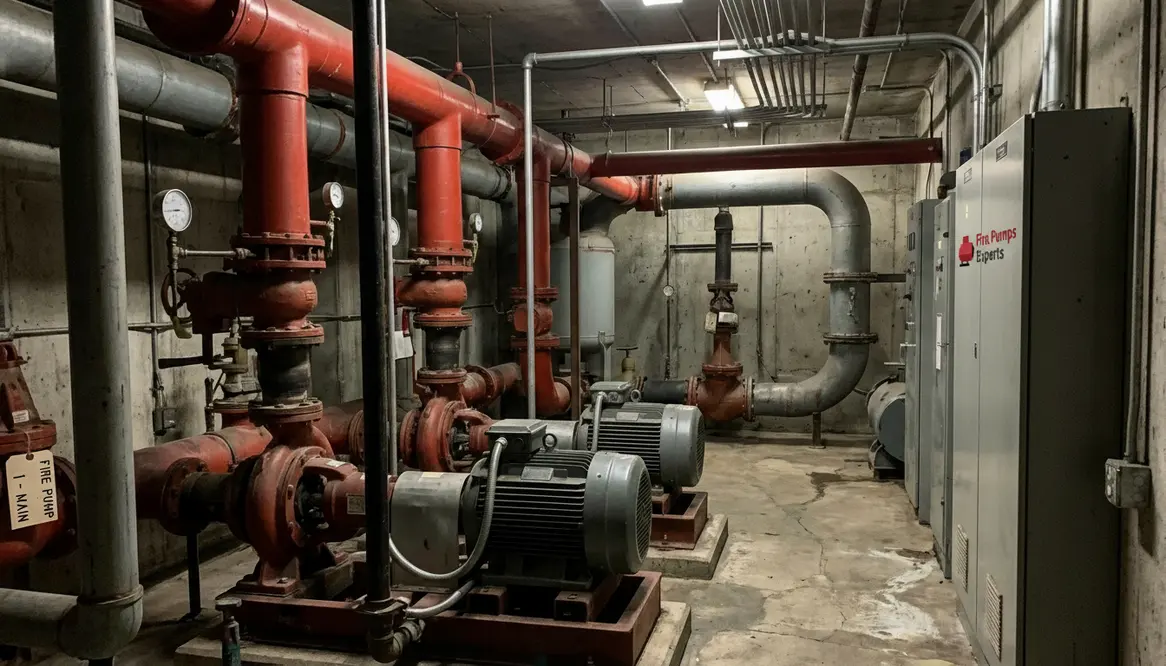
I spend a lot of time inside mechanical rooms that most people never see. Concrete walls. Steel pipes. A low hum from equipment that sounds like it belongs in the engine room of the Millennium Falcon. It may not look glamorous, but it keeps massive facilities safe.
In places like the City of Industry, warehouses stretch for acres and manufacturing lines run day and night. Because of that scale, city of industry industrial fire suppression water pressure is not just a technical detail. It is the difference between a controlled emergency and a disaster that shuts down operations for months.
So today I want to walk you through how large commercial and industrial facilities keep that pressure stable, reliable, and ready. Think of it like the backstage crew at a concert. When the curtain rises and the sprinklers need to perform, everything behind the scenes must work perfectly.
And trust me, when fire protection systems do their job well, nobody notices. Which, in this business, is the highest compliment you can get.
Why Large Facilities Depend on Stable Fire Suppression Pressure
Industrial buildings in the City of Industry are not your typical structures. I am talking about distribution centers that could swallow a football stadium. Manufacturing plants with complex equipment lines. Logistics hubs moving thousands of pallets every hour.
Because of that scale, the fire suppression network must deliver large volumes of water instantly. A sprinkler head activating in one corner of a facility may require hundreds of gallons per minute. If several activate at once, the demand jumps fast.
Therefore, maintaining strong pressure becomes a constant engineering challenge for any system supporting city of industry industrial fire suppression water pressure.
What Fails When Pressure Falls Short
- Sprinkler systems cannot distribute water evenly
- Fire hoses lose reach and force
- Large storage areas remain vulnerable
- Response times increase
However, industrial systems solve this problem with layered infrastructure. Storage tanks, fire pumps, pressure controllers, and monitoring systems work together like a well rehearsed orchestra.
And yes, sometimes I do stand in a pump room listening to the equipment and think of an orchestra warming up. Granted, instead of violins, it is 300 horsepower motors. Beethoven would probably approve.
How City of Industry Industrial Fire Suppression Water Pressure Is Engineered
When I walk into a large industrial facility, I usually start by tracing the system from the water supply forward. The process tells a story about how the property protects itself.
First comes the municipal supply. Although city water provides the base flow, it rarely delivers enough pressure for a massive industrial sprinkler network.
So facilities install dedicated fire pumps.
These pumps act as the muscle behind the system. Once activated, they boost pressure dramatically and move water through the building with force and speed.
Common Fire Pump Configurations
- Electric motor driven fire pumps
- Diesel driven fire pumps for backup reliability
- Vertical turbine pumps when drawing from storage tanks
However, the pump itself is only one part of the equation. Engineers design the entire piping network to minimize pressure loss. Large diameter pipes, strategic valve placement, and balanced distribution zones all help maintain flow.
Meanwhile, pressure sensing controllers monitor the system constantly. When pressure drops, even slightly, the pump starts automatically. No debate. No hesitation. Just instant response.
It reminds me of those scenes in action movies where the hero flips a switch and the whole operation springs to life. Except here the hero is a pressure sensor quietly doing its job.
Key Components That Keep Industrial Fire Pressure Reliable
When people hear about fire suppression systems, they often imagine sprinkler heads alone. In reality, the backbone of reliability lies deeper in the infrastructure that supports city of industry industrial fire suppression water pressure.
Water Storage
Large industrial facilities often maintain on site water tanks that store thousands of gallons. These reserves ensure immediate supply even if municipal pressure fluctuates.
Fire Pumps
Pumps increase flow and maintain system pressure during activation. Without them, large properties would struggle to deliver sufficient water across wide floor areas.
Pressure Maintenance Pumps
Small jockey pumps maintain baseline pressure between events. They prevent the main pump from cycling unnecessarily and keep the system primed.
Monitoring and Controls
Digital controllers track pressure, flow, and equipment status. Facility teams receive alerts immediately if anything drifts outside normal conditions.
When all these parts work together, the system remains steady and responsive.
Additionally, redundancy plays a major role. Industrial facilities rarely rely on a single component. Backup power sources, secondary pumps, and layered alarms ensure the system stays operational even during unexpected failures.
After all, in fire protection, hope is not a strategy. Engineering is.
If you want a deeper look at how standards shape this engineering, resources like NFPA 20 fire pump system guidance show just how much thought goes into reliable fire pump performance.
What Happens When Pressure Starts to Drift
Pressure does not stay perfect forever. Pipes age. Valves wear down. Sensors drift. That is just the reality of mechanical systems.
Therefore, professional inspection and testing programs become essential.
What Technicians Look For
During a typical service visit, I check several performance indicators.
- Pump start pressure and stop pressure
- Flow test results across the system
- Valve positioning and functionality
- Controller communication signals
- Tank levels and refill systems
If something looks off, we address it immediately. Small corrections today prevent major failures tomorrow.
For example, a slightly miscalibrated pressure switch might delay pump activation. In a normal situation, that delay might seem trivial. However, during a real fire event, seconds matter.
And let me tell you, industrial facility managers appreciate systems that respond faster than a Marvel superhero cameo.
How Do Large Facilities Monitor Pressure in Real Time?
Today’s industrial buildings rely heavily on monitoring technology. Instead of waiting for a manual inspection, systems track performance around the clock.
Pressure sensors sit at key points across the network. These sensors feed data into controllers that analyze system behavior continuously.
If pressure drops below the target range, the system reacts immediately.
Common Monitoring Tools
- Digital fire pump controllers with alarm reporting
- Remote monitoring systems connected to facility networks
- Supervisory alarms tied into fire control panels
- Automated performance logging
Because of these tools, facility managers gain visibility they never had before. Instead of discovering issues during annual testing, they receive early warnings.
Consequently, maintenance teams can fix problems before safety or compliance becomes a concern.
And honestly, that level of foresight makes life easier for everyone involved, especially when you are responsible for something as unforgiving as city of industry industrial fire suppression water pressure.
FAQ About Industrial Fire Suppression Pressure
Here are quick answers to common questions facility teams ask about city of industry industrial fire suppression water pressure and the systems behind it.
Protecting Your Facility Starts With the Right Pressure
At the end of the day, reliable fire protection is not about equipment alone. It is about preparation. When systems supporting city of industry industrial fire suppression water pressure operate at peak performance, industrial facilities stay protected, compliant, and ready for the unexpected.
If your property depends on high capacity fire pump systems, professional inspection and maintenance make all the difference. The right expertise keeps your infrastructure strong and your operations moving forward with confidence.