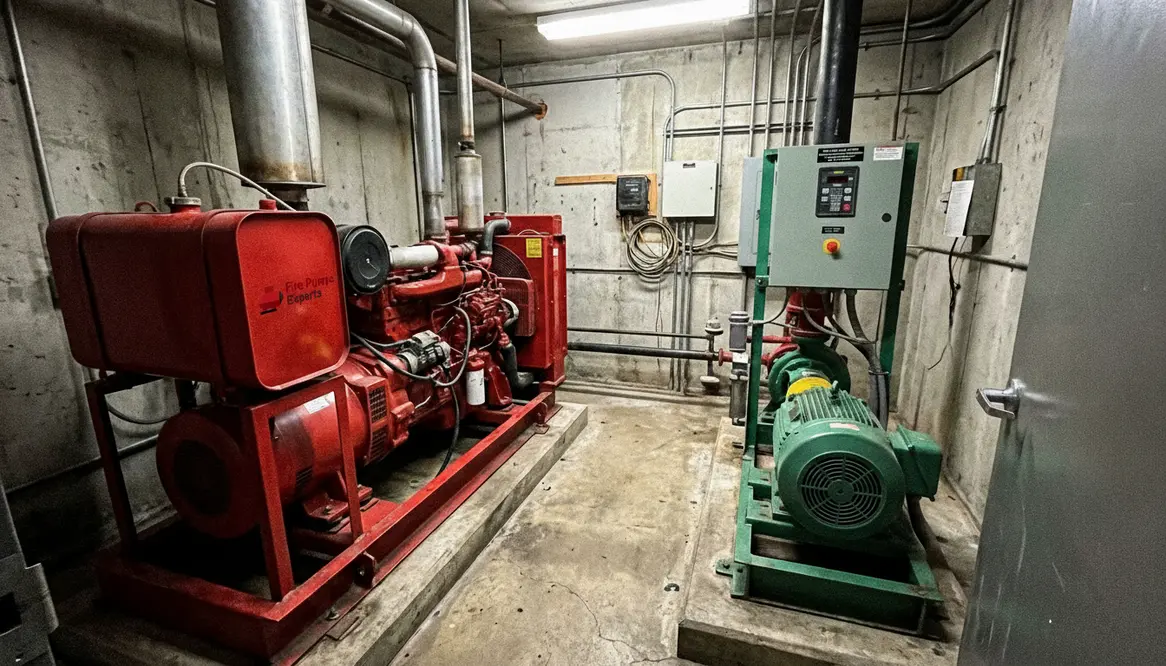
Diesel vs Electric Fire Pump Houston Site Constraints
I have spent enough time around fire protection rooms to know one thing. Nothing wakes you up faster than the low growl of a diesel engine or the quiet confidence of an electric motor standing ready for an emergency. In a city like Houston, where massive commercial campuses, refineries, hospitals, and distribution hubs stretch across miles of concrete and steel, choosing the right fire pump is not just a technical decision. It is a site constraint puzzle.
That is where the conversation about diesel vs electric fire pump Houston systems begins. Owners and facility managers ask me about it all the time. Which one works best for their building layout, their utilities, their reliability needs? The answer is not always simple. However, when you look at power availability, space limitations, fuel logistics, and compliance requirements, the choice begins to reveal itself.
So let’s walk through it together. Imagine we are standing in a mechanical room somewhere in Houston, coffee in hand, listening to the quiet hum of equipment that keeps thousands of people safe every day.
Understanding the Role of Fire Pumps in Large Commercial Facilities
Before comparing options, I always start with the basics. A fire pump exists for one reason. When the municipal water supply cannot provide enough pressure to push water through a sprinkler or standpipe system, the pump steps in and does the heavy lifting.
Large facilities across Houston rely on them. High rise office towers, petrochemical plants, hospitals, data centers, airports, and sprawling industrial warehouses all demand strong and consistent water pressure during a fire event.
However, site constraints shape the decision. For example, some facilities sit in areas where electrical reliability is excellent. Others operate in industrial zones where power outages happen more often than a Houston summer thunderstorm.
Because of that, engineers often weigh two main choices.
Electric fire pumps
- Powered directly by the facility electrical system
- Quiet operation and lower maintenance
- No fuel storage requirements
- Depend on stable power infrastructure
Diesel fire pumps
- Run independently from the electrical grid
- Require fuel tanks and exhaust systems
- Often used where electrical reliability is uncertain
- Provide strong backup capability
Both meet NFPA standards. Both protect lives and property. The real difference appears when we examine the physical and operational realities of your building.
Diesel vs Electric Fire Pump Houston Site Constraints Explained
Now let’s get practical. When engineers evaluate diesel vs electric fire pump Houston installations, they usually start with the building itself. Houston facilities are not all built the same. Some properties offer generous mechanical space. Others squeeze equipment into rooms that feel about the size of a walk in closet.
Diesel pumps require more infrastructure. You need fuel tanks, ventilation, exhaust piping, and enough clearance for maintenance. That can become a challenge inside dense commercial towers or hospitals where every square foot already has a job.
Electric pumps, on the other hand, are the minimalist of the two. No fuel tank. No exhaust stack. No engine cooling system. Just the motor, controller, and pump assembly.
However, the electrical service must support it. Large industrial fire pumps can demand significant power during startup. If the building electrical system cannot deliver that capacity, the electric option becomes less practical.
Think of it like choosing between a pickup truck and an electric sedan. Both will get you to work. But if your job site sits halfway down a muddy field, the truck suddenly makes a lot more sense.
How Reliable Power Availability Shapes the Decision
Houston is a powerhouse city for industry. Yet even powerhouse cities experience grid challenges. Hurricanes, floods, and severe storms occasionally remind us that electricity is not always guaranteed.
This is where diesel pumps shine.
Because diesel engines operate independently from the electrical grid, they continue running even when utility power disappears. As long as the fuel tank is full and the engine receives regular maintenance, the system remains ready.
Electric pumps rely on facility power. That sounds risky at first. However, many major commercial properties operate with redundant power systems, generators, and dual utility feeds.
Therefore, the decision often depends on the building’s resilience strategy. Data centers, hospitals, and energy facilities usually design layers of electrical backup. In those environments, electric fire pumps fit nicely into the broader reliability plan.
Meanwhile, remote industrial facilities or large manufacturing complexes sometimes favor diesel engines because they eliminate dependence on the grid entirely.
In other words, reliability is not about which pump is better. It is about which one fits the electrical reality of the property.
Space, Noise, and Maintenance Considerations
Let me paint a picture. Imagine walking into a fire pump room during a weekly test.
If the room houses a diesel pump, you will hear it immediately. The engine roars to life like it is auditioning for a Fast and Furious sequel. It is powerful, impressive, and definitely not shy.
Electric pumps behave differently. They start with a steady motor hum that feels almost polite by comparison.
That difference matters in some buildings.
Diesel Pump Characteristics
- Larger equipment footprint
- Fuel storage requirements
- Engine cooling and exhaust systems
- Regular engine maintenance
- Higher noise during testing
Electric Pump Characteristics
- Compact installation
- No on site fuel storage
- Minimal ventilation requirements
- Lower routine maintenance
- Quieter weekly testing
For dense commercial properties in Houston, space often becomes the deciding factor. When mechanical rooms already feel like a game of Tetris, electric pumps provide a simpler fit.
Meanwhile, large industrial campuses with dedicated pump houses have the flexibility to accommodate diesel equipment more easily.
What Houston Fire Codes and Insurance Expectations Look For
Regulations always join the conversation. Fire pumps must comply with NFPA 20 standards along with local code enforcement. If you want a deeper look at how that standard shapes design and installation, resources such as the NFPA 20 overview from Kord Fire at https://kordfire.com/how-nfpa-20-regulates-fire-pump-systems/ can be helpful background reading.
In Houston, code officials focus on reliability and proper installation rather than pushing one power source over another. Both diesel and electric pumps meet compliance when installed correctly.
However, insurers sometimes influence the decision. Large commercial properties often work closely with risk engineers from major insurance carriers. Those engineers examine hazards, operational continuity, and redundancy.
For instance, a petrochemical processing plant may lean toward diesel pumps to reduce dependency on electrical infrastructure. On the other hand, a hospital with multiple generators and redundant utility feeds may comfortably operate electric fire pumps.
Each site tells a different story. The trick is aligning engineering design with operational risk management and understanding how diesel vs electric fire pump Houston decisions interact with your insurers’ expectations.
FAQ: Diesel and Electric Fire Pumps for Houston Facilities
Below are common questions that come up when teams compare diesel vs electric fire pump Houston options and try to match them to real world constraints.
Choosing the Right Fire Pump for Your Houston Facility
At the end of the day, selecting between diesel and electric fire pumps comes down to understanding the physical realities of your property. Power reliability, mechanical room space, maintenance capabilities, and risk tolerance all play a role in how you approach a diesel vs electric fire pump Houston comparison.
Major commercial and industrial facilities across Houston rely on carefully engineered fire pump systems to protect people, infrastructure, and operations. The right choice ensures dependable water pressure when it matters most.
If you are evaluating fire pump solutions for your property, work with experienced professionals who understand Houston code requirements, facility scale, and system design. A well planned fire pump installation protects more than buildings. It protects everything happening inside them.