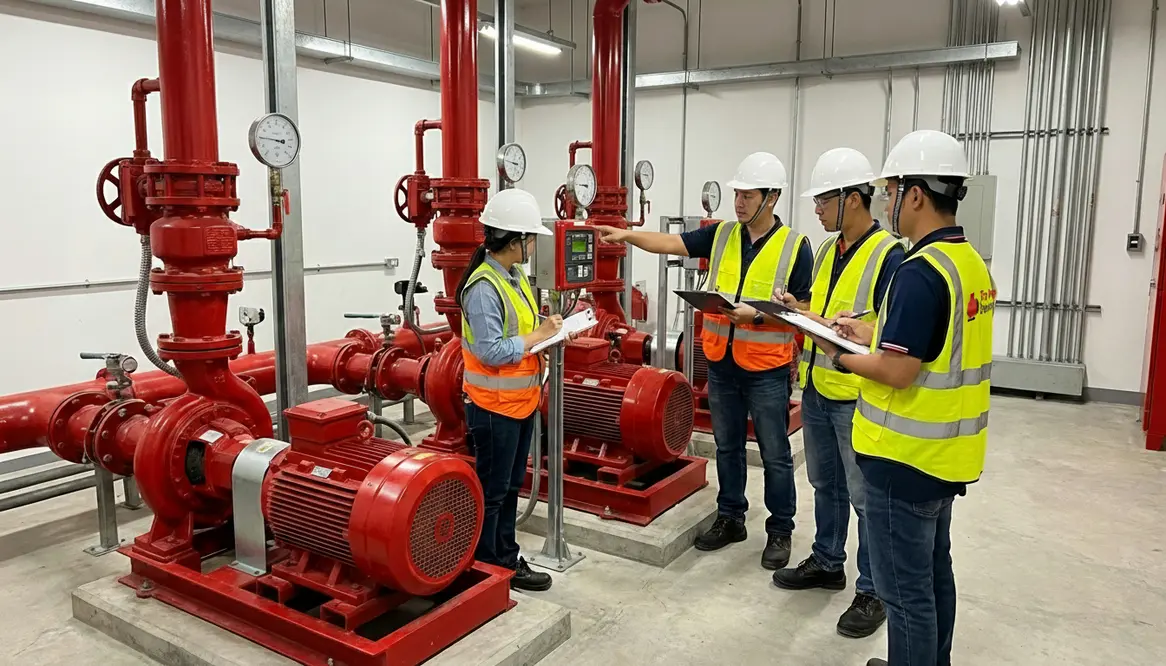
Fire Pump Acceptance Test Fort Worth: Avoid Failures Before They Start
Test day in a fire pump room should feel calm, predictable, and almost boring. When the preparation is wrong, it feels like a circus. When it is right, it feels like quiet confidence and smooth readings.
I have stood in a lot of mechanical rooms over the years. Some quiet as a library. Others loud enough to make a rock concert blush. And when test day arrives for a fire pump, the mood shifts fast. Engineers lean in. Facility managers hold their breath. Someone inevitably asks if the gauges were calibrated. That moment is exactly why I talk so often about fire pump acceptance test fort worth avoid failed test day scenarios. In a city full of massive warehouses, data centers, hospitals, and high rise buildings, a failed acceptance test is not just embarrassing. It delays occupancy, disrupts operations, and sometimes burns through budgets faster than a Hollywood action movie burns through explosions.
However, when the preparation is right, test day can feel almost boring. And in fire protection, boring is beautiful.
So let me walk you through how I approach it. Slowly. Methodically. With the calm confidence of someone who has seen both disaster and success in the same pump room.
Why Test Day Fails (Or Passes) Before Anyone Hits “Start”
The real secret behind a successful fire pump acceptance test in Fort Worth is not what happens during the test; it is everything that happens in the months leading up to it. The buildings are big, the timelines are tight, and the expectations from owners and insurers are even bigger.
Treat test day like a final exam: the grade is already decided long before you walk into the room.
Fire Pump Acceptance Test Fort Worth Avoid Failed Test Day Scenarios: Why Preparation Starts Months Before
Most people assume acceptance testing begins the week of the test. That assumption is about as accurate as saying the Dallas Cowboys only start planning during the fourth quarter.
The truth is simpler. I start preparing months earlier.
Step 1: Confirm the Design Matches Reality
First, I confirm that every component in the system matches the approved design. The fire pump, controller, relief valve, flow meter, and suction supply must all match the specifications. If even one piece differs, the system might behave differently under full flow conditions.
Step 2: Inspect Installation Quality
Next, I review installation quality. Alignment, electrical connections, and pipe supports matter more than people think. A pump that is even slightly misaligned can vibrate during testing. And vibration leads to unstable readings, which leads to frowns from inspectors.
Step 3: Get the Paperwork Ready Before Anyone Asks
Then there is documentation. Inspectors want to see paperwork that proves every component meets its listing and rating. Without those documents, the system may perform perfectly but still fail the acceptance process.
Because of that, I always say the same thing to facility teams.
Testing day does not reveal surprises. It reveals preparation.
What Inspectors Actually Look For During a Fire Pump Acceptance Test
This question pops up all the time. And honestly, it is a good one.
During an acceptance test, inspectors focus on performance and reliability. They want proof that the pump delivers the required pressure and flow under real conditions.
However, they are not just watching numbers on gauges. They watch everything.
Startup, Stability, and Controller Behavior
For example, they observe how the pump starts. A delayed start or electrical hesitation raises immediate concerns. They also monitor pressure stability as flow increases through the test header.
Additionally, they examine how the controller behaves. Does it automatically start when pressure drops? Does it switch correctly between power sources if a backup generator is present?
The Little Details That Cause Big Headaches
Even small details matter. Inspectors notice leaking fittings, excessive vibration, or unstable suction supply.
I once saw a test fail because a small air pocket caused erratic gauge readings. The pump itself worked beautifully. Yet the numbers looked like a roller coaster at Six Flags.
And inspectors do not like roller coasters in fire protection systems.
Common Reasons Fire Pump Tests Fail in Large Fort Worth Facilities
Fort Worth has a growing landscape of large commercial and industrial buildings. Distribution centers stretch across entire blocks. Hospitals run around the clock. Data centers hum like giant digital engines.
Each one depends on reliable fire protection.
Yet when acceptance tests fail, the causes are surprisingly predictable.
- Insufficient water supply. Municipal supply or storage tanks cannot maintain required flow.
- Improper pump installation. Alignment issues or suction piping problems disrupt performance.
- Controller programming errors. Incorrect pressure settings prevent proper automatic operation.
- Air trapped in the system. This creates unstable pressure readings during flow tests.
- Missing documentation. Inspectors cannot verify compliance with NFPA requirements.
However, the most common cause is simpler than all of those.
Lack of coordination.
Acceptance testing requires contractors, engineers, facility managers, inspectors, and fire protection specialists working together. When communication breaks down, the test day schedule collapses faster than a cheap folding chair.
That is why coordination meetings matter. They keep everyone aligned before the pump ever starts.
Fire Pump Acceptance Test Fort Worth Avoid Failed Test Day Scenarios Through Smart Pre Testing
If you want test day to run smoothly, you rehearse.
I always conduct a full pre test before the official acceptance test. Think of it like a dress rehearsal before opening night on Broadway. Nobody wants surprises when the curtain rises.
During pre testing, we simulate the full flow conditions using the test header or flow meter. We verify pressure readings, confirm pump curves, and observe system behavior.
Because of that rehearsal, we can identify problems early.
- Maybe a valve is partially closed.
- Perhaps the jockey pump settings need adjustment.
- Sometimes the discharge gauges need recalibration.
All of those issues are easy to fix before the official inspection. However, if they appear during the acceptance test, the entire event may stop.
For large facilities in Fort Worth, this preparation is especially important. Distribution hubs and manufacturing campuses operate on tight construction schedules. A failed test can delay occupancy permits, tenant operations, and insurance approvals.
And nobody wants to explain that delay during a boardroom meeting.
Preparation Checklist for Commercial and Industrial Facilities
Mechanical Readiness
- Verify pump alignment and mounting stability
- Confirm suction piping meets NFPA guidelines
- Check all valves are correctly positioned
- Inspect relief valves and circulation lines
- Ensure test header and drains operate smoothly
Operational Readiness
- Confirm controller settings and start pressures
- Test emergency power transfer if applicable
- Calibrate gauges and flow measurement devices
- Verify communication with monitoring systems
- Prepare documentation for inspectors
When both columns are handled properly, the acceptance test becomes far less dramatic. Instead of scrambling around the pump room, everyone calmly observes the readings.
That calm atmosphere is exactly what I aim for when helping facilities handle fire pump acceptance test fort worth avoid failed test day scenarios. Preparation removes stress. And frankly, it saves money.
If you want to go even deeper into how compliant fire pump systems should be laid out and tested, resources like the NFPA 20 overview from Kord Fire Protection at https://kordfire.com/how-nfpa-20-regulates-fire-pump-systems/ provide helpful context for design, installation, and testing practices.
How I Coordinate a Smooth Test Day in Major Buildings
By the time the official test day arrives, everything should feel routine.
First, I gather the entire team for a quick walkthrough. We review safety procedures, communication signals, and the test sequence. That short meeting ensures everyone knows their role.
Then we begin with churn testing. This confirms the pump runs properly at zero flow. After that, we move through the required flow points.
Typically, those include:
- 100 percent rated flow
- 150 percent rated flow
- Intermediate flow points
Throughout the test, we record pressure, flow, and electrical performance. Meanwhile, inspectors observe the pump curve to ensure it matches the manufacturer specifications.
When everything lines up correctly, the final paperwork gets signed.
And I have to admit, that moment always feels satisfying. Not fireworks level exciting. More like the quiet satisfaction of finishing a long road trip without hitting traffic.
Which, if you have ever driven through Texas construction zones, is practically a miracle.
Frequently Asked Questions About Fire Pump Acceptance Testing
These are the questions that come up over and over again when facilities start planning how to handle a fire pump acceptance test fort worth avoid failed test day scenarios level of preparation.
Conclusion
When I help facilities prepare for a fire pump acceptance test fort worth avoid failed test day scenarios, the goal is simple. Remove uncertainty before the inspector walks through the door. With proper coordination, detailed pre testing, and experienced oversight, even the most complex commercial or industrial fire pump systems can pass smoothly.
If your facility in Fort Worth is approaching acceptance testing, now is the time to prepare. Reach out to a specialist who understands large scale systems and keeps test day calm, predictable, and successful.